
Tuesday, November 17, 2026Nov 17

Collapse of major dam in southern Ukraine triggers emergency as Moscow and Kyiv trade blame

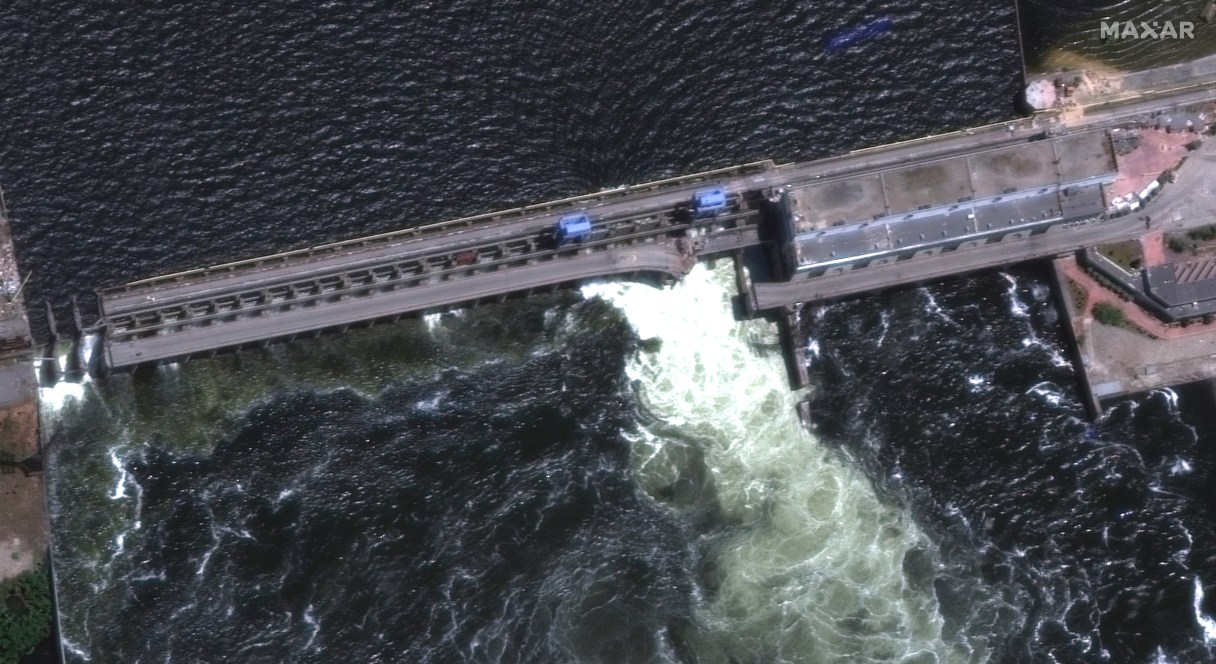
This satellite image provided by Maxar Technologies shows an overview of the Kakhovka dam in southern Ukraine on Monday, June 5, 2023. Ukraine on Tuesday, June 6, accused Russian forces of blowing up the major dam and hydroelectric power station in a part of southern Ukraine they control, threatening a massive flood that could displace hundreds of thousands of people, and ordered residents downriver to evacuate. Russian news agency Tass quoted an unspecified Russian government official as saying the dam had “collapsed” due to damage. (Maxar Technologies via AP)


KHERSON, Ukraine (AP) — A major dam in southern Ukraine collapsed Tuesday, triggering floods, endangering crops in the country’s breadbasket and threatening drinking water supplies as both sides in the war scrambled to evacuate residents and blamed each other for the destruction.

Ukraine accused Russian forces of blowing up the Kakhovka dam and hydroelectric power station on the Dnieper River in an area that Moscow has controlled for over a year, while Russian officials blamed Ukrainian bombardment in the contested area. It was not possible to verify the claims.

The environmental and social consequences quickly became clear as homes, streets and businesses flooded downstream and emergency crews began evacuations; officials monitored water for cooling systems at the Zaporizhzhia nuclear plant; and authorities expressed concern about supplies of drinking water to the south in Crimea, which Russia illegally annexed in 2014.

In the downstream city of Kherson, a woman who gave her name only as Tetyana waded through thigh-deep water to reach her flooded house and rescue her dogs. They were standing on any dry surface they could find but one pregnant dog was missing. “It’s a nightmare,” she kept repeating, declining to give her full name.