
Friday, October 30, 2026Oct 30

This story is free to read.

Sharing the sentence: Separation takes toll on incarcerated moms and their kids

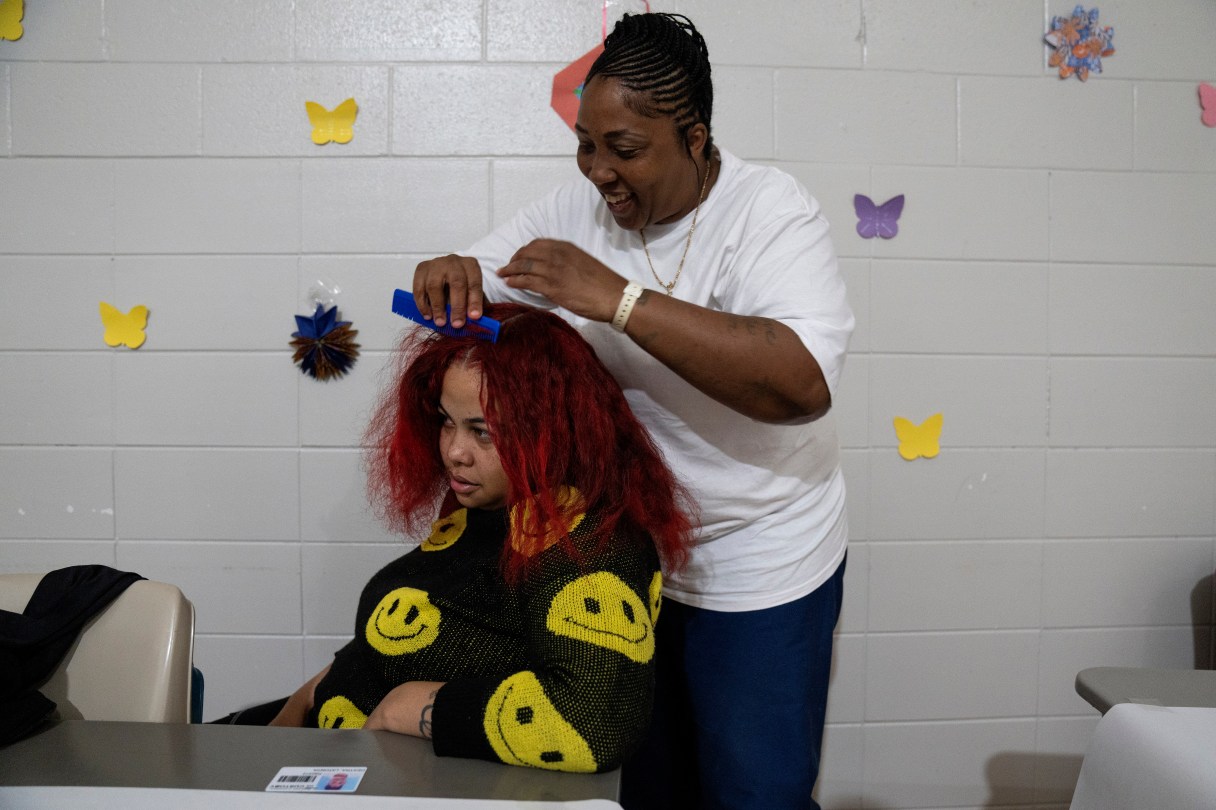
Latonya Dextra braids the hair of her 27-year-old daughter Nyia Pritchett during a special visit at Logan Correctional Center, Saturday, May 20, 2023, in Lincoln, Illinois. Pritchett hadn't seen her mother for three years. Rare programs like the Reunification Ride, a donation-dependent initiative that buses prisoners' family members from Chicago to Illinois' largest women's prison every month so they can spend time with their mothers and grandmothers, are a crucial lifeline for families, prisoners say. (AP Photo/Erin Hooley)
Latonya Dextra braids the hair of her 27-year-old daughter Nyia Pritchett during a special visit at Logan Correctional Center, Saturday, May 20, 2023, in Lincoln, Illinois. Pritchett hadn't seen her mother for three years. Rare programs like the Reunification Ride, a donation-dependent initiative that buses prisoners' family members from Chicago to Illinois' largest women's prison every month so they can spend time with their mothers and grandmothers, are a crucial lifeline for families, prisoners say. (AP Photo/Erin Hooley) Latonya Dextra braids the hair of her 27-year-old daughter Nyia Pritchett during a special visit at Logan Correctional Center, Saturday, May 20, 2023, in Lincoln, Illinois. Pritchett hadn't seen her mother for three years. Rare programs like the Reunification Ride, a donation-dependent initiative that buses prisoners' family members from Chicago to Illinois' largest women's prison every month so they can spend time with their mothers and grandmothers, are a crucial lifeline for families, prisoners say. (AP Photo/Erin Hooley)

LINCOLN, Ill. (AP) — Dressed in her Sunday best — pink ruffled sleeves and a rainbow tulle tutu — Crystal Martinez’s 4-year-old daughter proudly presents her with a multicolored bouquet of carefully crafted tissue paper flowers. With her 5-year-old son nestled on her lap, laughing in delight, Martinez holds out her arms and pulls the girl into a hug so tight that her glasses are knocked askew.

“I want you! I don’t want the flowers,” Martinez says , smiling and holding her children close.

Martinez’ five children, including the three aged 13, 10 and 6, last month traveled for three hours from Chicago to visit her in Logan Correctional, Illinois’ largest state prison for women, on the Reunification Ride. The donation-dependent initiative buses prisoners’ family members 180 miles (290 km) from the city to Logan every month so they can spend time with their mothers and grandmothers.

The number of incarcerated women in the United States dropped by tens of thousands because of COVID-19. But as the criminal justice system returns to business as usual and prison populations creep back to pre-pandemic norms, more children are being separated from their mothers, putting them at greater risk of health and behavioral problems and making them vulnerable to abuse and displacement.

Black and Hispanic women are more likely to be imprisoned than white women and are affected disproportionately by family separation due to incarceration.