
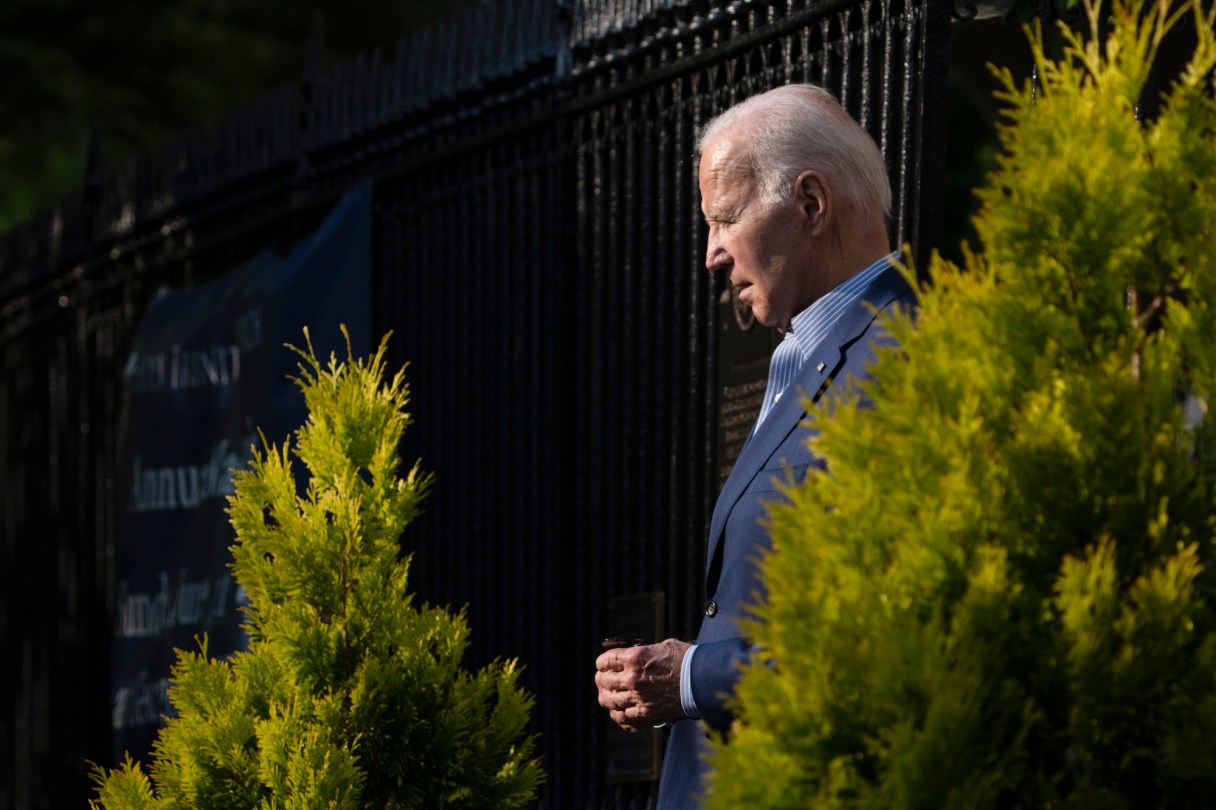
President Joe Biden, eager to get more tax money to pay for the faults of others along with his own disastrously irresponsible, inflationary overspending, has said that American billionaires have a tax rate of just 8%. Here, then, is a great excuse to hit this relatively small group of 700 or maybe 1,000 people with a fiscal fist as big as the Treasury Department without worrying about losing millions of votes.
A difficulty for Biden, however, is that the tax rate is more than three times bigger than he said, 25.6%, either demonstrating that he made a major mistake or qualifies to be called a political trickster. I endorse the second possibility, seeing as how the tiny-tax assertion could confuse the public enough for him to seem a hero catching cheapskate billionaires, even though the top 1% of taxpayers deliver something like 43% of all federal taxes.
The way Biden arrives at his deception is by saying the billionaires and still other super-rich tax targets pay nothing for the unrealized gains they have in their stock portfolios. In fact, nobody does. The Constitution limits the personal income tax to actual income a person has received, not something that might be converted into income someday. Understand, too, that when stocks are finally exchanged for money, the money is in fact taxed, and, as any investor knows, a gain one day could be a loss the next.
But there is this to be said for taxes: If they are fair and honest, they are the best way to finance our government and, if they become egregious, the government should find ways to reduce the costs to what is affordable. Tax receipts and governmental costs should be as equal as is workable, not what President Donald Trump did: cut taxes while increasing spending.
The worst and most common fiscal threat these days is something else: over-borrowing. Our debt has grown to an unbelievable $31.4 trillion with an ever-increasing expense of borrowing having sky-high consequences, a yearly cost of $352 billion in 2021, $475 billion in 2022 and a predicted $640 billion in 2023.