
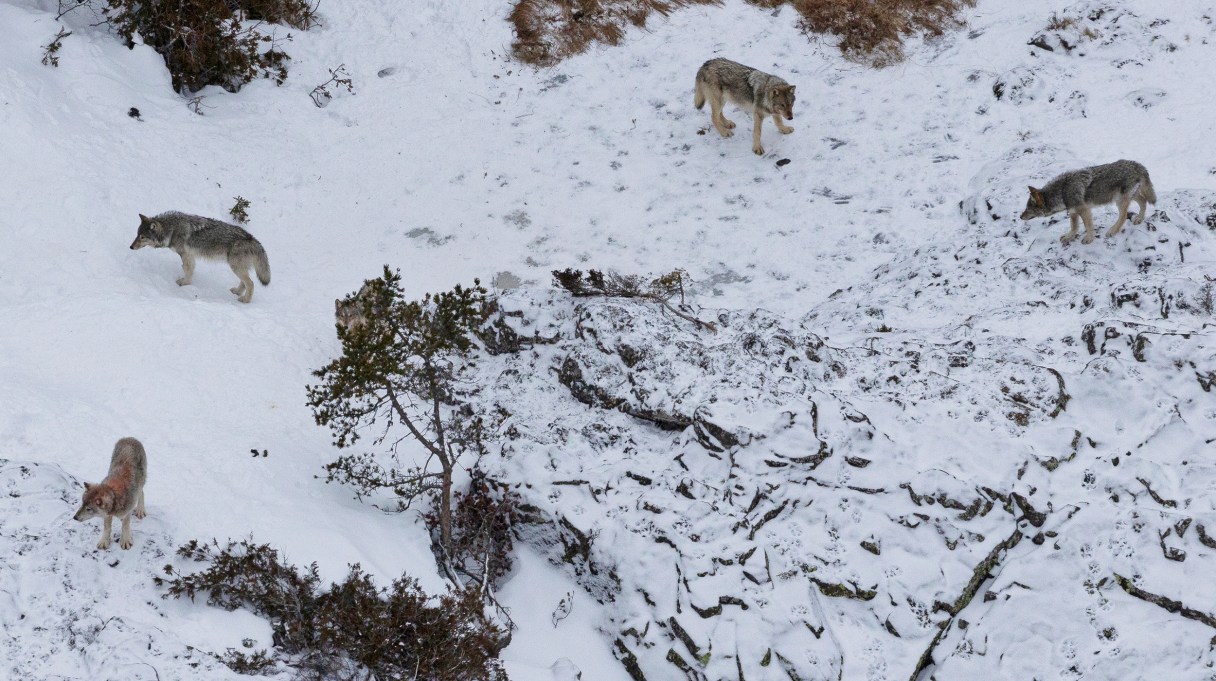
TRAVERSE CITY, Mich. (AP) — Gray wolves are thriving at Isle Royale National Park five years after authorities began a last-ditch attempt to prevent the species from dying out on the Lake Superior island chain, scientists said Wednesday.
Meanwhile, the park’s moose population continues a sharp but needed decline. Overpopulation of the lumbering mammals were causing their own starvation as they outstripped available balsam fir trees — their primary food during long, snowbound winters, Michigan Technological University biologists said.
The trends appear to justify federal officials’ 2018 decision to airlift mainland wolves to Isle Royale, the researchers said, arguing that the predators’ return is helping rebalance an ecosystem knocked off-kilter as their number dropped to just two.
The scientists’ annual report, based largely on aerial observations last winter, estimated the rebuilt population at 31 wolves— up from 28 last year. It said the wolves appeared to be forming three packs, with others wandering alone or in smaller groups. The moose total was roughly 967, down from 1,346 last year and 54% decline from about 2,000 in 2019. Ecologists are celebrating what they hope will be a healthier herd.
“It’s been hugely successful,” said study co-leader Sarah Hoy, a research assistant professor and animal ecologist. “That’s what everyone was hoping for.”