
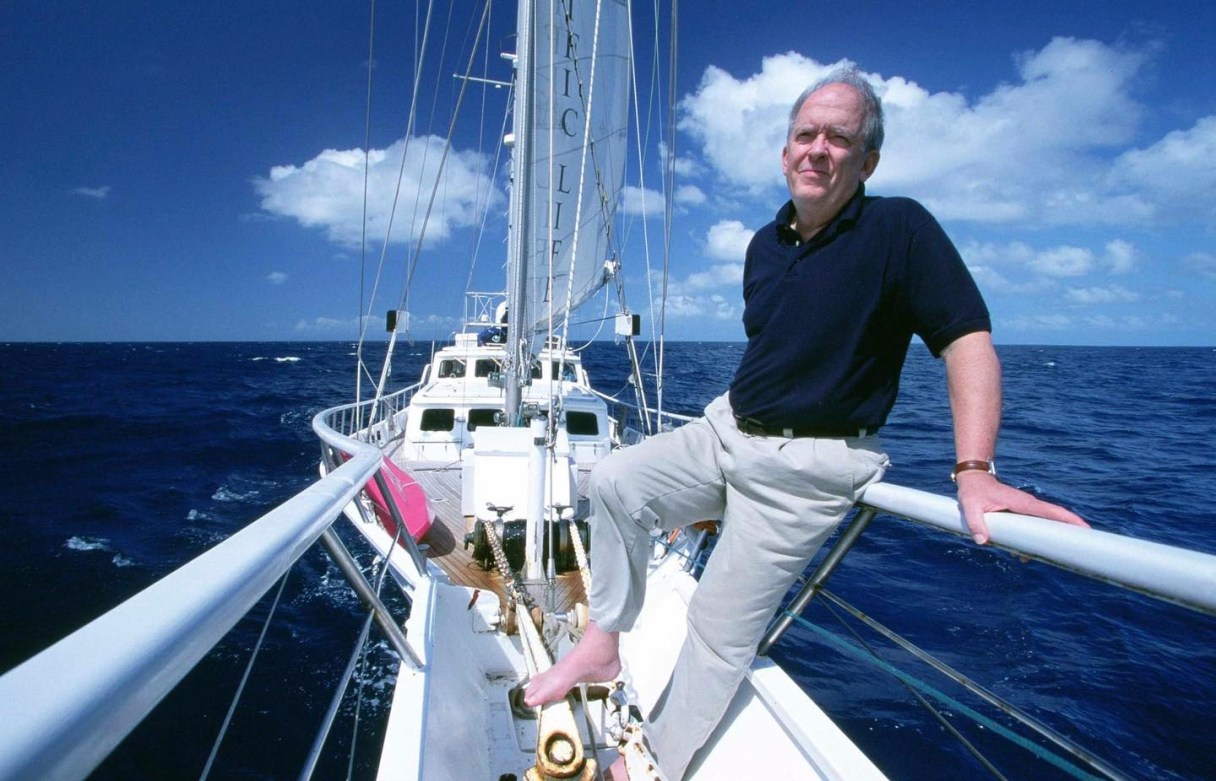
Roger Payne, the scientist who spurred a worldwide environmental conservation movement with his discovery that whales could sing, has died. He was 88.
Payne made the discovery in 1967 during a research trip to Bermuda in which a Navy engineer provided him with a recording of curious underwater sounds documented while listening for Russian submarines. Payne identified the haunting tones as songs whales sing to one another.
He saw the discovery of whale song as a chance to spur interest in saving the giant animals, who were disappearing from the planet. Payne would produce the album “Songs of the Humpback Whale” in 1970. A surprise hit, the record galvanized a global movement to end the practice of commercial whale hunting and save the whales from extinction.
Payne was cognizant from the start that whale song represented a chance to get the public interested in protecting an animal previously considered little more than a resource, curiosity or nuisance. He told Nautilus Quarterly in a 2021 interview that he first heard the recording in the loud engine room of a research vessel and knew almost instantly that the sounds were indeed whales.