
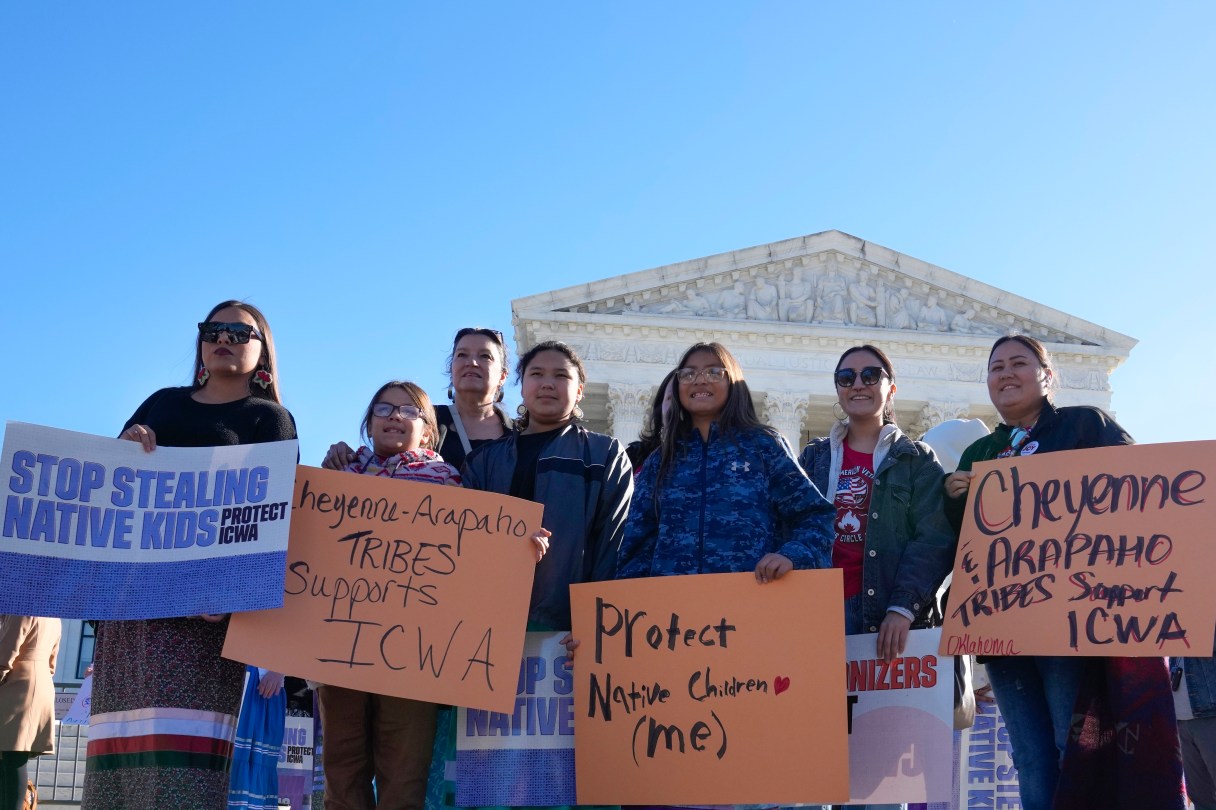
WASHINGTON (AP) — The Supreme Court on Thursday preserved the system that gives preference to Native American families in foster care and adoption proceedings of Native children, rejecting a broad attack from some Republican-led states and white families who argued it is based on race.
The court left in place the 1978 Indian Child Welfare Act, which was enacted to address concerns that Native children were being separated from their families and, too frequently, placed in non-Native homes.
Tribal leaders have backed the law as a means of preserving their families, traditions and cultures and had warned that a broad ruling against the tribes could have undermined their ability to govern themselves.
The “issues are complicated” Justice Amy Coney Barrett wrote for a seven-justice majority that included the court’s three liberals and four of its six conservatives, but the “bottom line is that we reject all of petitioners’ challenges to the statute.”
Justices Clarence Thomas and Samuel Alito dissented, each writing that Congress lacks the authority to interfere with foster care placements and adoptions, typically the province of the states. The decision, Alito wrote, “disserves the rights and interests of these children.”