
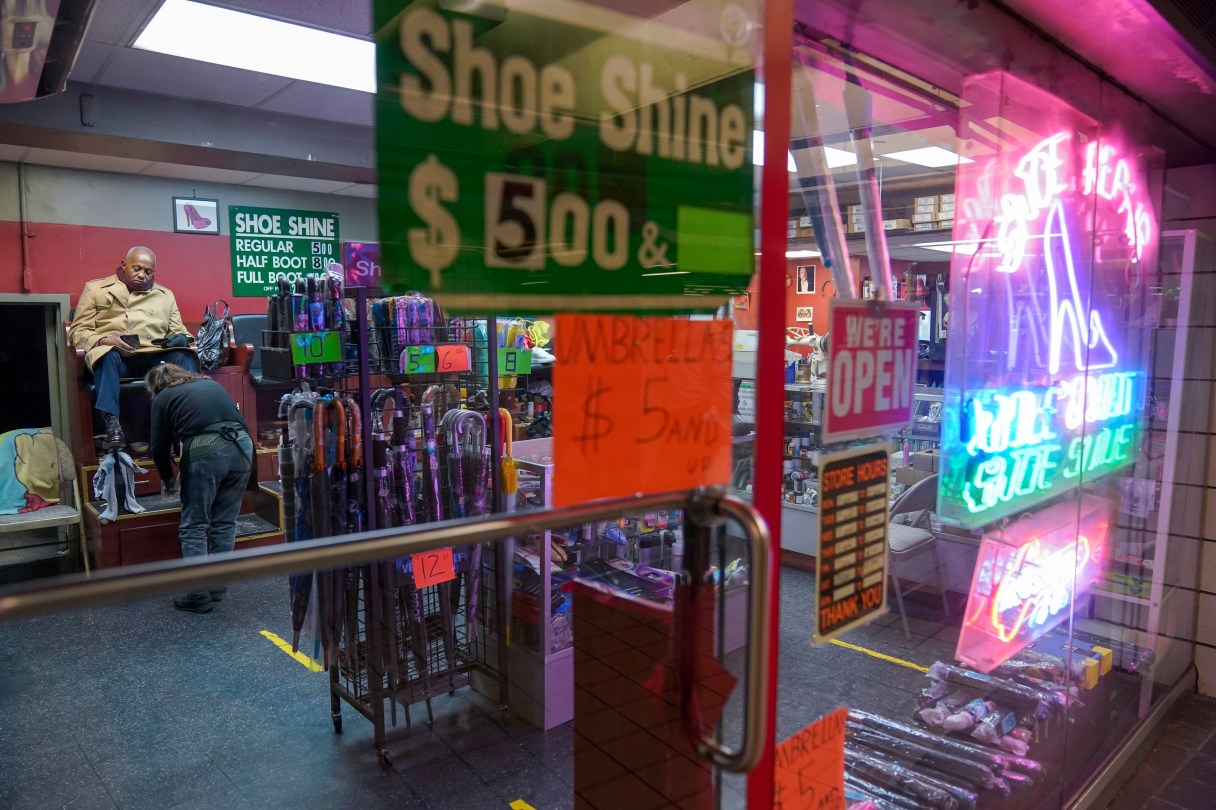
NEW YORK (AP) — On a recent winter weekday at Penn Station Shoe Repair and Shoe Shine, men hop onto shoeshine chairs and pull out newspapers and phones to read while shoeshiners get to work applying polish and elbow grease to loafers, boots and other leather shoes. When finished, these customers hand over $8 in cash at a counter where a sign reads “We’re not God, but we do save soles.”
Shoeshining has a vaunted history in the U.S. In the 1860s, Horatio Alger popularized the “rags-to-riches” American narrative with his book “Ragged Dick” about a shoeshiner (or “bootblack”) who works his way up to wealth. “Shoeshine boys” (and occasional girls) have subsequently been in countless movies and TV shows.
Today, the tradition of getting a quick polish from a rag-toting shoeshiner is greatly diminished, and many stands similar to the one in Penn Station have disappeared across the country. The decline has been exacerbated by the pandemic, remote working and the rise in popularity of more casual workwear when people did return to the office. SC Johnson, which makes the biggest shoe polish brand, Kiwi, even said in January that it had stopped selling the brand in the U.K. due to softening demand (they still sell it in the U.S.)
The last time the Census listed shoeshining as a discrete business was 2007, when only 30 establishments were counted. The more-encompassing shoe repair market has declined an estimated 23% between 2013 and 2023 to $307 million, according to market research firm IBISWorld. Shoe polish sales in 2022 totaled 27.3 million units, down 29% compared with 2019, according to figures from Nielsen, a sign of the changes brought on by the pandemic.