
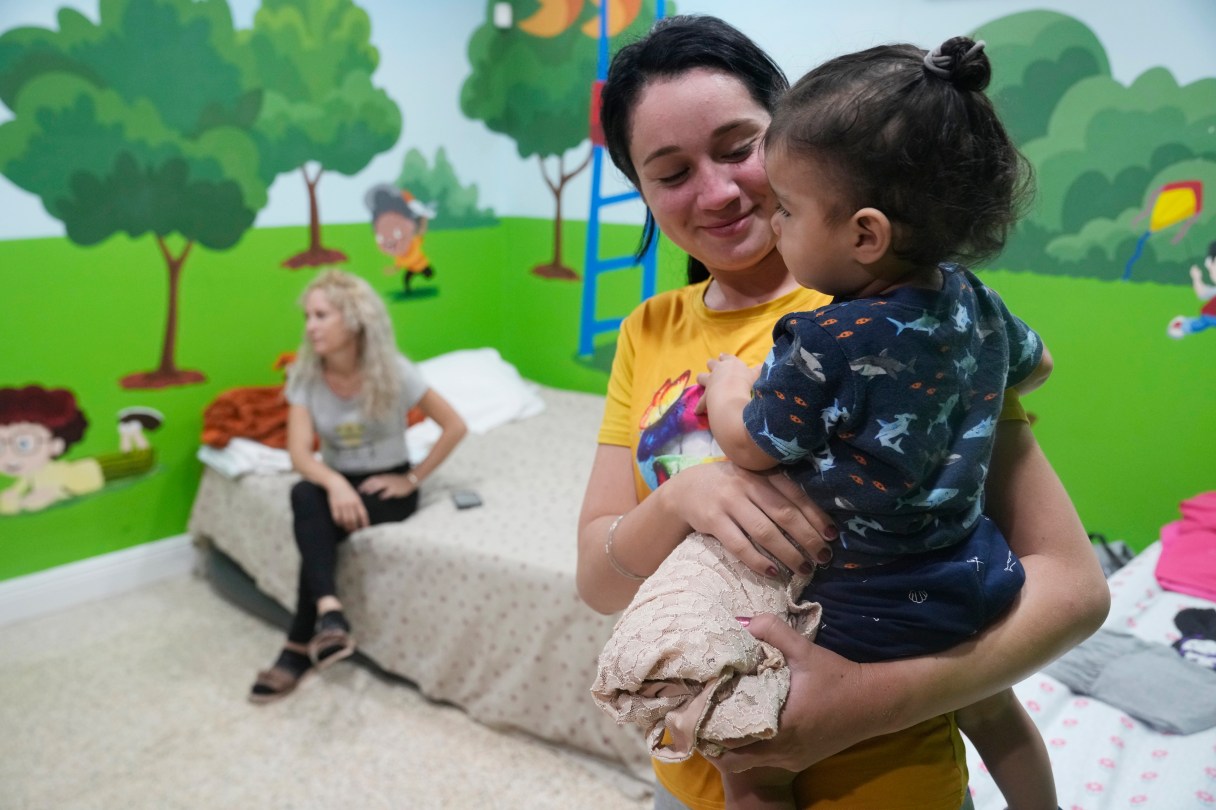
HIALEAH, Florida (AP) — A few days after selling all she had to flee Cuba with her three children on a crowded boat, Daneilis Tamayo raised her hand in praise and sang the rousing opening hymn at Sunday worship in this Miami suburb.
“The only thing that gave me strength is the Lord. I’m not going to lose my faith, whatever I might go through,” she said. The family has been sleeping in Iglesia Rescate’s improvised shelter since the promises of help made by her contact in the United States turned out to be “all lies.”
In the past 18 months, an estimated 250,000 migrants and asylum-seekers like Tamayo have arrived in the Miami area after being granted only precarious legal status that often doesn’t include permission to work, which is essential to building new lives in the U.S.
This influx is maxing out the migrant social safety net in Miami’s faith communities, long accustomed to integrating those escaping political persecution, a lack of freedoms and a dearth of basic necessities. Cubans were the first to arrive during the island’s communist revolution 60 years ago, and they’re still fleeing here alongside Haitians, Nicaraguans and Venezuelans.