
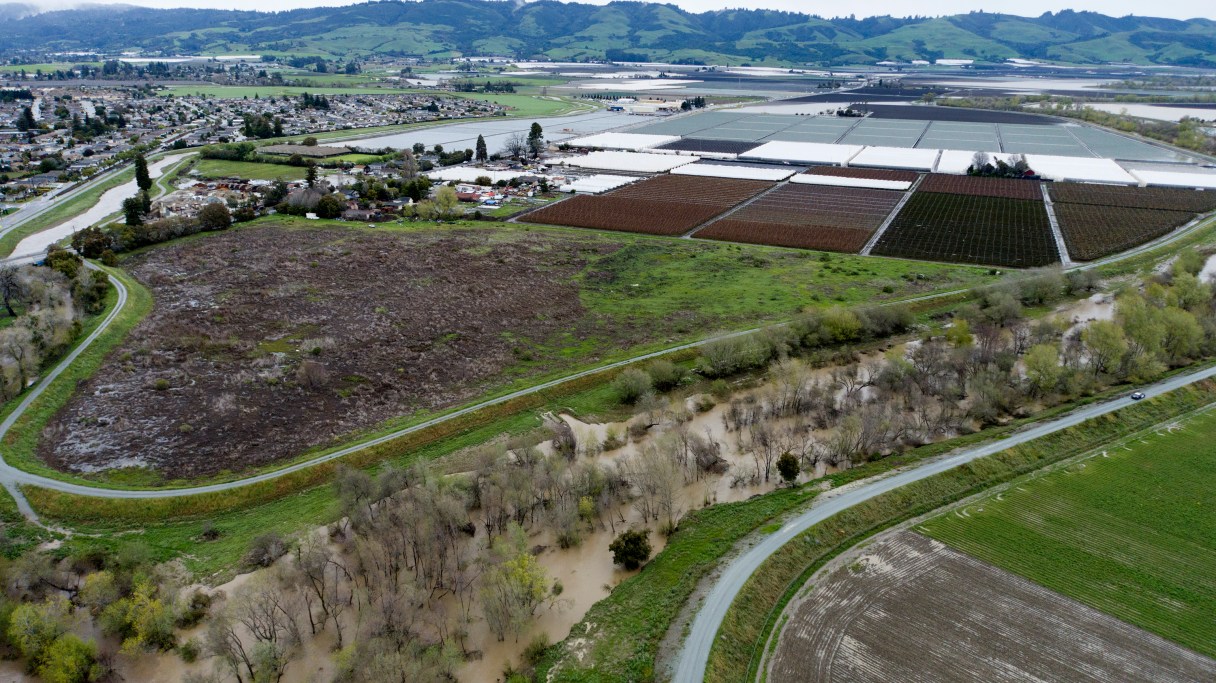
As river water gushed through a broken levee, thousands of people in a California farming town were forced to evacuate as their homes were flooded and businesses destroyed.
Yet another potential casualty of the powerful rainstorms that drenched coastal California: hundreds of acres of fresh strawberries slated for America’s supermarket shelves this summer.
Industry experts estimate about a fifth of strawberry farms in the Watsonville and Salinas areas have been flooded since the levee ruptured late Friday about 70 miles (110 kilometers) south of San Francisco and another river overflowed. It’s too soon to know whether the berry plants can be recovered, but the longer they remain underwater the more challenging it can get, said Jeff Cardinale, a spokesperson for the California Strawberry Commission.
“When the water recedes, what does the field look like — if it is even a field anymore?” Cardinale said. “It could just be a muddy mess where there is nothing left.”
For years, California’s farmers have been plagued by drought and battles over water as key sources have run dry. But so far this winter, the nation’s most populous state — and a key source of food for the nation — has been battered by 11 atmospheric rivers as well as powerful storms fueled by arctic air that produced blizzard conditions in the mountains.