
Monday, November 16, 2026Nov 16

Kurds remain biggest winners from US-led invasion of Iraq

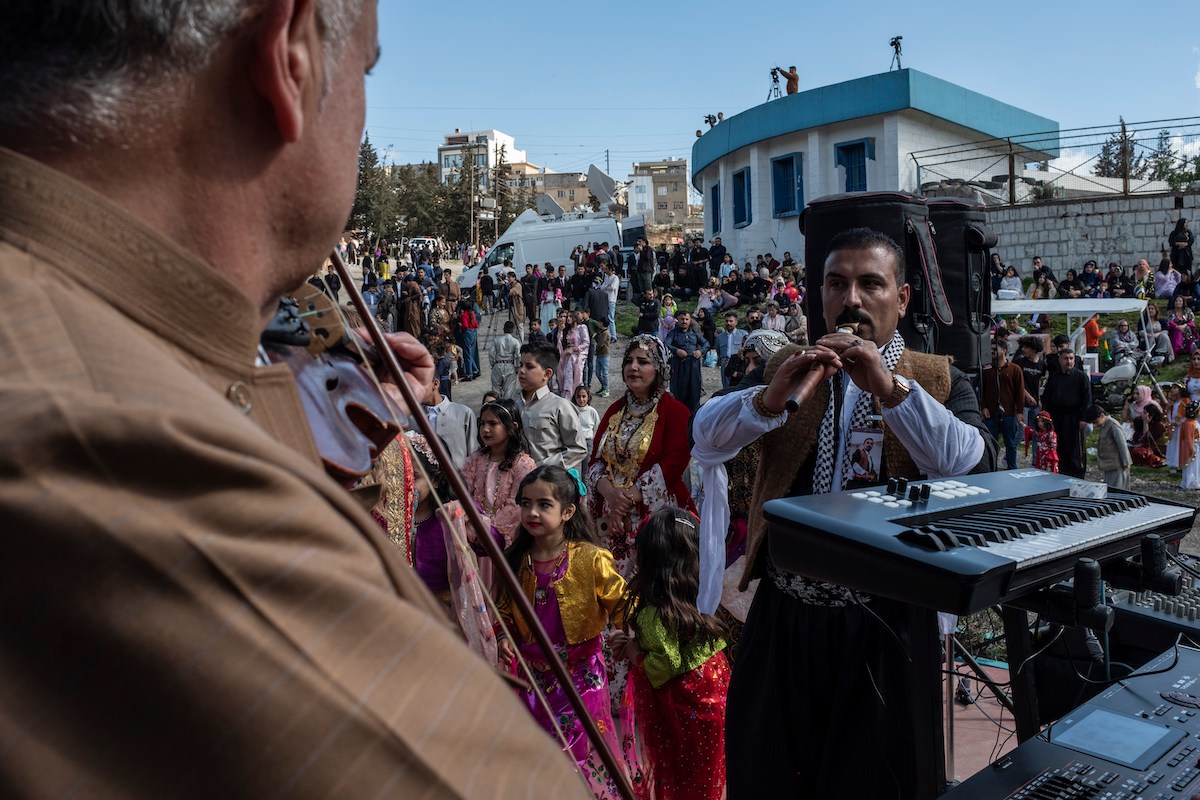
Iraqi Kurds celebrate Nowruz, a Persian New Year, in Sulaimaniyah, Iraq, Monday, March 20, 2023. The Kurdish in Iraq region won de facto self-rule in 1991 when the United States imposed a no-fly zone over it in response to Saddam's brutal repression of Kurdish uprisings. With American invasion 20 years ago much of Iraq fell into chaos, as occupying American forces fought an insurgency and as multiple political and sectarian communities vied to fill the power vacuum left in Baghdad. But the Kurds, seen as staunch allies of the Americans, strengthened their political position and courted foreign investments. (AP Photo/Hawre Khalid, Metrography)


IRBIL, Iraq (AP) — Complexes of McMansions, fast food restaurants, real estate offices and half-constructed high-rises line wide highways in Irbil, the seat of the semi-autonomous Kurdish region in northern Iraq.

Many members of the political and business elite live in a suburban gated community dubbed the American Village, where homes sell for as much as $5 million, with lush gardens consuming more than a million liters of water a day in the summer.

The visible opulence is a far cry from 20 years ago. Back then, Irbil was a backwater provincial capital without even an airport.

That rapidly changed after the 2003 U.S.-led invasion of Iraq that toppled Saddam Hussein. Analysts say that Iraqi Kurds — and particularly the Kurdish political class — were the biggest beneficiaries in a conflict that had few winners.