
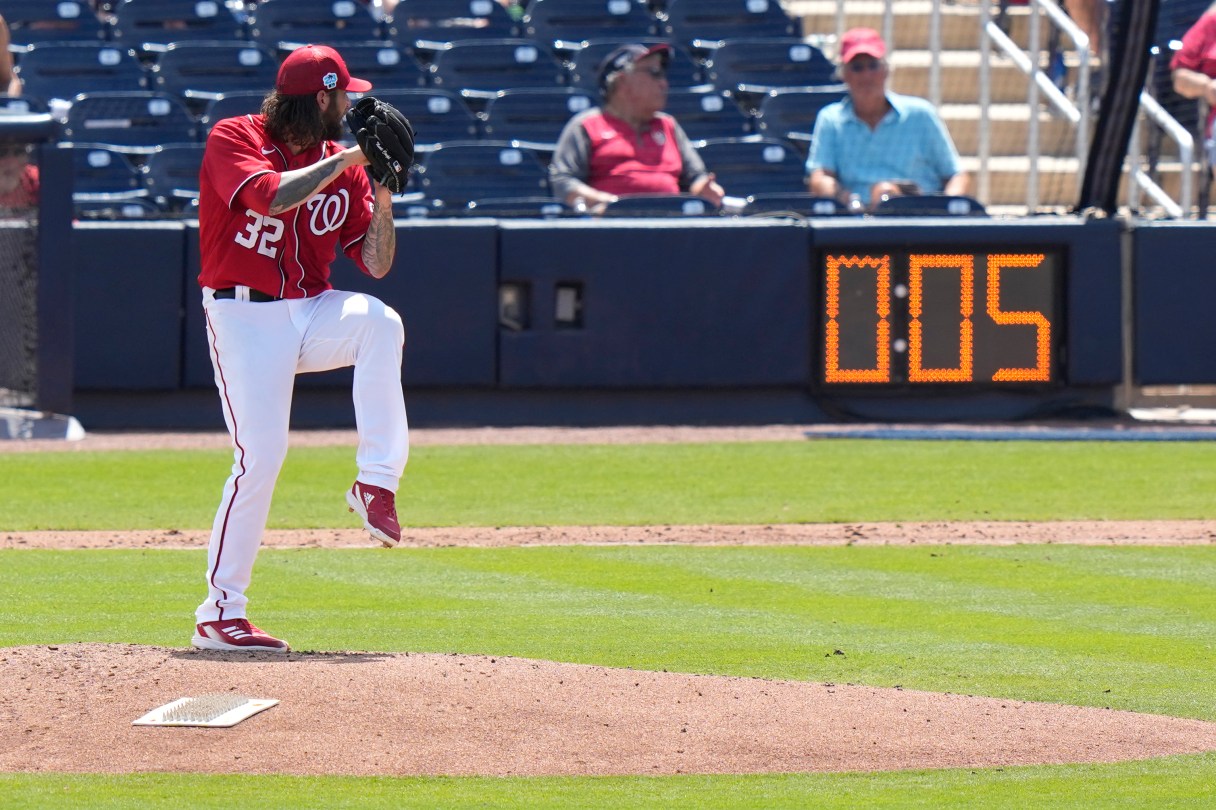

As the clock wound down, the 6-foot-4-inch player looked to his left and looked to his right before releasing … the pitch to the plate.
We’re not talking March Madness here. It’s baseball, baby.
The pitch clock measuring seconds between pitches is one of several new changes Major League Baseball (MLB), whose season opens today, has instituted this year. The idea, at least for the clock, is to speed up the games, which had lengthened to an average of three hours and 11 minutes in 2021.
Television and radio commercials extended the time, to be sure. But so did the fidgeting of a pitcher and the ministrations of a batter between pitches. Untighten the Velcro strap on the glove. Retighten it. Take a practice swing outside the box. Step in and take several more swings. Pull at the shoulders of the uniform. Step back out. Repeat.
Now, pitchers will have 15 seconds between pitches if nobody is on base and 20 seconds if there is. Batters must be in the box and ready for the pitch with at least eight seconds on the clock. They can call time only once per plate appearance.