
HOUSTON — The spirit of March Madness is strongest when the underdogs stir things up.
Saint Peter’s unprecedented run as a No. 15 seed to the Elite Eight a year ago, and 11th-seeded Loyola of Chicago’s journey to the 2018 Final Four, with Sister Jean along for the ride with the Ramblers. Butler making back-to-back title game appearances in 2011 and 2012, with the Bulldogs just missing out on a victory against blue blood Duke in the first one. Eighth-seeded Villanova efficiently shooting down mighty Georgetown to win it all in 1985.
Cinderellas are alluring, even if they shred brackets as they dance, and a massive upheaval this March has created an especially rare sight for the NCAA men’s basketball tournament: two teams from mid-major conferences playing for a spot in the national championship game.
When Florida Atlantic University of Conference USA faces San Diego State of the Mountain West in the first of two national semifinals Saturday night in Houston, it will mark just the second time two mid-major programs will meet in the Final Four since the bracket expanded to 64 teams in 1985. The first time was 2011, when Butler beat Virginia Commonwealth University in, you guessed it, Houston.
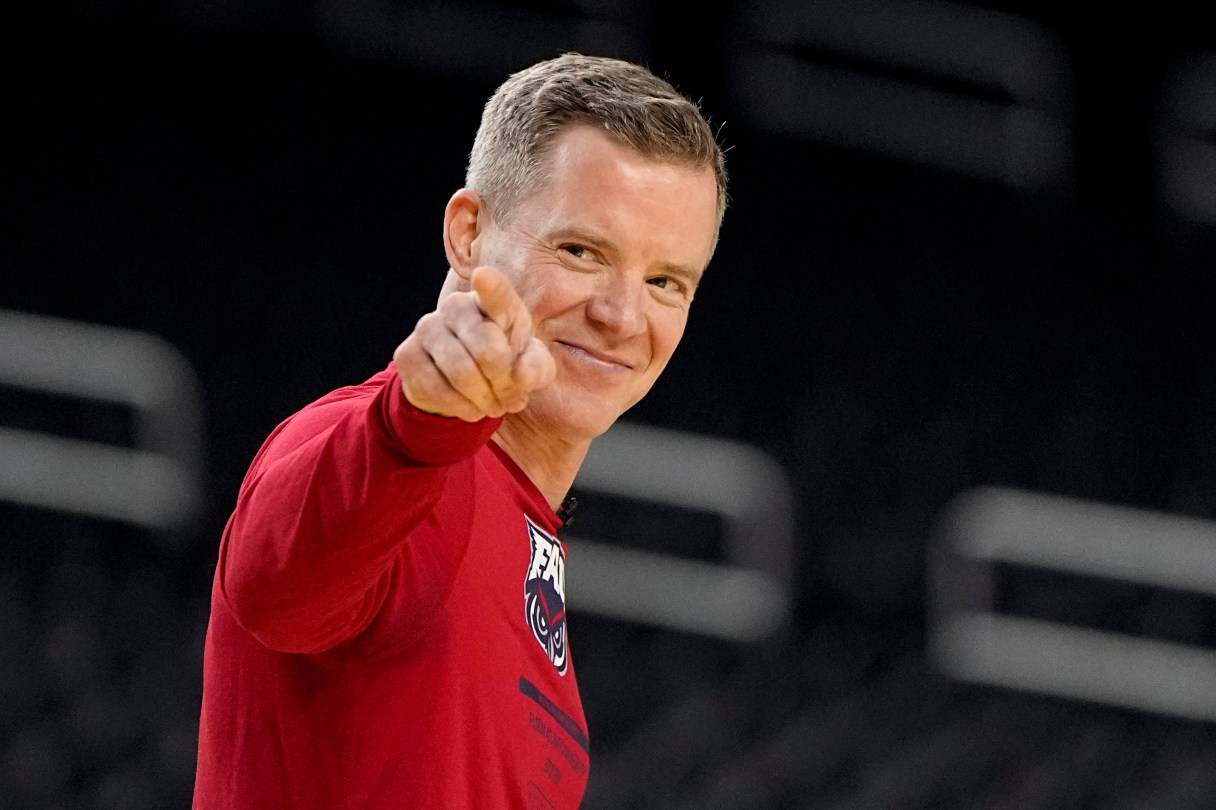
“I love to see it just because it’s an opportunity for those outside of the national spotlight to be on the big stage and show what they can do,” said FAU coach Dusty May, whose Owls (35-5) take on the Aztecs (31-6) at 6:09 p.m. Eastern.
The second Final Four game night pits two familiar names. The Big East’s University of Connecticut is vying for its fifth NCAA championship and Miami, though in its first Final Four, plays in the basketball-rich Atlantic Coast Conference and went to the Elite Eight a year ago.
While their presence still mostly fits the theme of a Final Four without a top-three seed, the Owls and Aztecs are the more unexpected guests to college basketball’s ultimate party.
FAU had never been to the NCAA tourney since joining Division I in 1993. The Owls flew through the regular season, earning their first AP Top 25 ranking while racking up 31 wins. They have continued to soar in the NCAA tourney, taking out Memphis and fellow March darling Fairleigh Dickinson the first weekend, then fending off physical tests against Tennessee and Kansas State to reach their first Final Four.
“We’re not scared of any challenge,” FAU guard Bryan Greenlee said. “We love playing under the bright lights.”
So do the Aztecs. San Diego State became a mid-major power under Steve Fisher, earning six straight NCAA tourney appearances from 2009-15. His former longtime assistant, Brian Dutcher, has pushed the Aztecs to unprecedented heights for the program since taking over; they were likely headed toward a No. 1 seed before the coronavirus pandemic canceled the 2020 tourney.
The defensive-minded Aztecs may not play a pretty game, but they make teams play their game. In the tourney, they have held their opponents to 17% shooting from 3-point range and an average of 57.3 points per game.
Said Dutcher: “We believed if we did what we were supposed to do, we could make a Final Four, we could win a national championship.”
Slipper doesn’t fit
When UConn was given a No. 4 seed on Selection Sunday three weekends ago, nobody raised too much of a stink.
Four wins later — after no opponent came within 15 points of the Huskies — it’s becoming apparent this is a team that might have been overlooked. Or underestimated, particularly when the program’s history is factored in.
As the Huskies (29-8) prepare to take on Miami (29-7), they’re just two wins away from their fifth title, all since 1999. No other school has won more over that span.
“A lot of things happened,” coach Dan Hurley said in explaining how the Huskies’ profile went from world beaters to middle of the pack in midseason.
Most of that had to do with a string of six losses in eight games starting on New Year’s Eve. It was a dry spell that coincided, he said, with a stretch where “we didn’t guard anybody for two weeks.” And now?
“We left that behind,” Hurley said. “In November, December, February, March, we’ve been as good as anybody.”
Like UConn, there’s an argument to be made for the Hurricanes having been seeded lower than they should have. Not that it matters much now.
“How your season starts is not really reflective of how you might be in February and March,” Miami coach Jim Larrañaga said. “And it’s an impossible task for the committee to seed one through 68 and for everything to fall into place.”
With all of the semifinalists’ seeds adding up to a whopping 23, it’s the second highest at a Final Four since seeding began in 1979. But in a sign the Huskies aren’t fooling anyone anymore, UConn is a prohibitive 10-13 favorite to win it all, according to FanDuel Sportsbook.
Edey an easy pick
Purdue center Zach Edey was a nearly unanimous choice as the AP men’s college basketball player of the year, receiving all but one vote from a 58-person media panel, with Indiana’s Trayce Jackson-Davis getting the other. Voting was done before the NCAA tourney, and the honor was announced Friday.
“It kind of validates your work a little bit,” Edey said. “The last three years I’ve played here, I’ve seen my game grow every year. AP player of the year is a great feeling; it just kind of stinks the way the season ended.”
That ending came in the NCAA’s first round, when Purdue lost to Fairleigh Dickinson, joining Virginia in 2018 as the only No. 1 seeds to lose to a No. 16.
Before that, Edey dominated. The 7-foot-4 Canadian was a unanimous AP All-American and the Big Ten player of the year after finishing sixth nationally in scoring (22.3 points per game), second in rebounding (12.8 per game) and first in double-doubles (26).
Edey shot 62% from the floor and averaged 2.1 blocks per game. He is the first player since Navy’s David Robinson in 1985-86 to have at least 750 points, 450 rebounds and 50 blocked shots in a season.
Smart is top coach
Shaka Smart, who led Marquette to a sweep of the Big East regular-season and tournament titles after the Golden Eagles were picked ninth in the 11-team conference, is the AP men’s basketball coach of the year.
The honor was announced Friday, with Smart receiving 24 of 58 votes to edge Kansas State’s Jerome Tang, who received 13 votes before guiding the Wildcats to the Elite Eight, and Houston’s Kelvin Sampson, who received 10 votes before taking the Cougars to the Sweet 16.
Smart’s team was a No. 2 seed but got knocked out in the second round by Michigan State.
“I’m very grateful to win this award,” Smart said, “but obviously it always comes back to the guys you have on your team.”