
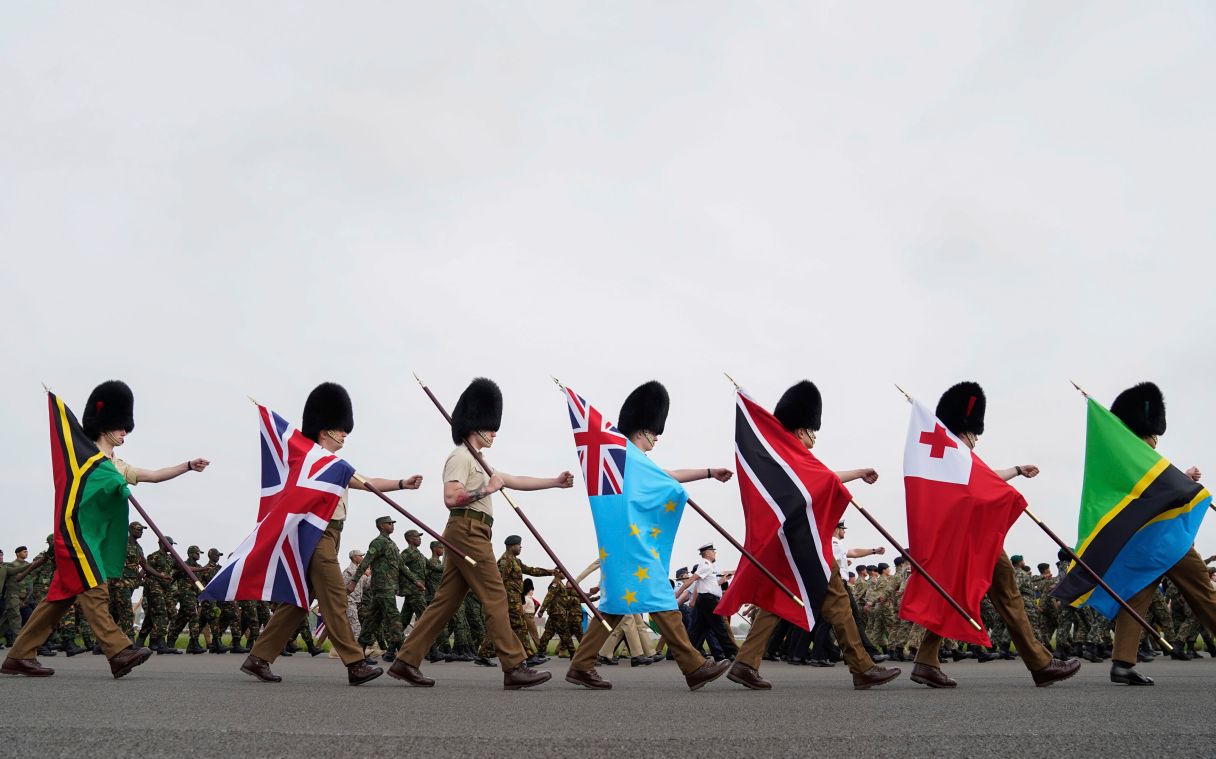
LONDON (AP) — When King Charles III is crowned on Saturday, soldiers carrying flags from the Bahamas, South Africa, Tuvalu and beyond will march alongside British troops in a spectacular military procession in honor of the monarch.
For some, the scene will affirm the ties that bind Britain and its former colonies. But for many others in the Commonwealth, a group of nations mostly made up of places once claimed by the British Empire, Charles’ coronation is seen with apathy at best.
In those countries, the first crowning of a British monarch in 70 years is an occasion to reflect on oppression and colonialism’s bloody past. The displays of pageantry in London will jar especially with growing calls in the Caribbean to sever all ties with the monarchy.
“Interest in British royalty has waned since more Jamaicans are waking to the reality that the survivors of colonialism and the holocaust of slavery are yet to receive reparatory justice,” the Rev. Sean Major-Campbell, an Anglican priest in the Jamaican capital, Kingston, said.
The coronation is “only relevant in so far as it kicks us in the face with the reality that our head of state is simply so by virtue of biology,” Major-Campbell added.