
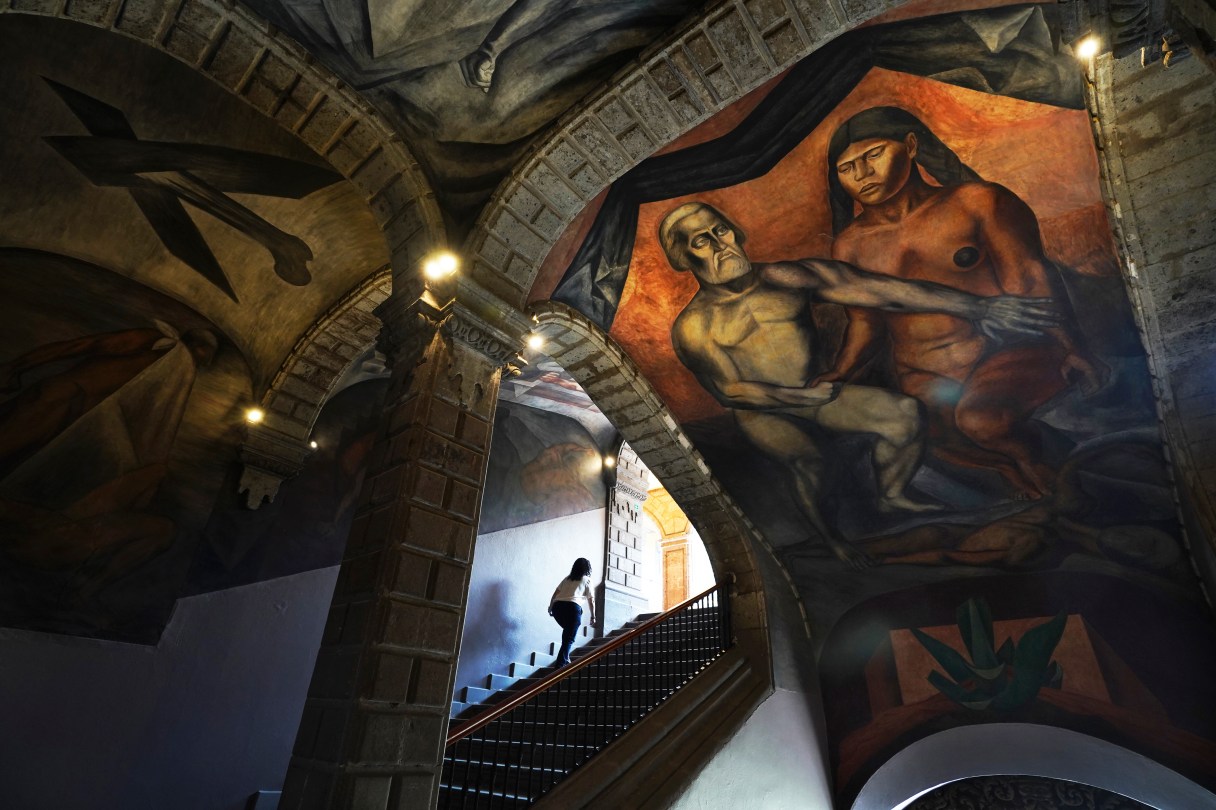
MEXICO CITY (AP) — Across the main entrance of a former Jesuit college in the heart of Mexico City, a bright-colored mural depicting Our Lady of Guadalupe represents both the Indigenous religiosity and the Christianity that shaped the culture of post-colonial Mexico.
The mural was created by Mexican artist Fermín Revueltas between 1922 and 1923, when the walls of Antiguo Colegio de San Ildefonso became the canvases for the country’s emerging muralist movement.
To honor the art of Revueltas, Diego Rivera and José Clemente Orozco, who among others led the artistic movement a century ago, the baroque building that currently serves as a museum hosts an exhibition that reflects on the significance of their monumental art.
The exhibit, which is regularly updated, recently welcomed a contemporary mural created by Mexican craftsmen who were inspired by the old masters and will run through June 12. That mural, called “La Muerte de las Culturas” (“The Death of Cultures”), depicts how Mexicans of African descent struggled for freedom and equality, and how the community’s identity was forged from that.