
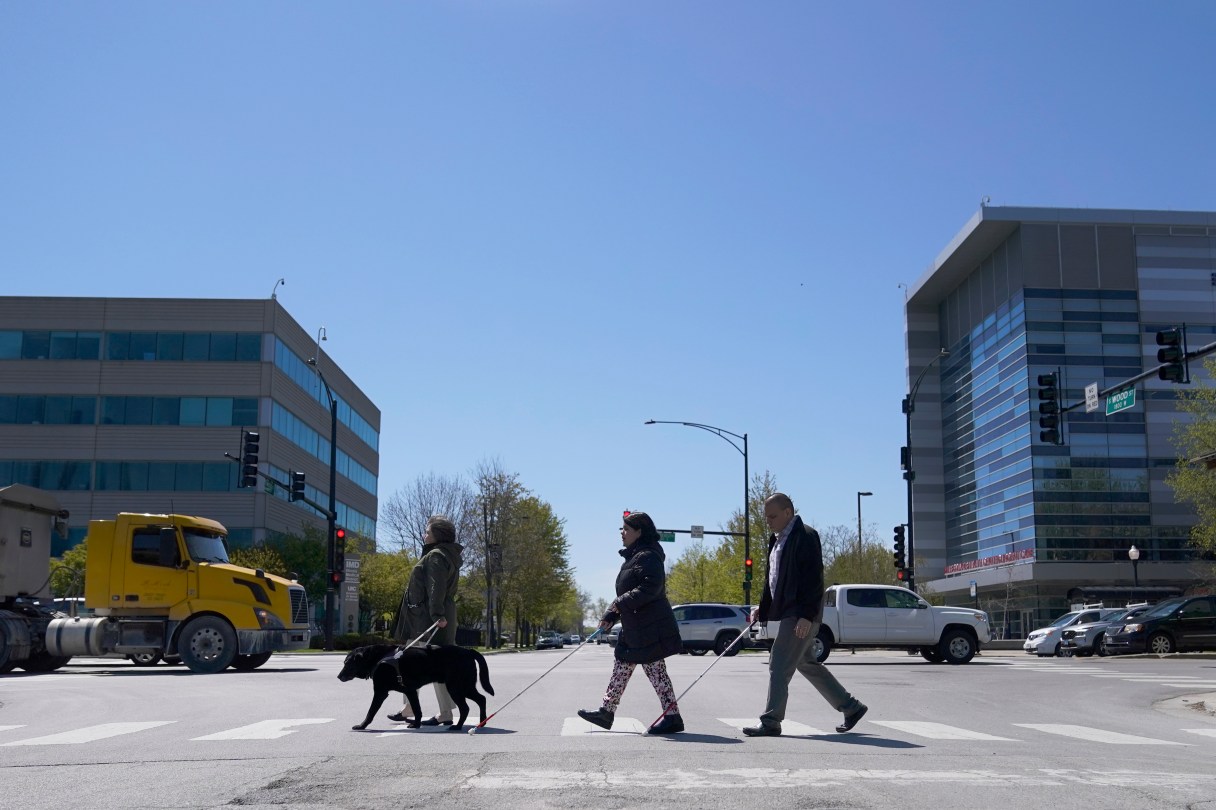
CHICAGO (AP) — After a retinal disease left him legally blind, architect John Gleichman was struck by a taxicab while walking home near Chicago’s Lincoln Park Zoo — at the same intersection where a 4-year-old girl was killed by a hit-and-run driver years earlier.
Although Maya Hirsch’s death in 2006 ignited a citywide crusade for pedestrian safety improvements, almost all the electronic upgrades since then have been for people who can see. Nearly 3,000 Chicago intersections are now equipped with visual crossing signals, yet fewer than three dozen include audible cues.
In a landmark victory for blind residents challenging the accessibility of a major city’s signalized crosswalks, a federal judge in March ruled in a class-action lawsuit that such disparity in the nation’s third-largest city violates the Americans with Disabilities Act.
“Every time I go out to go downtown for a meeting, I have to think I could get hit today and not make it home,” said Gleichman, 65, who has been struck four times times by vehicles while navigating the city with his white cane since being diagnosed as legally blind in 2005. He considers himself fortunate to have escaped serious injury each time.
A future hearing could decide how many audible crossing signals Chicago must install, but a similar case in New York City suggests it could be substantial. A federal judge there appointed an independent monitor and in December 2021 gave officials a decade to gradually make at least 10,000 of its approximately 13,000 signalized intersections accessible to blind pedestrians. It’s already well ahead of schedule.