
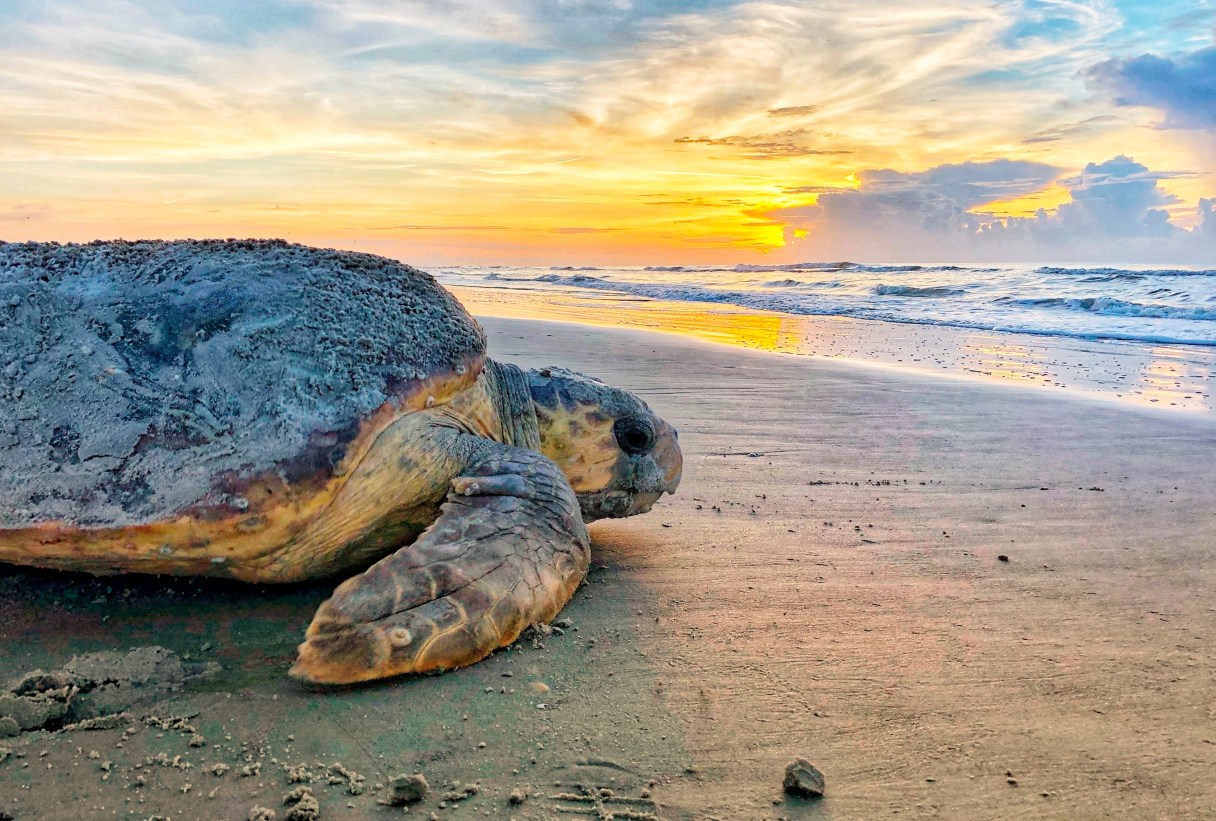
SAVANNAH, Ga. (AP) — A U.S. agency has agreed to an in-depth environmental study into whether dredging a Georgia shipping channel in the spring and summer would threaten rare sea turtles nesting on nearby beaches — a review demanded by conservationists who sued to stop the project.
Georgia conservation group One Hundred Miles moved to dismiss its lawsuit against the Army Corps of Engineers after the agency announced Friday that it would voluntarily conduct the study. The group sued in December, asking a U.S. District Court judge to order the Corps to produce such a report.
“The Corps has now committed to what we’ve asked for, to go back and review the science,” Catherine Ridley, a One Hundred Miles vice president, said Monday. “The science is clear: Spring and summer dredging puts Georgia’s sea turtles and decades of conservation progress at risk.”
Environmentalists and the Army Corps have battled since 2021 over the agency’s plan to end a policy that for three decades has prohibited the dredging of accumulated sand and mud from harbors in Georgia and the Carolinas during the nesting season for sea turtles.
In place since 1991, the seasonal limits are intended to protect sea turtles from being killed and maimed by the vacuum-like suction pumps of hopper dredges during the warmer months, when female turtles are most abundant near Southern beaches. Conservationists credit that policy with helping threatened and endangered turtle species begin a fragile rebound.