
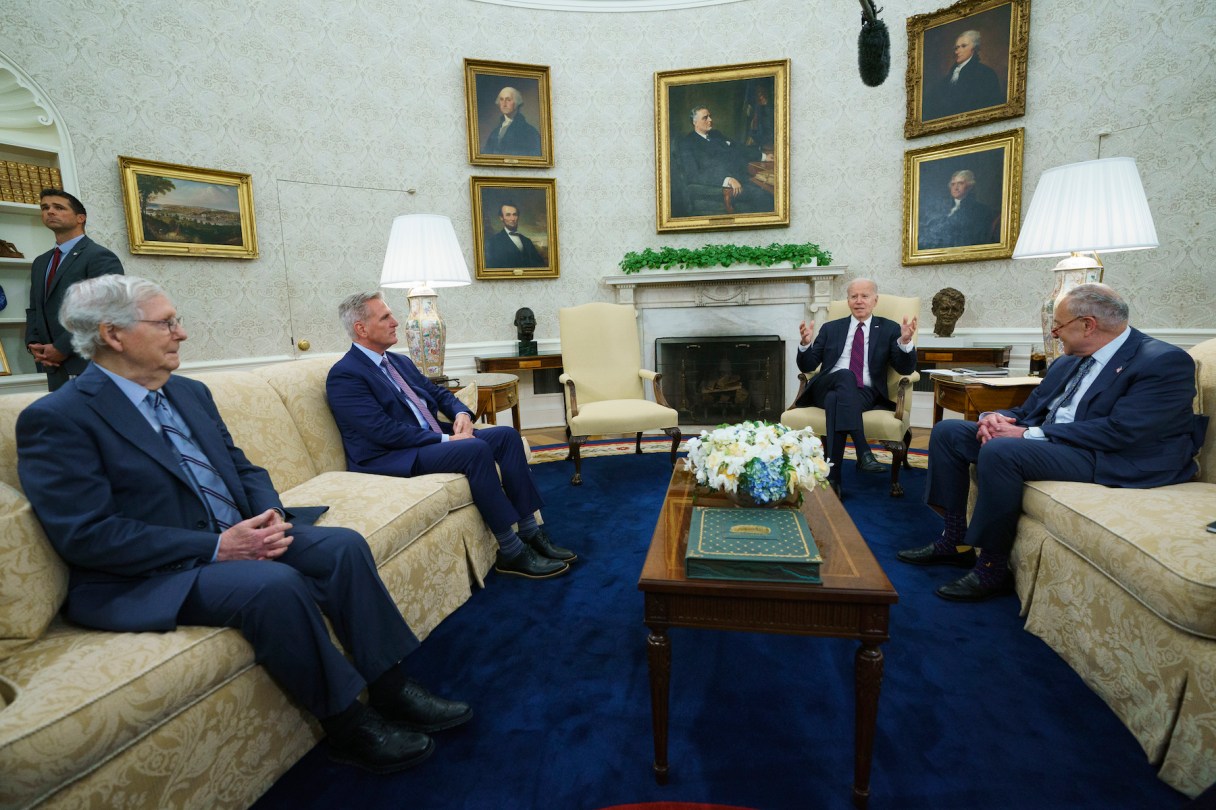
The debt limit is an archaic relic of World War I that should have been abolished long ago, but lives on and emerges periodically to threaten the U.S. economy like a zombie from The Living Dead. The current cap on Treasury borrowing was reached in January and if not increased before the cash runs out, the U.S. economy could go in the tank.
Perhaps responding to the Hollywood writers’ strike, Congress is screening reruns of its greatest debt ceiling hits, resembling in turn High Noon, The Thing, or Blazing Saddles. And the programming is quickly losing its entertainment value.
Recall that the debt limit has nothing to do with spending. It relates only to America’s willingness to pay the bills it already owes and our desire to maintain a decent national FICO score. Failure would be catastrophic.
Ironically, the debt limit was originally intended to make borrowing easier, not to use as a cudgel. Before 1917, each new bond issue had to be authorized by an act of Congress, an exceedingly inefficient mechanism as America entered the war, so legislators granted the Treasury authority to borrow as needed up to a prescribed limit to finance the war. This ceiling has been routinely increased over 100 times, yet only in recent decades has the existential threat of default been exploited as leverage.
In December 2022, Congress passed an appropriations bill authorizing the government to spend $6.2 trillion during fiscal 2023. Before the vote, the Congressional Budget Office projected tax revenues of just $4.8 trillion. Members of Congress know the definition of “deficit” and understood that their action required the U.S. Treasury to borrow $1.4 trillion to cover the shortfall.