
Wednesday, November 25, 2026Nov 25

California condors confront bird flu in flight from extinction

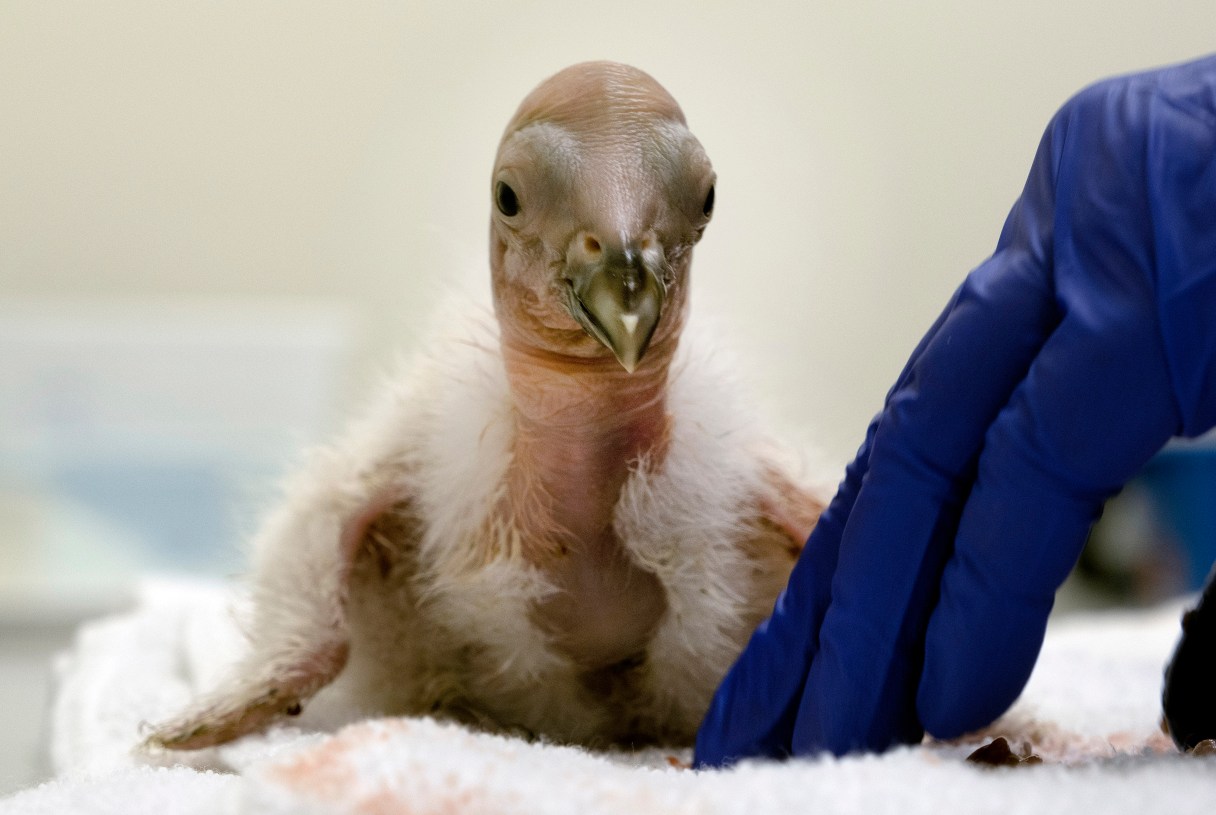
Debbie Sears, a condor keeper, takes Condor chick LA1123 from her temperature controlled enclosure for an afternoon feeding on Tuesday, May 2, 2023, at the Los Angeles Zoo facility. The chick hatched Sunday April 30, 2023. The latest breeding efforts to boost the population of North America's largest land bird, an endangered species where there are only several hundred in the wild. Experts say say the species cannot sustain itself without human intervention. More birds still die in the wild each year than the number of chicks that are born, both in nature and in captivity, and survive annually. (AP Photo/Richard Vogel)

LOS ANGELES (AP) — The California condor is facing the deadliest strain of avian influenza in U.S. history, and the outbreak could jeopardize the iconic vulture with its 10-foot (3.05-meter) wingspan decades after conservationists saved the species from extinction.

But nine newly hatched chicks, covered in downy white feathers, give condor-keepers at the Los Angeles Zoo hope that the endangered population of North America’s largest soaring land birds will once again thrive after 40 years of aggressive efforts.

With fewer than 350 condors in the wild — in flocks that span from the Pacific Northwest to Baja California, Mexico — the historic outbreak means ongoing breeding-in-captivity and re-wilding programs like the LA Zoo’s remain essential.

Over the past year and a half, millions of birds across the U.S. have died from avian flu, including more than 430 bald eagles and some 58 million turkeys and commercial chickens that were euthanized to prevent the spread of the disease. Bird flu is further suspected in the deaths of dozens of seals off the coast of Maine last summer.

Already, the strain is believed to have caused the deaths of at least 22 California condors in Arizona, which were part of a flock in the Southwest that typically accounts for a third of the species’ entire wild population.