
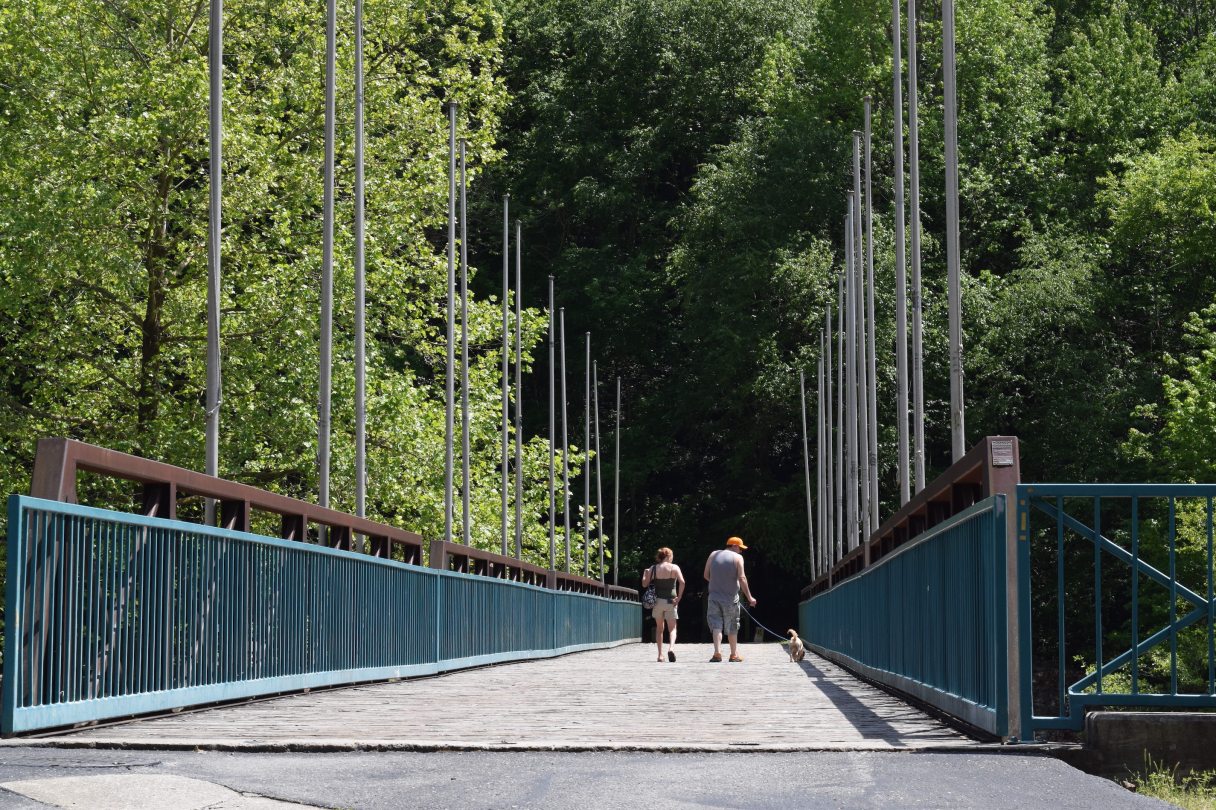

COPPERHILL, Tenn. — The public and river stakeholders will have a voice in the future of the Ocoee Whitewater Center in the Cherokee National Forest, where an administration building burned to the ground in April 2022.
The U.S. Forest Service wants the public and river users to help guide the future of the center and its grounds, taking a role in its rise from the ashes through what federal officials call a collaborative planning process.
“We are excited to work together with stakeholders and the public to create a vision for the future of the Ocoee Whitewater Center,” Cherokee National Forest forest supervisor Mike Wright said in a news release. “The original facility was built as an Olympic venue but became an important landmark and destination for the local community, state and the Forest Service. There is tremendous interest in the future of the whitewater center, so we are taking a collaborative approach as we together plan for the center’s next chapter.”
A contract for an assessment of the recreation site, including the whitewater course, will be completed, followed by a planning process involving landscapers, architects, whitewater course designers, engineers and more, according to federal officials.