
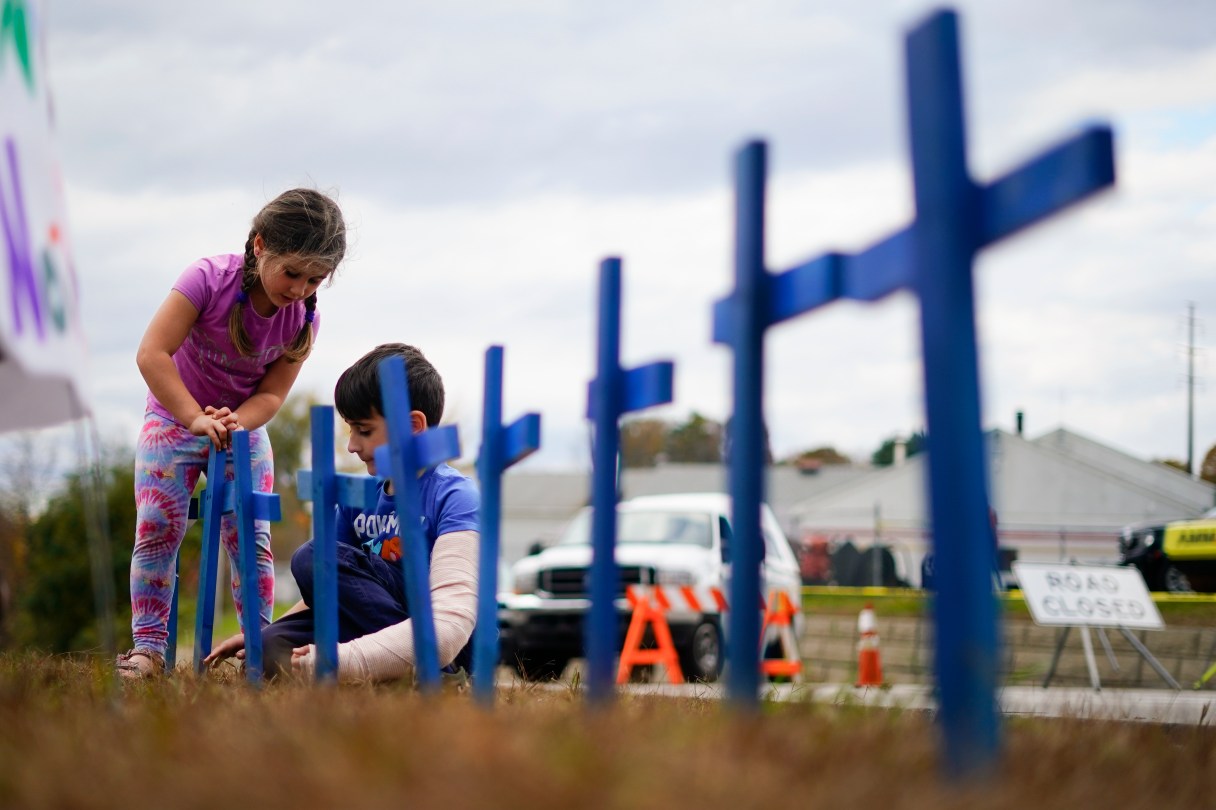
LEWISTON, Maine (AP) — A history of mental illness. An array of weapons. Law enforcement knew about his potential for violence. But he was still able to own guns and commit the deadliest mass shooting in Maine’s history.
One week later, many in Lewiston and nationwide are asking: Why did he have guns at all?
Robert Card was identified by authorities as a person of interest four hours after he shot and killed 18 people and wounded 13 others at a bowling alley and a bar in Maine’s second-largest city. But Card, who was found dead two days after his rampage, had been well known to law enforcement for months.
“This is the clearest-cut case I’ve seen where an extreme risk protection order could have saved all these lives,” said Mark Collins, federal policy director at the gun-violence prevention group Brady, referring to measures often called “ red flag” laws, which Maine does not have.