

Friday, November 13, 2026Nov 13

Drought deepens across Chattanooga region as forecast calls for relief Monday, Tuesday

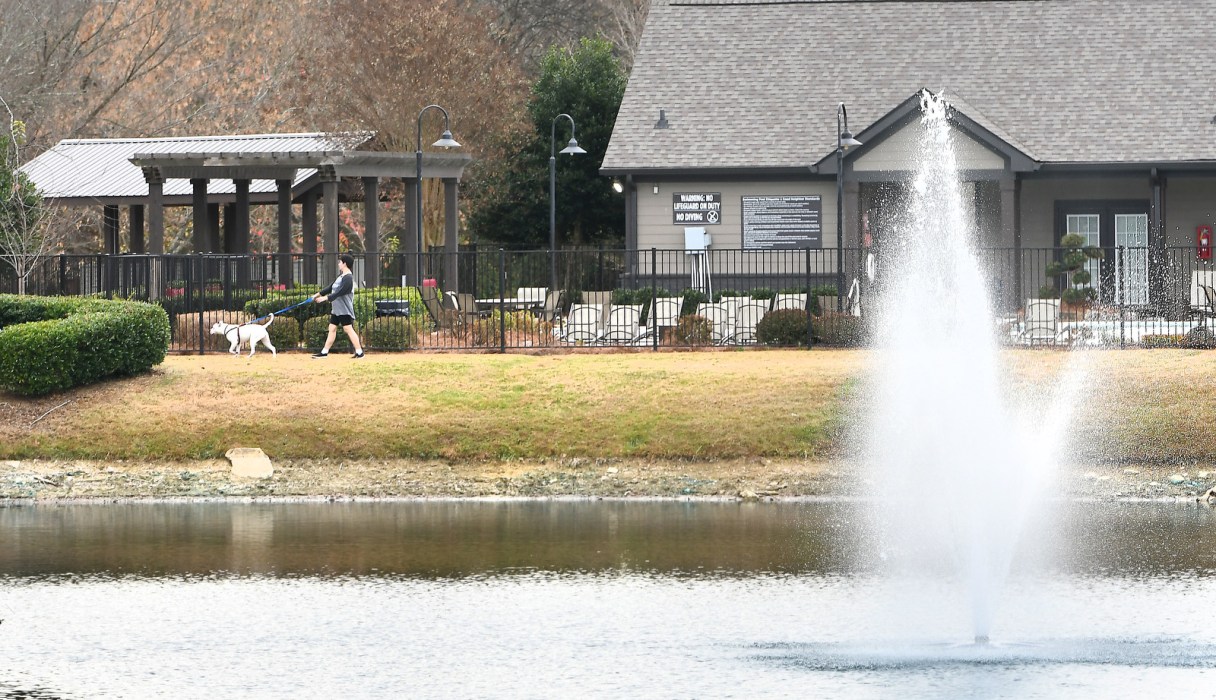
Staff Photo by Robin Rudd / The drought reduced level of the pond at Parc 1346 Apartments in East Brainerd is seen as a stony ring Friday. The U.S. Drought Monitor shows all of Hamilton, Bradley, Marion, Dade, Walker, Catoosa, Whitfield and Jackson, Ala., counties now in exceptional drought -- the deepest possible -- and the rest of the tristate Chattanooga region's counties are in extreme drought.
Staff Photo by Robin Rudd / The drought reduced level of the pond at Parc 1346 Apartments in East Brainerd is seen as a stony ring Friday. The U.S. Drought Monitor shows all of Hamilton, Bradley, Marion, Dade, Walker, Catoosa, Whitfield and Jackson, Ala., counties now in exceptional drought -- the deepest possible -- and the rest of the tristate Chattanooga region's counties are in extreme drought. Staff Photo by Robin Rudd / The drought reduced level of the pond at Parc 1346 Apartments in East Brainerd is seen as a stony ring Friday. The U.S. Drought Monitor shows all of Hamilton, Bradley, Marion, Dade, Walker, Catoosa, Whitfield and Jackson, Ala., counties now in exceptional drought -- the deepest possible -- and the rest of the tristate Chattanooga region's counties are in extreme drought.


Friday’s precipitation only stirred the parched dust a little and provided no relief for the region’s ongoing drought, but forecasters said there’s hope relief is coming Tuesday.

The U.S. Drought Monitor map for the past week shows the large, dark brown bull’s-eye of exceptional drought covering all of Hamilton, Bradley, Marion, Dade, Walker, Catoosa, Whitfield and Jackson counties in the tristate Chattanooga region.

Exceptional drought is the worst level identified on the Monitor’s map; the rest of the region’s counties are in extreme drought, the second-worst level.

“Chattanooga and the surrounding areas have been experiencing a rough time over the past few weeks,” Elijah Worley, chief drought officer at the Tennessee Climate Office at East Tennessee State University in Johnson City, said via email. “That area was the first in the state to start showing depictions of exceptional drought.”