
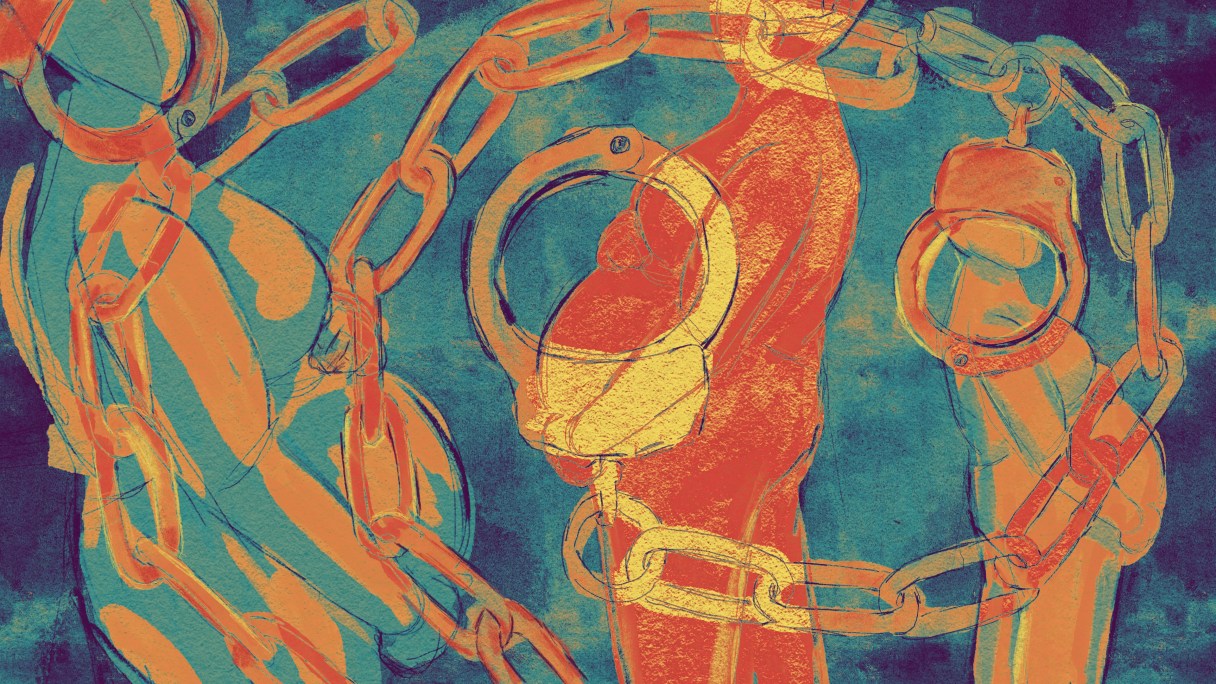
Ashley Denney was about seven months pregnant in 2022 when police handcuffed her during an arrest in Carroll County, Georgia. Officers shackled her even though the state bans the use of restraints on pregnant women in custody beginning at the second trimester.
In early July, she said, it happened again.
“I asked the officer, ‘Please, pull over. I’m not supposed to be handcuffed. I’m pregnant,'” Denney said. At the time, she was near the end of her first trimester, though she believed her pregnancy was more advanced. Arresting officers did not know she was pregnant, said an official with the Carrollton Police Department who reviewed video footage of that arrest.
Medical groups, such as the American College of Obstetricians and Gynecologists, widely condemn shackling pregnant people, which they argue is unethical and unsafe because it increases the risk of falls, hinders medical care and endangers the fetus.
About 40 states, including Georgia, have passed laws limiting the use of restraints such as handcuffs, leg restraints and belly chains on pregnant people in law enforcement custody, according to a Johns Hopkins University research group. Laws that seek to improve treatment of pregnant women in jails and prisons have drawn bipartisan support, including the First Step Act, which was passed in 2018 and limits the use of restraints on pregnant people in federal custody. Yet advocates said they continue logging reports of law enforcement agencies and hospital staffers ignoring such prohibitions and allowing pregnant people to be chained, handcuffed or otherwise restrained.