
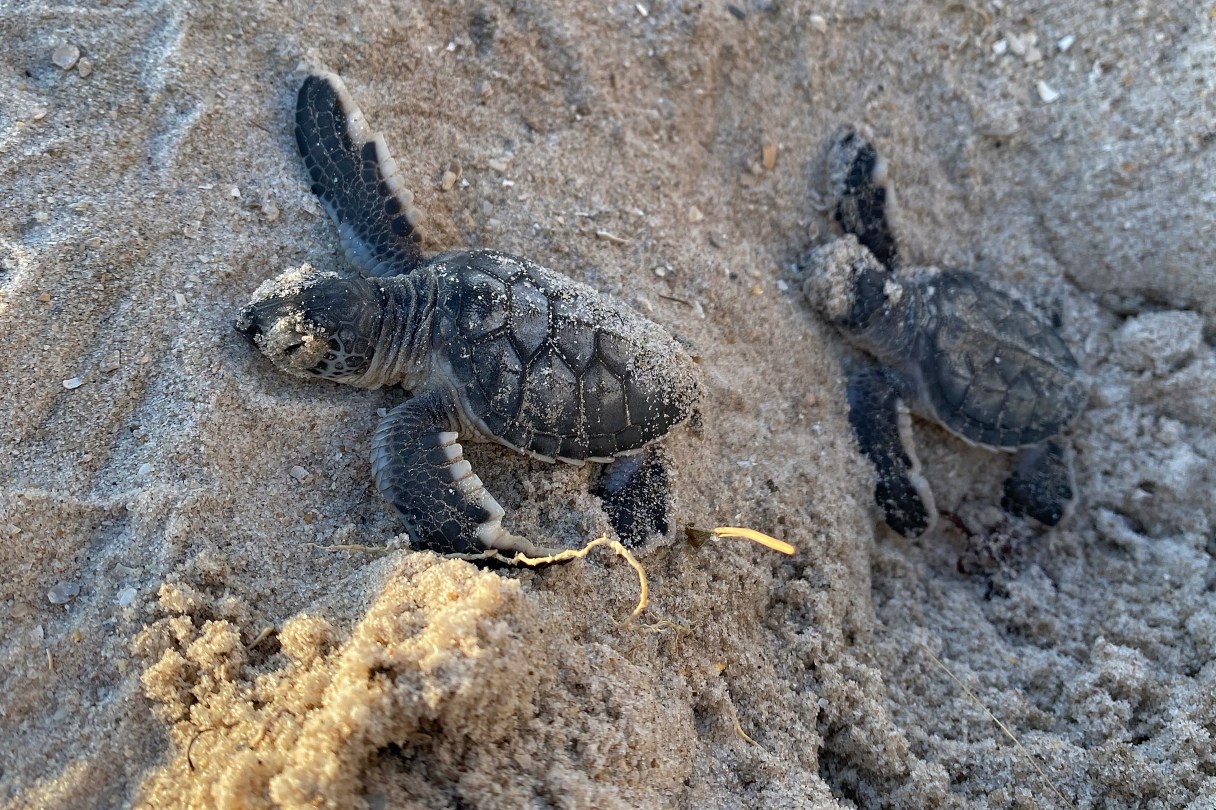
INDIAN ROCKS BEACH, Fla. (AP) — Just as they have for millions of years, sea turtles by the thousands made their labored crawl from the ocean to U.S. beaches to lay their eggs over the past several months. This year, record nesting was found in Florida and elsewhere despite growing concern about threats from climate change.
In Florida, preliminary state statistics show more than 133,840 loggerhead turtle nests, breaking a record set in 2016. Same for green turtles, where the estimate of at least 76,500 nests is well above the previous mark set in 2017.
High sea turtle nest numbers also have been reported in South Carolina, Alabama, North Carolina and Georgia, although not all set records like Florida, where Justin Perrault, vice president of research at Loggerhead Marinelife Center in Juno Beach, said the number of nests is remarkable this year.
“We had more nests than we had ever seen before on our local beaches,” said Perrault, whose organization monitors Palm Beach County and broke a local record by 4,000 nests. “That’s quite a bit of nesting.”
There are seven species of sea turtles: loggerhead, green, leatherback, hawksbill, Kemp’s ridley, olive ridley and flatback. All are considered either endangered or threatened. They come ashore on summer nights, digging pits in the sand and depositing dozens of eggs before covering them up and returning to the sea. Florida beaches are one of the most important hatcheries for loggerheads in the world.