
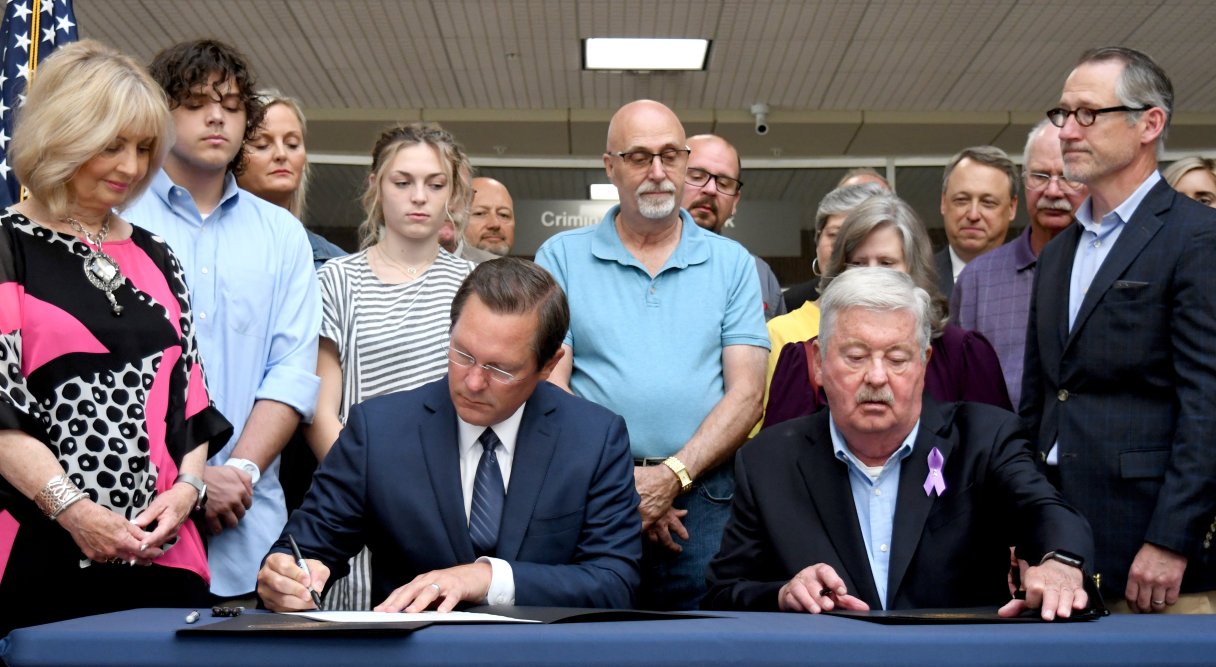
NASHVILLE — Often allies, Tennessee House Speaker Cameron Sexton, R-Crossville, and Lt. Gov. Randy McNally, the Republican speaker of the Senate from Oak Ridge, find themselves at odds over the death an 18-year-old college student in Nashville who was walking on a track when struck by a stray bullet.
The bullet was allegedly fired by a man clinically diagnosed with an intellectual disability, an IQ in the 50s and a history of violent behavior as an adult.
During a recent interview with Nashville radio station WTN 99.7 host Matt Murphy, Sexton said had the Senate passed his mental health bill and other measures during its special session on gun safety in August, Belmont University freshman Jillian Ludwig might still be alive.
Had the bill passed with changes proposed by Davidson County District Attorney General Glenn Funk, Sexton said, Taylor probably would have been involuntarily committed in September, “and this incident never would have happened. That’s the frustrating part of this.”
(politics)