
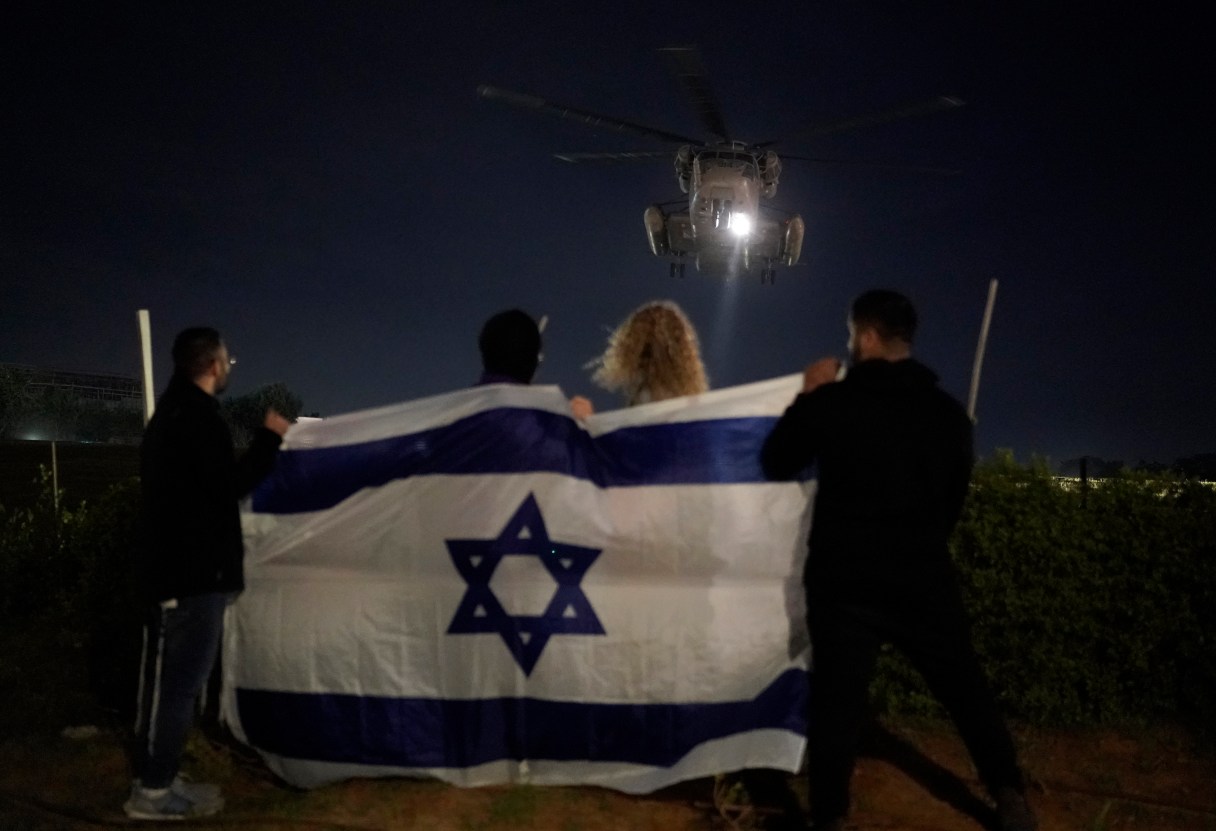
RAFAH, Gaza Strip (AP) — International mediators worked Wednesday to extend the truce in Gaza, hoping the territory’s Hamas rulers will keep freeing hostages in return for the release of Palestinian prisoners and further respite from Israel’s air and ground offensive. It will otherwise expire within a day.
Israel has welcomed the release of dozens of hostages in recent days and says it will maintain the truce if Hamas keeps freeing captives. But its other major goal — the annihilation of the armed group that has ruled Gaza for 16 years — could be slipping out of reach.
Weeks of heavy aerial bombardment and a ground invasion have demolished vast swathes of northern Gaza and killed thousands of Palestinians. But it seems to have had little effect on Hamas’ rule, evidenced by its ability to conduct complex negotiations, enforce the cease-fire among other armed groups, and orchestrate the smooth release of hostages.
Hamas’ leader in Gaza, Yehya Sinwar, and other commanders have likely relocated to the south, along with hundreds of thousands of displaced Palestinians who have packed into overflowing shelters.
An Israeli ground invasion of the south could eventually ferret out Hamas’ leaders and demolish the rest of its militant infrastructure, including kilometers (miles) of tunnels, but at a cost in Palestinian lives and destruction that the United States, Israel’s main ally, seems unwilling to bear.