
WASHINGTON (AP) — A few years back, Joseph Stramondo was a last-minute replacement as a conference speaker in Salt Lake City. He went online and made a reservation for a room accessible for people with disabilities.
“I figured, ‘OK, I should be set,'” Stramondo said.
But when he checked in, the room he was given looked like a standard room, without bars in the bathroom or a door wide enough to accommodate his wheelchair.
Returning to the front desk, Stramondo learned the room was accessible — for people with hearing loss.
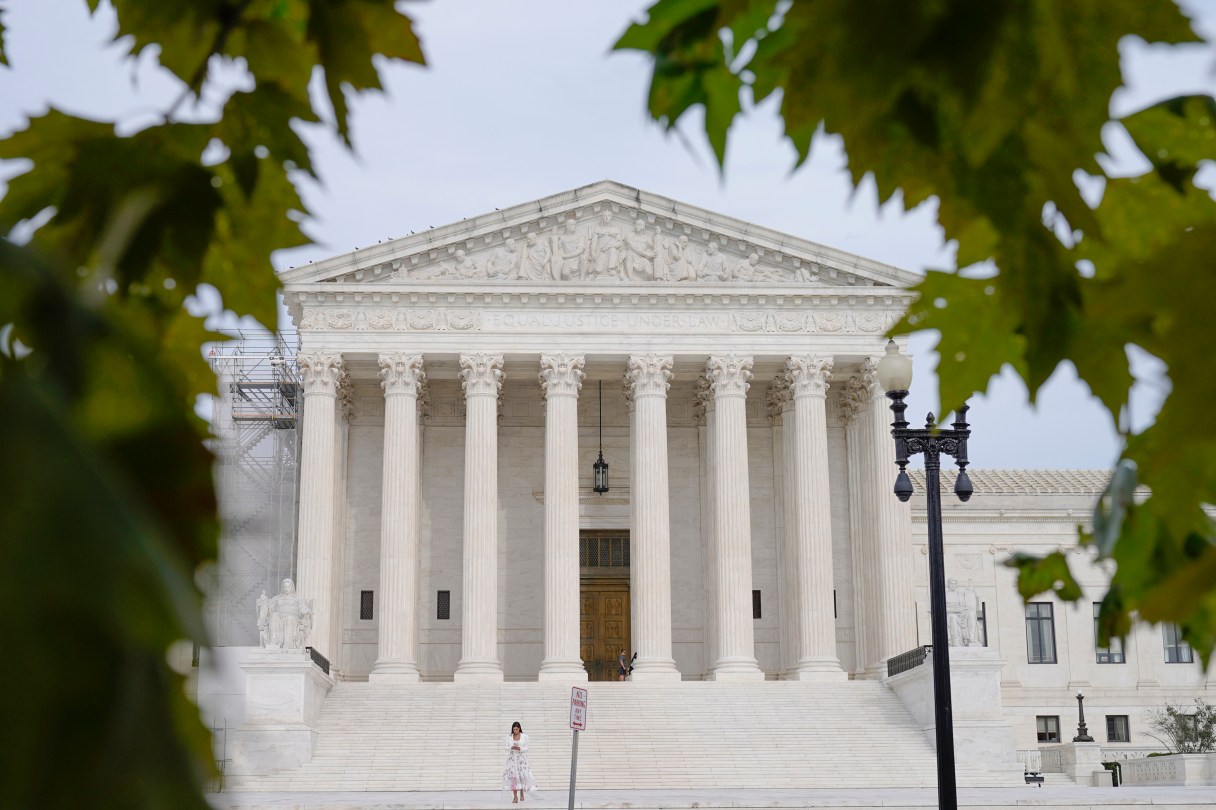
The Supreme Court is taking up a case Wednesday that Stramondo, his wife, Leah Smith, and other people with disabilities worry could make it harder to learn in advance what accommodations are available that meet their needs.