
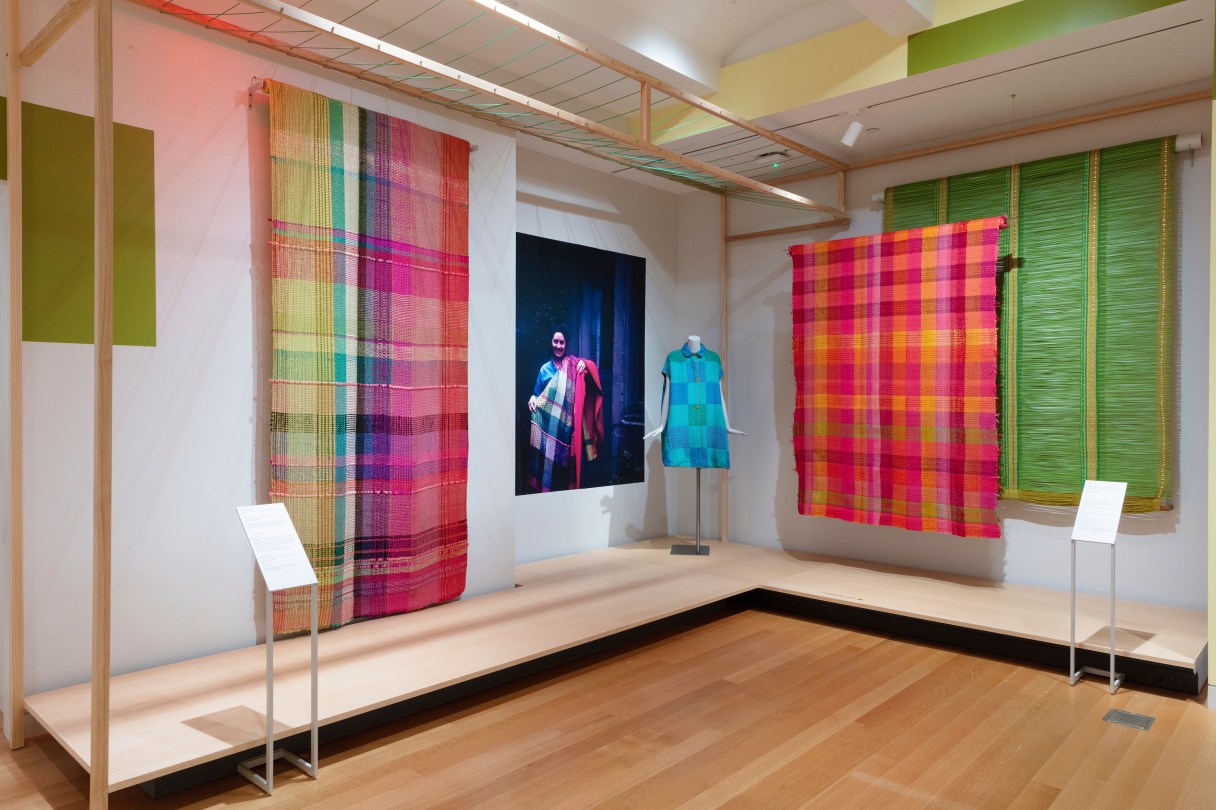
NEW YORK (AP) — Weaver and designer Dorothy Liebes helped define the look and feel of 20th century luxury, from first-class airline seats to movie backdrops, hotel suites to bathing suits, metallic wallpaper to car upholstery.
She was a name, but unlike so many of the leading architects and designers with whom she worked, including Frank Lloyd Wright, Henry Dreyfuss and Donald Desky, her fame has dimmed since her death in 1972.
An eye-popping exhibit at the Cooper Hewitt Smithsonian Design Museum takes a giant step toward changing that, revealing the breadth and impact of Liebes’ work through dozens of textiles, fashion pieces, furniture, documents and photos.
Liebes was a master of color, texture, marketing and bling for decades, starting in the 1930s.
“She pioneered a new role for the textile designer as a partner to industry,” says Susan Brown, the museum’s associate curator and acting head of textiles, who co-organized the exhibit with Alexa Griffith Winton, manager of content and curriculum.