
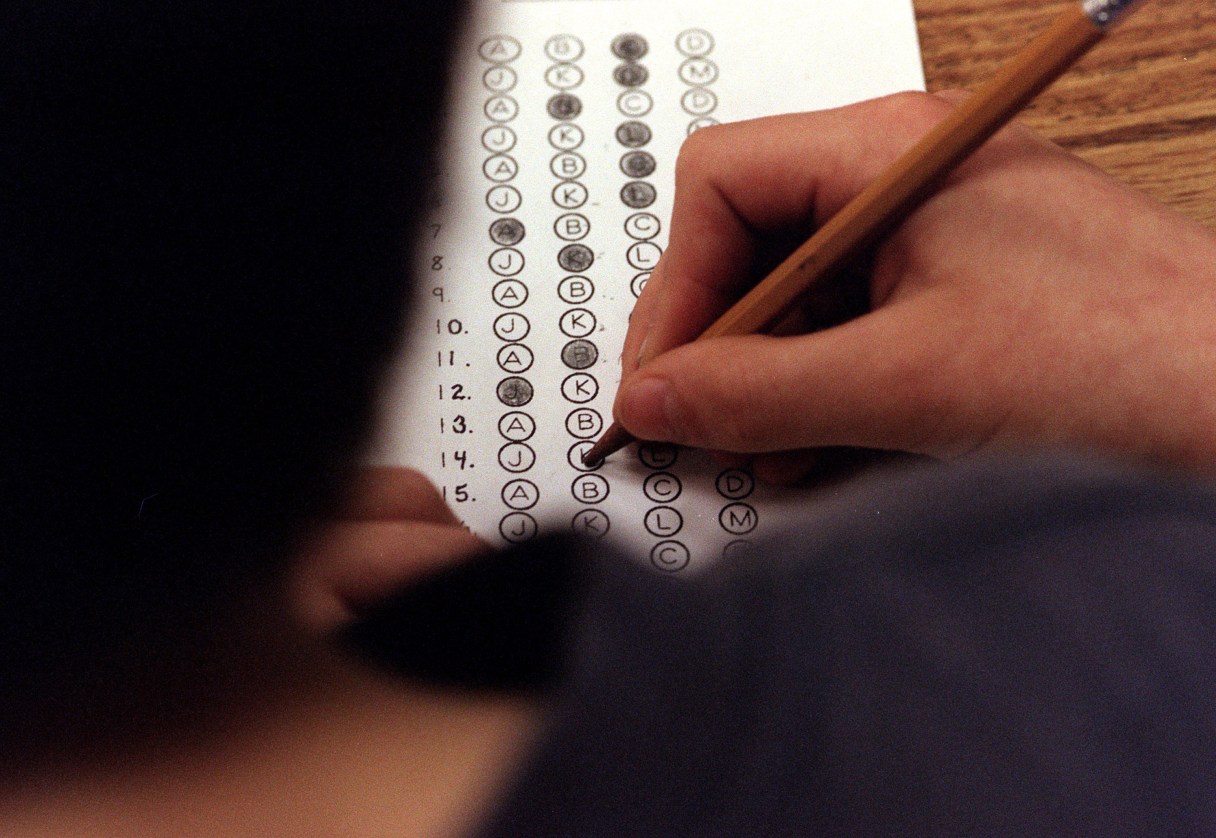

The average ACT score of 2023 high school graduates across the country is the lowest in more than 30 years and marked the sixth straight year in which scores have declined, the American College Testing organization announced earlier this week.
Since it’s been six straight years, that means the decline started well before the pandemic, the be-all, end-all culprit for every dreadful score and outcome revealed by standardized testing since the coronavirus unceremoniously invaded our lives more than three-and-a-half years ago.
That should be a hint to administrators in Chattanooga, Keokuk, Iowa, and Sacramento, California, to keep the accelerator on reforming learning strategies and to stop blaming COVID.
Overall state-level scores have not been released. In Tennessee, the average composite ACT score was the same, 19.1, among both the 2021 and 2022 graduating cohorts. It was 19.9 in 2020, 20.0 in 2019 and 20.2 in 2018. The 2023 state private school average composite score for 2023 is 26.
Meanwhile, at the Hamilton County Board of Education meeting Wednesday, members and district administrators wrangled about the equitable use of cellphones and grading practices.
One might argue that neither one is endemic to the sinking standardized test scores and the recently released national ACT score, but other than the time wasted arguing about semantics in dealing with those topics, we beg to differ.
The number of cellphones owned by students, their use as a dubious source of knowledge and their ability to provide a wide variety of instant entertainment have increased as the scores have fallen. Any use of them during classes, outside of an emergency, it seems to us, is extraneous.
As far as grade practices, artificially inflating mastery of a subject by not allowing a student to receive an earned grade below 50, as is used in some district schools and not others, only delays the inevitable. What is hidden in what is called “credit recovery” cannot be hidden in standardized test and ACT results.
The 2023 overall composite score for students across the country is 19.5 out of 36, a drop from 19.8 in 2022, which also had been a 30-year low.
“The hard truth,” ACT CEO Janet Godwin said in a statement, “is that we are not doing enough to ensure that graduates are truly ready for postsecondary success in college and career.”
Beyond the overall score, the organization said more than four in 10 seniors didn’t meet the ACT’s college readiness benchmarks in reading, science and math, which are the minimum scores for predicted success in college courses. From 2022, overall scores fell 0.4% in English and 0.3% in math, reading and science.
Of the 1.4 million students in the United States who took the ACT during the last school year, only 21% met the benchmarks in all subjects for success in first-year, college-level classes. According to the organization, those who meet the benchmarks have a 50% chance of earning a “B” or better and nearly a 75% chance of earning a “C” or better.
Of course, many students shouldn’t go to college, and many others should seek lucrative vocational and technical skills jobs that often require certificates or two-year degrees, but the decrease in overall scores doesn’t bode well for all students and potential employers.
Some universities have made standardized admission tests optional because they believe they favor the wealthy over low-income students. Others such as the University of California system, where state high school scores have plunged in recent years, do not consider ACT or SAT scores in admissions policies.
Godwin, nevertheless, said the scores help students get placed in the right courses and are a tool for academic advisers to support students better.
“In terms of college readiness, even in a test-optional environment, these kinds of objective test scores about academic readiness are incredibly important,” she said.
Tennessee leads the nation in access to the ACT, offering public high school students the opportunity to take it twice for free during normal school hours. Public school students test once in the spring of their junior year and have an opportunity to retake it in the fall of their senior year.
In 2022, the state Department of Education was presented the inaugural ACT State Equity and Access Champion Award, which celebrates and honors a state’s commitment to postsecondary access by enabling more students to achieve their goals and dreams.
Access to the ACT is good, but improved scores are even better. And anything that prevents students from achieving those scores — be it concentrating on their cellphones or having the lack of their mastery of subject hidden — should be reconsidered.