
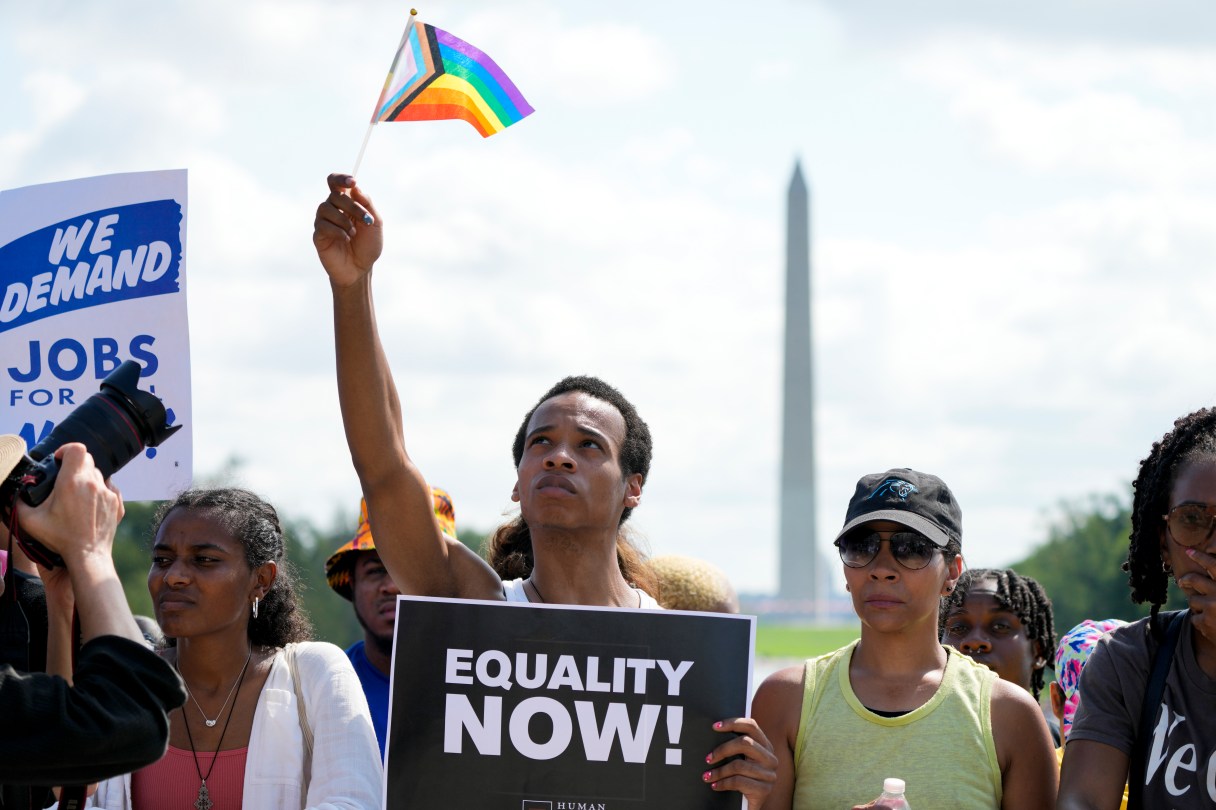
WASHINGTON (AP) — On the 60th anniversary of the March on Washington this summer, a few Black queer advocates spoke passionately before the main program about the ongoing struggle for LGBTQ+ rights. As some of them got up to speak, the crowd was still noticeably small.
Hope Giselle, a speaker who is Black and trans, said she felt the event’s programming echoed the historical marginalization and erasure of Black queer activists in the Civil Rights Movement. However, she was buoyed by the fact that prominent speakers drew attention to recent efforts to turn back the clock on LGBTQ+ rights, like the attacks on gender-affirming care for minors.
And despite valid concerns around the visibility of Black queer advocates in activist movements, progress is being made in elected office. This month, Sen. Laphonza Butler made history as the first Black and openly lesbian senator in Congress, when California Governor Gavin Newsom appointed her to fill the seat held by the late Dianne Feinstein.
Rectifying the erasure of Black queer civil rights giants requires a full-throated acknowledgment of their legacies, and an increase of Black LGBTQ+ representation in advocacy and politics, several activists and lawmakers told The Associated Press.
“One of the things that I need for people to understand is that the Black queer community is still Black,” and face anti-Black racism as well as homophobia and transphobia, said Giselle, communications director for the GSA Network, a nonprofit that helps students form gay-straight alliance clubs in schools.