
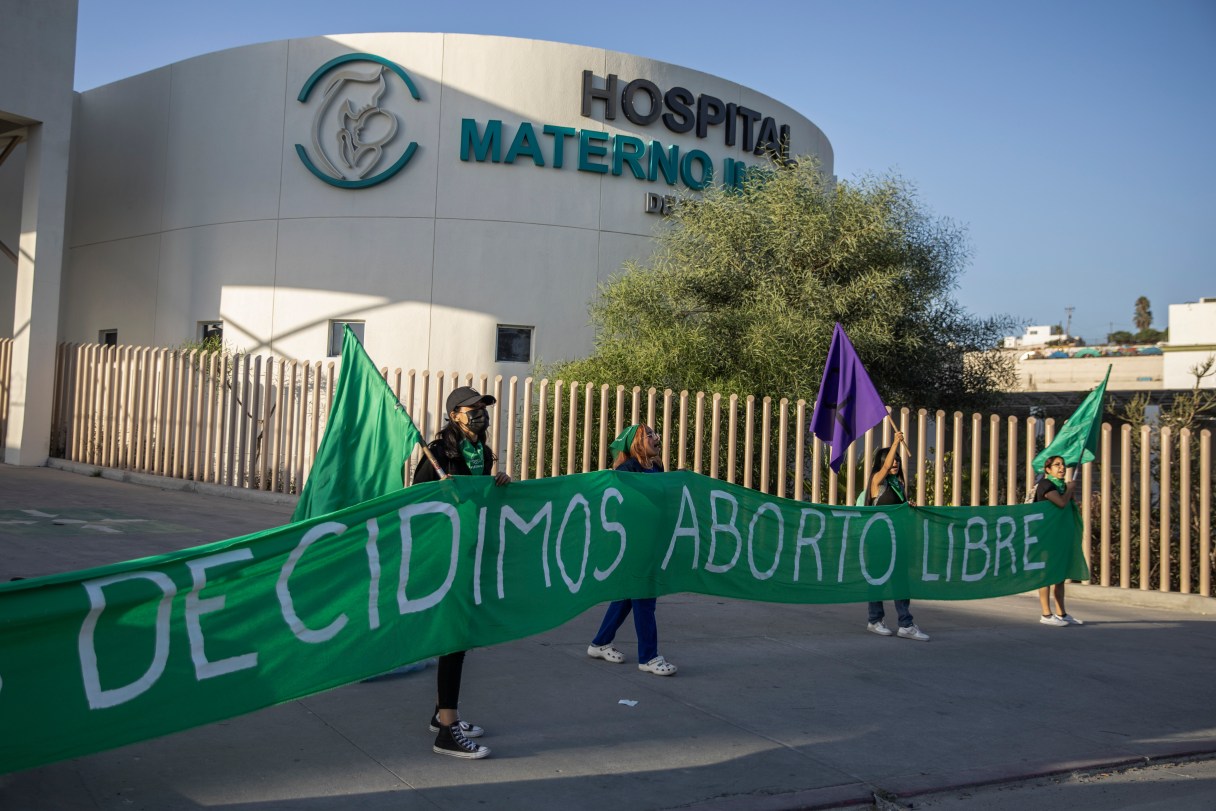
TIJUANA, Mexico (AP) — It’s Sunday night and Crystal P. Lira is not answering her messages. Inside the headquarters of Colectiva Bloodys y Projects, an organization that has supported reproductive rights near the U.S.-Mexico border since 2016, her only concern is for the woman she has provided with a safe space to get an abortion.
Lira, who lives in Tijuana, in northern Mexico, is one among dozens of Mexican “acompañantes” — volunteers who support women wanting to terminate a pregnancy. Located all over the country, most acompañantes offer virtual guidance through an abortion protocol in which no clinics or prescriptions are needed.
Developed by activists after decades of facing abortion bans and restrictions in most of Mexico’s 32 states, the protocol encourages women to trust self-managed medication abortions following guidelines established by the World Health Organization.
“Accompaniment means that we facilitate information, medications and everything a woman needs to get a safe abortion at home,” Lira said. “But we also provide emotional support and support to fight stigma, religious and cultural barriers.”
Mexico’s Supreme Court recently ruled that national laws prohibiting abortions are unconstitutional and violate women’s rights. The ruling, which extended Latin American’s trend of widening abortion access, happened a year after the court’s U.S. counterpart went in the opposite direction.