
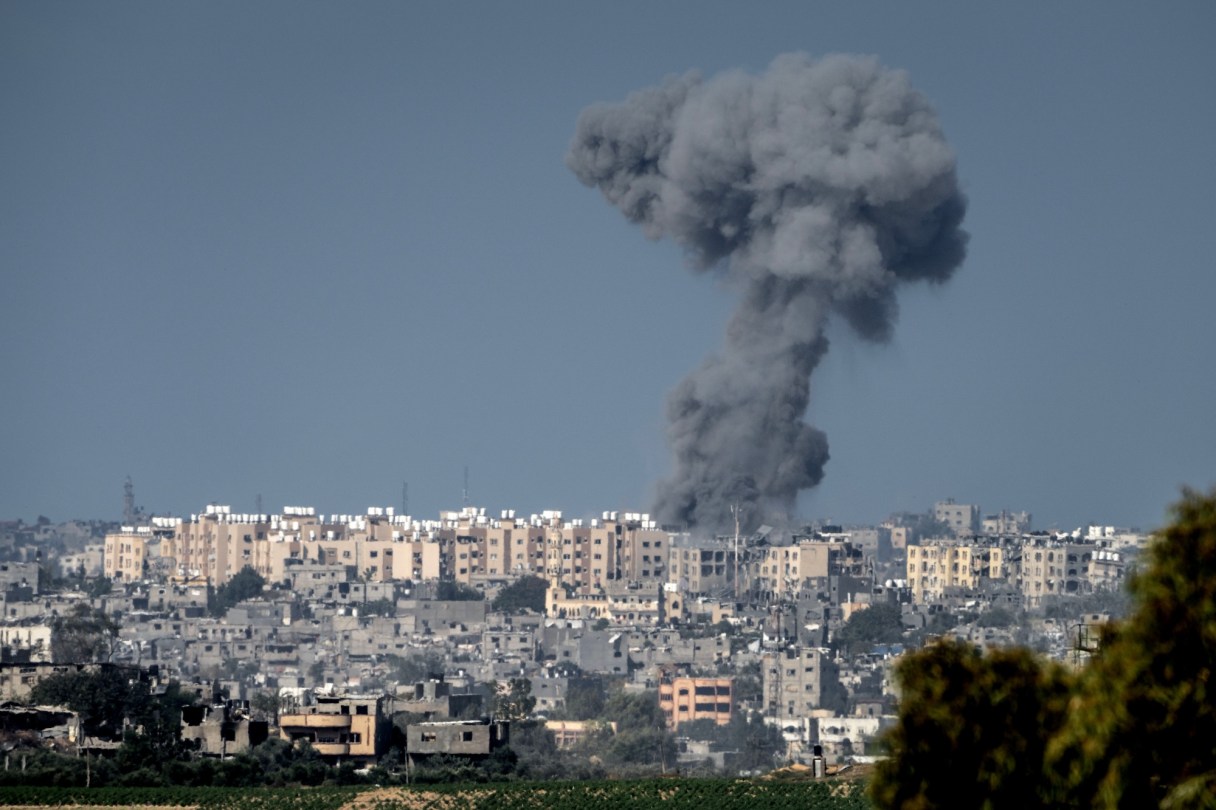
The phrase ” mowing the grass ” has been the bumper sticker version of Israeli strategy in Gaza for the last decade and a half.
It plays out in the following way: Palestinians, frustrated by the state of the enclave, turn to the likes of Hamas for, if nothing else, vengeance against Israel; Israel imposes restrictions such as the blockade on Gaza, citing security concerns; living conditions in Gaza deteriorate further, and discontent builds; Hamas, Palestinian Islamic Jihad and others capitalize on the discontent and attack Israel; and Israel responds by “mowing the grass” — killing the perpetrators along with some number of civilians, buying at best a few years of relative peace and fueling further long-term radicalization. And so the cycle continues ad infinitum.
“Mowing the grass” embodies more than just strategic fatalism; it also reflects a large measure of hubris. At its core lies the assumption that Israel can control the rheostat in Gaza, hitting Hamas just hard enough to deter it from attacking Israel but not so hard that Gaza implodes into chaos or explodes into a regional war. As one Israeli defense analyst said of the 2014 Gaza war, “We want to break their bones without putting them in the hospital.”
That is a hard if not impossible balance to strike year after year, especially as Gaza’s internal pressures mount. Its 2 million inhabitants are packed into an area roughly the size of Philadelphia, 80% of them impoverished and 46% unemployed. Some 108,000 cubic meters of untreated sewage flow daily from the Gaza Strip into the Mediterranean Sea, and potable water can be hard to come by.