
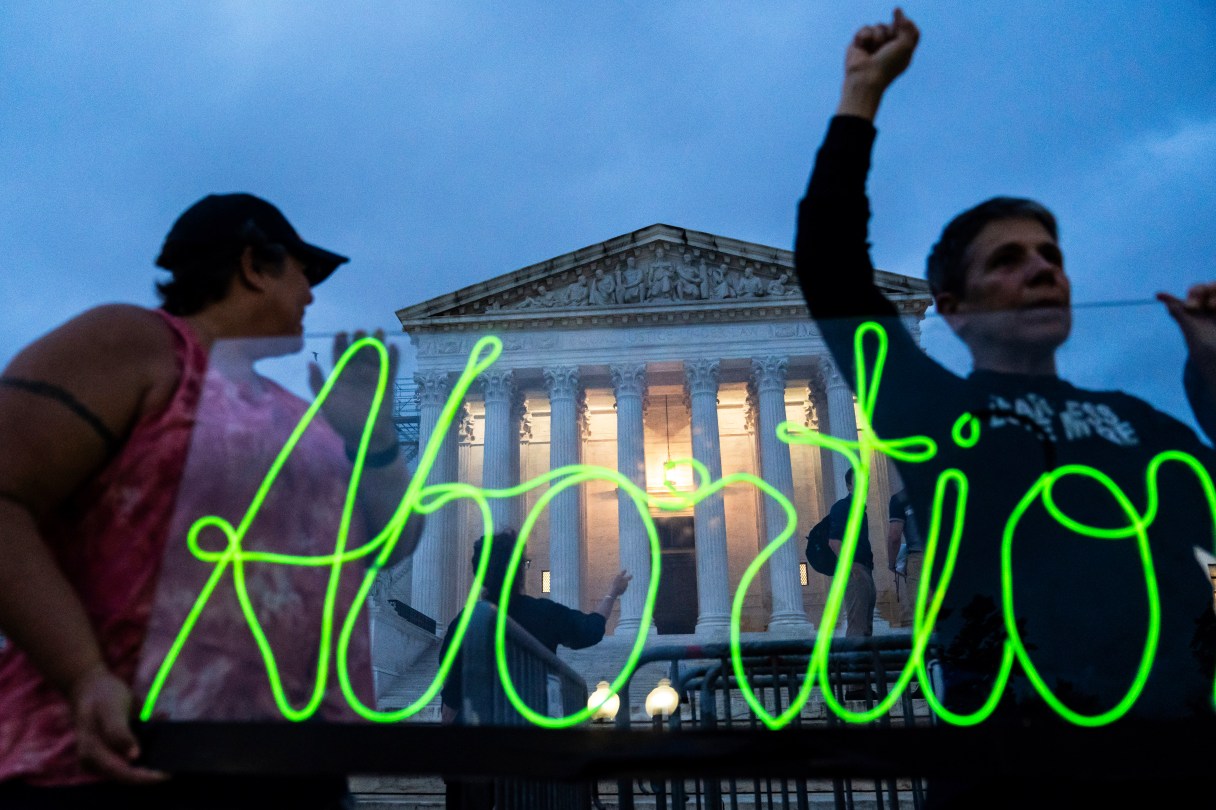
The total number of abortions provided in the U.S. rose slightly in the 12 months after states began implementing bans on them throughout pregnancy, a new survey finds.
The report out this week from the Society of Family Planning, which advocates for abortion access, shows the number fell to nearly zero in states with the strictest bans — but rose elsewhere, especially in states close to those with the bans. The monthly averages overall from July 2022 through June 2023 were about 200 higher than in May and June 2022.
The changes reflect major shifts after the U.S. Supreme Court in June 2022 handed down its Dobbs v. Jackson Women’s Health Organization ruling, overturning Roe v. Wade, the 1973 ruling that had made abortion legal nationally. Since last year, most Republican-controlled states have enacted restrictions, while most Democrat-controlled states have extended protections for those from out of state seeking abortion.
“The Dobbs decision turned abortion access in this country upside down,” Alison Norris, a co-chair for the study, known as WeCount, and a professor at The Ohio State University’s College of Public Health, said in a statement. “The fact that abortions increased overall in the past year shows what happens when abortion access is improved, and some previously unmet need for abortion is met.” But she noted that bans make access harder — and sometimes impossible — for some people.
Meanwhile, an anti-abortion group celebrated that the number of abortions in states with the tightest restrictions declined by nearly 115,000. “WeCount’s report confirms pro-life protections in states are having a positive impact,” Tessa Longbons, a senior researcher for the Charlotte Lozier Institute, said in a statement.