
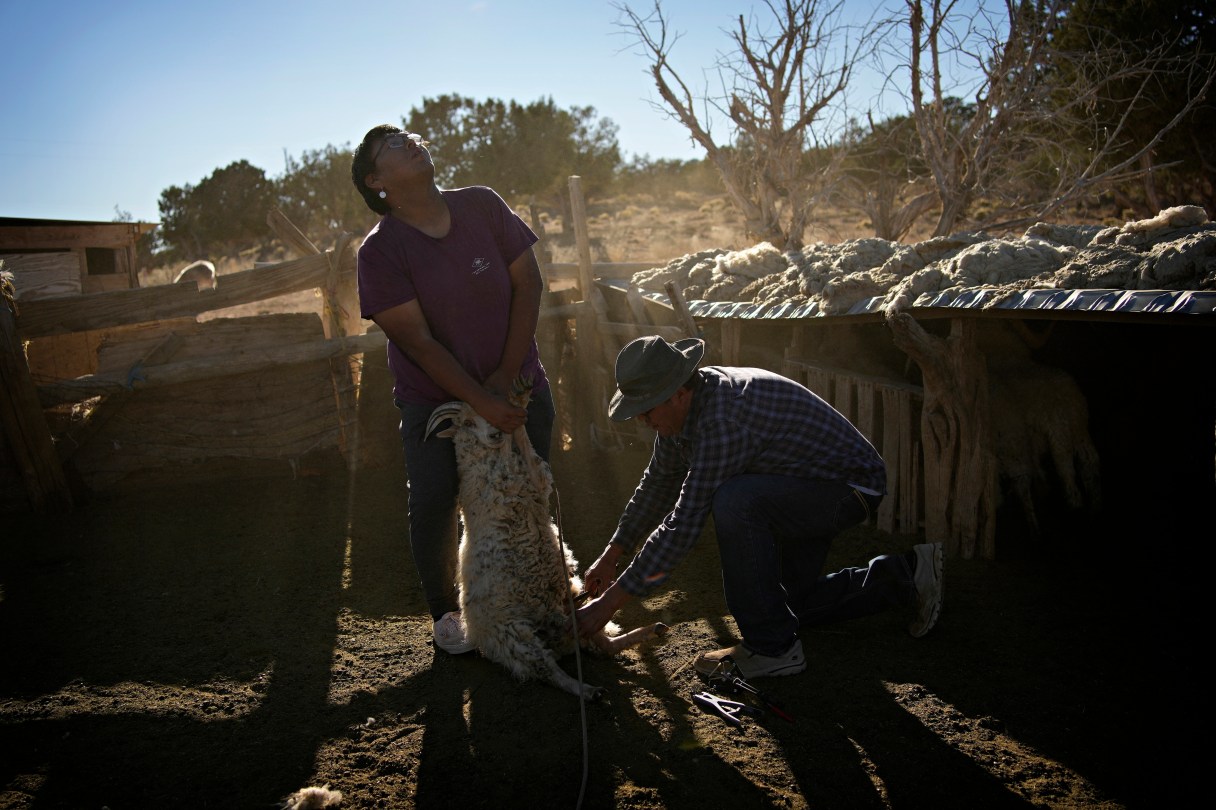
WINDOW ROCK, Ariz. (AP) — Whenever Amy Begaye’s extended family butchered a sheep, she was given what she considered easy tasks — holding the legs and catching the blood with a bowl. She was never given the knife.
That changed recently.
In the pale light of dawn at this year’s Miss Navajo Nation pageant, 25-year-old Begaye and another contestant opened a week of competition with a timed sheep-butchering contest. Begaye says preparing to compete, which also required she practice spoken Navajo and learn more about her culture, brought out another side. It taught her to be confident: that she, as a gentle young woman, could be courageous and independent enough to fulfill such an important responsibility.
“We butcher the sheep because it is a way of our life,” said Begaye, who won this year’s pageant and is preparing to speak about the importance of sheep as a cultural ambassador over the next year. “That’s how my ancestors were able to provide food for their families.”
That way of life is in peril. Climate change, permitting issues and diminishing interest among younger generations are leading to a singular reality: Navajo raising fewer sheep. Keeping hundreds of sheep, of historically prized Churro and other breeds, used to be the norm for many families living on a vast reservation that straddles parts of Arizona, New Mexico and Utah. But today some families have given up raising them all together. The ones who do report having far fewer sheep, sometimes just a handful. Still, many Navajo shepherds say they will keep their sheep as long as they can, and some younger people are speaking out and finding ways to pass on the tradition.