
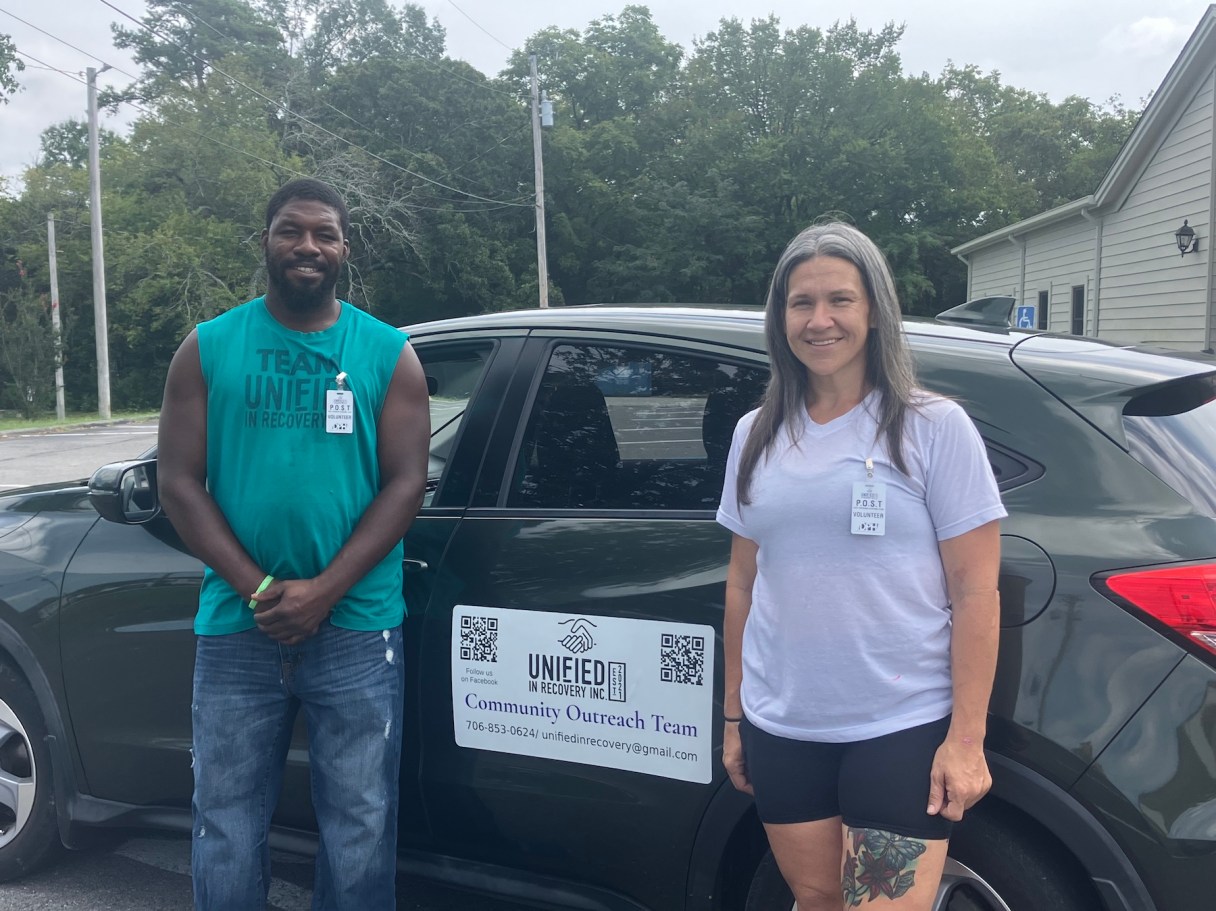
Opioid overdoses can affect anyone regardless of economic status or location, harm reduction advocates said after canvassing neighborhoods where suspected overdoses occurred in four Northwest Georgia counties.
Based on reporting from emergency medical services through online service ODMAP, volunteers were given seven to 13 overdose locations per week over about four months, said Jennifer Jenkins, executive director of the LaFayette, Georgia, nonprofit Unified in Recovery. Working through Unified in Recovery, two volunteers would knock on doors near each overdose location, handing out information and safe use supplies like naloxone and fentanyl testing strips, she said.
“No matter if we were in the lower income neighborhoods or we were in the upper class neighborhoods, general consensus was, ‘Wow, somebody cares,'” Jenkins said in a phone call.
Most people who answered their doors were receptive and wanted to learn more, but Jenkins thinks some people are scared to open doors to strangers. Door hangers were left at homes where no one answered, she said.
Sponsored by the Georgia Department of Public Health, Jenkins said the response team program is part of her organization’s work to educate the public about the dangers of illicit drugs. The group also hosts events like hikes and river rafting trips to build community and give people ways to enjoy life without drugs while connecting them to recovery groups and resources.
Jenkins said people can get trapped in a cycle of addiction with no clue how to make a change, so the program was started to meet people where they live.
“A lot of people aren’t going to come ask for help,” she said. “They don’t know where to go. They don’t know who to ask. They’re afraid.”
Rewa Pressley, the Department of Public Health’s Northwest District emergency preparedness coordinator who oversees the program, said when the program started in March that the boots-on-the-ground approach is a great use of state funding. The program is modeled after another in Paulding County, and its budget was in the low six figures, department officials said.
The response team covered Walker, Catoosa, Dade and Chattooga counties.
(READ MORE: Help sent to site of opioid overdoses in new Georgia recovery program)
Northwest Georgia deaths from opioids by county in 2022
— Catoosa County: 21.
— Walker County: 21 .
— Gordon County: 14.
— Whitfield County: 12.
— Murray County: 7.
— Dade County: 5.
— Chattooga County: 3.
Source: Georgia Department of Public Health, Northwest Health District
In 2022, the department reported more than 80 deaths from opioids in seven counties in Northwest Georgia. Nationally, the Centers for Disease Control and Prevention reported more than 80,000 deaths from opioids in 2021, three-fourths of all overdose deaths.
Based on the overdose reports, volunteers visited hundreds of homes in four counties, Jenkins said.
Jenkins said she grew up in an urban environment in the Kennesaw and Acworth area in Georgia and wasn’t accustomed to seeing people live in the conditions she encountered door-knocking.
Some houses didn’t have power, and a few had porches so unstable Jenkins was worried about falling through, she said. Often, it was clear which residence housed the opioid users because it had fallen into disrepair, Jenkins said.
“I just had never seen poverty on that scale as I have been experiencing it in those communities,” she said. “And the poor living conditions people were living in. I lived in some really crazy places when I was using, too. But seeing it from this side of life, it’s heartbreaking.”
Many neighbors were frustrated because of persisting problems, but Jenkins told them her job was to offer help and harm reduction supplies, not arrest and fine people.
One man in Dade County — who volunteers never met, Jenkins said — overdosed twice during the length of the program.
After losing his home, a neighbor let him live in a shed on their property, but he wasn’t getting any better, his neighbors told Jenkins. She said she gave them five doses of Narcan, a brand name of naloxone, so they could be prepared if he overdoses again.
A house in Rossville, Georgia, had three residents overdose over the course of the program. On one visit by volunteers, a young woman answered the door and looked like she was deep in addiction, Jenkins, a former addict who’s been sober for years, said.
Jenkins said volunteers gave the woman safe-use supplies and information on treatment options. Since the face-to-face meeting, there hasn’t been another reported overdose at that house, Jenkins said.
Number of homes visited by volunteers between mid-April and the end of August
— Walker County: 355.
— Catoosa County: 379.
— Chattooga County: 109.
— Dade County: 43.
Source: Post-Opioid Response Team Yearly Report
The program will continue even though the state grant has ended, Jenkins said. Her nonprofit organization has hired a grant writer, but the process takes time, she said.
The organization has some funding for mileage, Jenkins said, and the volunteers will fund the canvassing out of pocket, if needed. The naloxone, test strips and literature are provided by the state health department.
If anyone in the community needs safe-use supplies or information on treatment, Jenkins encouraged people to call her cellphone at 706-853-0624.
Every time volunteers knock on a door, they let people know there’s help out there and a life beyond drugs, Davadrion Davenport said on a break between home visits in Fort Oglethorpe.
“I enjoy it, because every door I go to, I have chill bumps,” the Walker County resident said. “I feel like I’m saving people’s lives.”
At his office in LaFayette, Walker County Coroner Billy Sims pointed to a whiteboard with 17 names — about four months of pending undetermined deaths. Most will turn out to be opioid deaths, he predicted, adding that the Georgia Bureau of Investigation is overwhelmed by overdose deaths statewide.
So far in 2023, there have been 100 fatal overdoses in Walker County, Sims said. Some of the deaths could have been intentional, but they are only counted as suicides if a note is found.
“I don’t know the answers,” Sims said about addressing the issue. “It’s really sad.”
When Sims first took office in 2021, heroin was the drug he saw the most in overdoses, but then fentanyl became more prominent. Now, new kinds of the synthetic opioids are being sold and used, and some are mixed with xylazine — an animal tranquilizer resistant to naloxone, Sims said.
(READ MORE: Three dead in suspected fentanyl overdoses in Walker County)
Besides education and supporting law enforcement, Sims said he doesn’t know what to do about the opioid crisis. He said he’s worked with Jenkins before, and that she is doing good work in the community.
Unified in Recovery is hosting a recovery rally from 10 a.m. to 2 p.m. Saturday in LaFayette at the Ross Abney Complex, Jenkins said. Titled “You are not alone,” there will be speakers, employers willing to give former users a second chance and people describing their unique path to recovery, Jenkins said.
And for the families that have lost someone to an overdose, participants can label a pinwheel with their loved one’s name to honor their memory.
Contact Andrew Wilkins at awilkins@timesfreepress.com or 423-757-6659
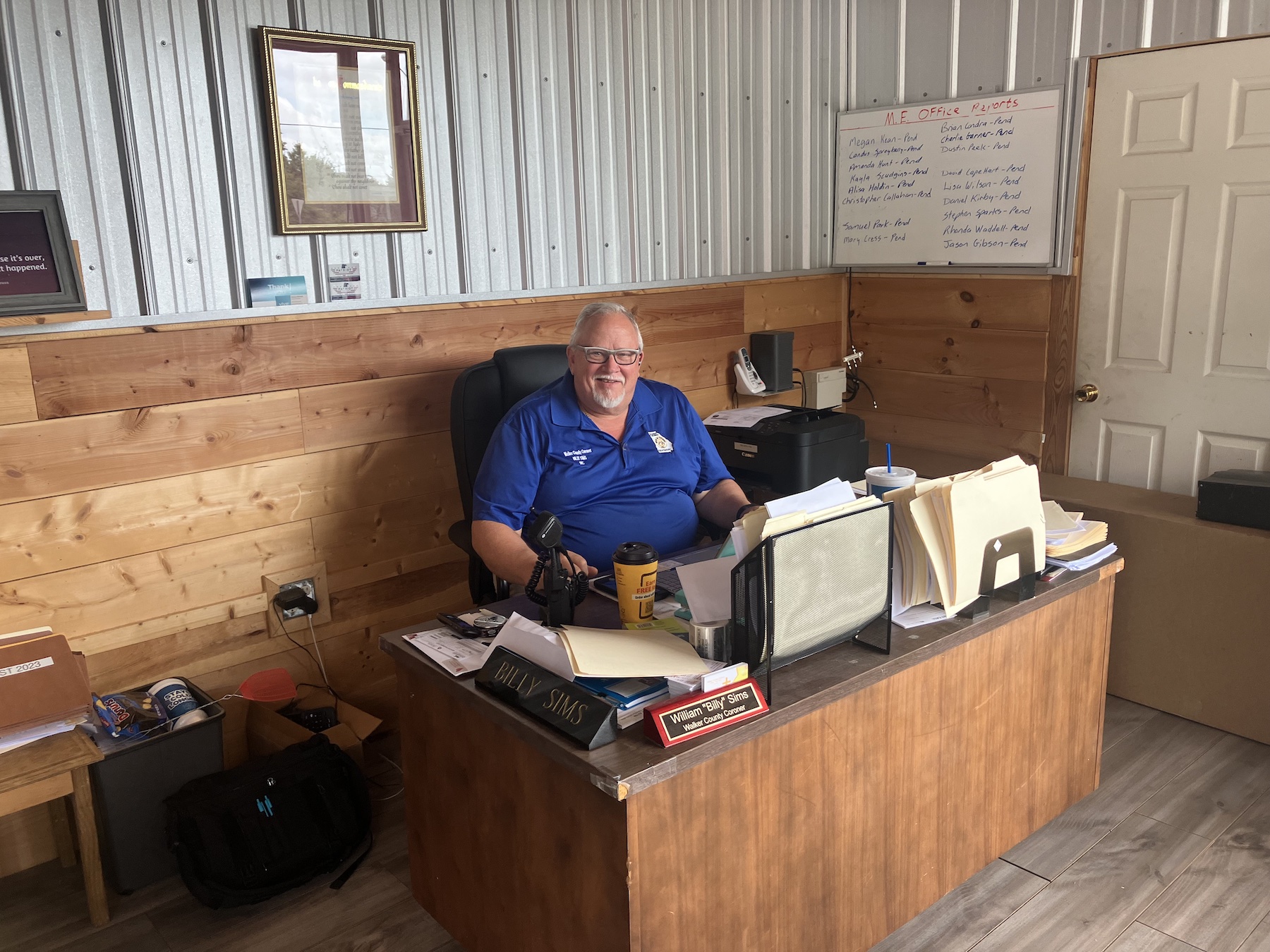 Staff Photo by Andrew Wilkins / Billy Sims, Walker County coroner, speaks about the opioid crisis. Sims was photographed in his office Wednesday.