
Monday, November 16, 2026Nov 16

Endangered red wolves need space to stay wild. But there’s another predator in the way — humans

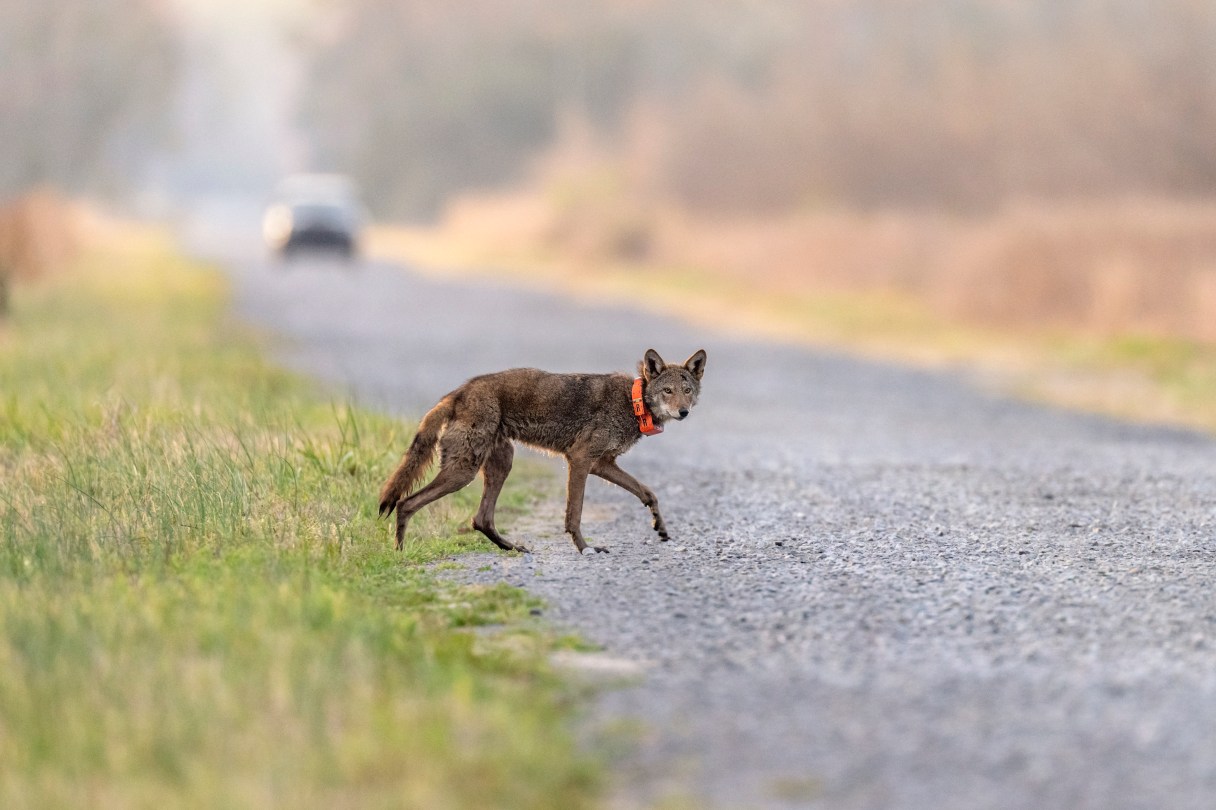
A red wolf crosses a road on the Alligator River National Wildlife Refuge, Thursday, March 23, 2023, near Manns Harbor, N.C. Over the course of 25 years, the red wolf went from being declared extinct in the wild to becoming hailed as an Endangered Species Act success story. But the only wolf species unique to the United States is once again at the brink. The last wild populations of Canis rufus are clinging to life on two federal refuges in eastern North Carolina. (AP Photo/David Goldman)

ALLIGATOR RIVER NATIONAL WILDLIFE REFUGE, N.C. (AP) — Jeff Akin had to bite his tongue.

He was chatting with a neighbor about efforts to protect and grow the area’s red wolf population. The endangered wolves are equipped with bright orange radio collars to help locals distinguish the federally protected species from invasive, prolific coyotes.

“If I see one of those wolves with a collar on, I’m going to shoot it in the gut, so it runs off and dies,” Akin says the neighbor told him. “Because if it dies near you, and they come out and find the collar, they can arrest you.”

Akin is a hunter and the walls of his country house are lined with photos of the animals he’s killed. But what he heard made him sick.

“I wouldn’t shoot a squirrel in the stomach if I was hungry,” he says. “It’s just not humane.”