
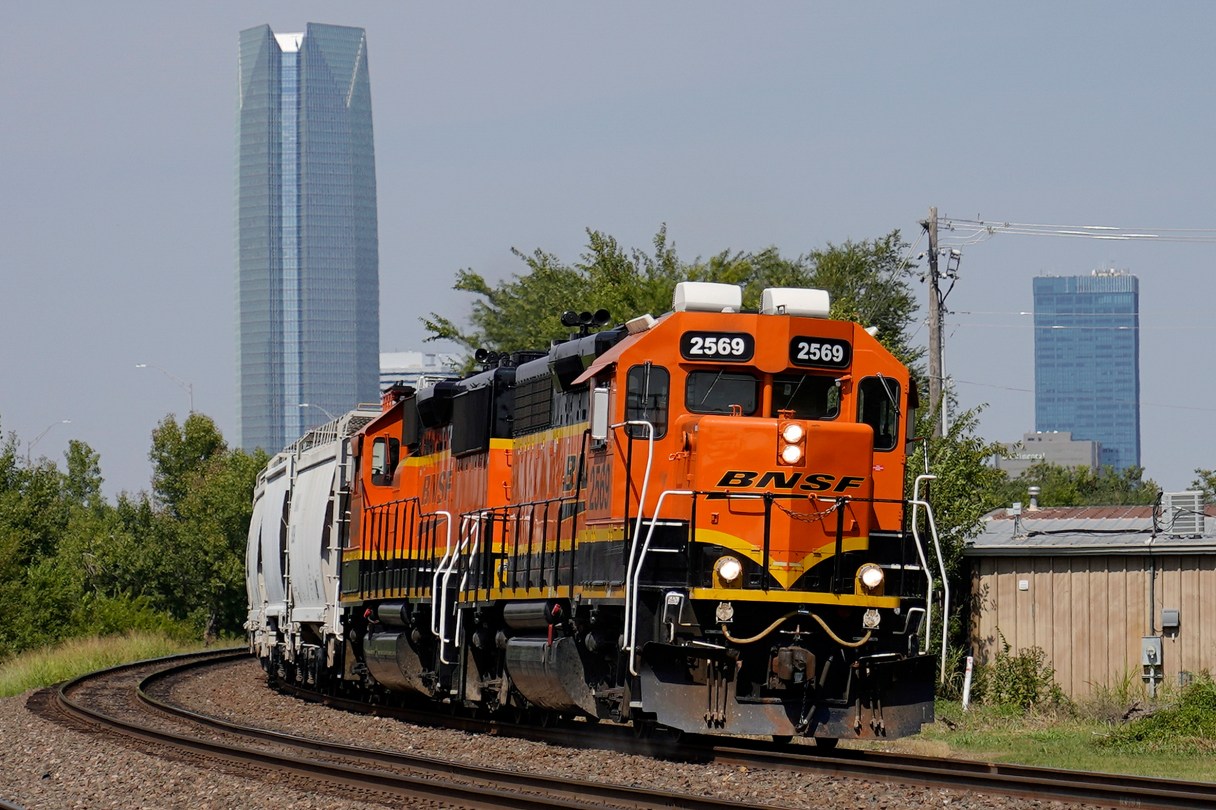
OMAHA, Neb. (AP) — Companies that have plants and facilities only served by one railroad may soon be able to get a bid from another railroad if their current service is bad enough under a new rule that was proposed Thursday to help boost competition.
Railroad shippers with plants that are only served by one railroad may soon be able to get a bid from another railroad if their current service is bad enough under a new rule that was proposed Thursday to help boost competition.
The U.S. Surface Transportation Board announced the long-awaited rule that has been under consideration in some form at least since 2010 to provide some relief to so called “captive shippers” that only have a connection to one of the six giant freight railroads that deliver the vast majority of goods across North America.
Many companies have complained about poor railroad service over the past couple years as the industry worked to recover from the depths of the pandemic. The railroads have acknowledged they cut their workforces too deep in 2020 and had a hard time hiring enough workers to handle all this shipments once demand returned because of the tight labor market and quality of life concerns over railroad work.
The railroads have made significant strides to improve service since the worst of the problems in the spring of 2022 as they hired more train crews, but labor unions have questioned whether the industry’s current lean operating model gives railroads enough capacity to handle all this shipments safely even after the recent hiring.