
My first unpleasant encounter with the current meaning of the word “problematic” occurred a couple of years ago.
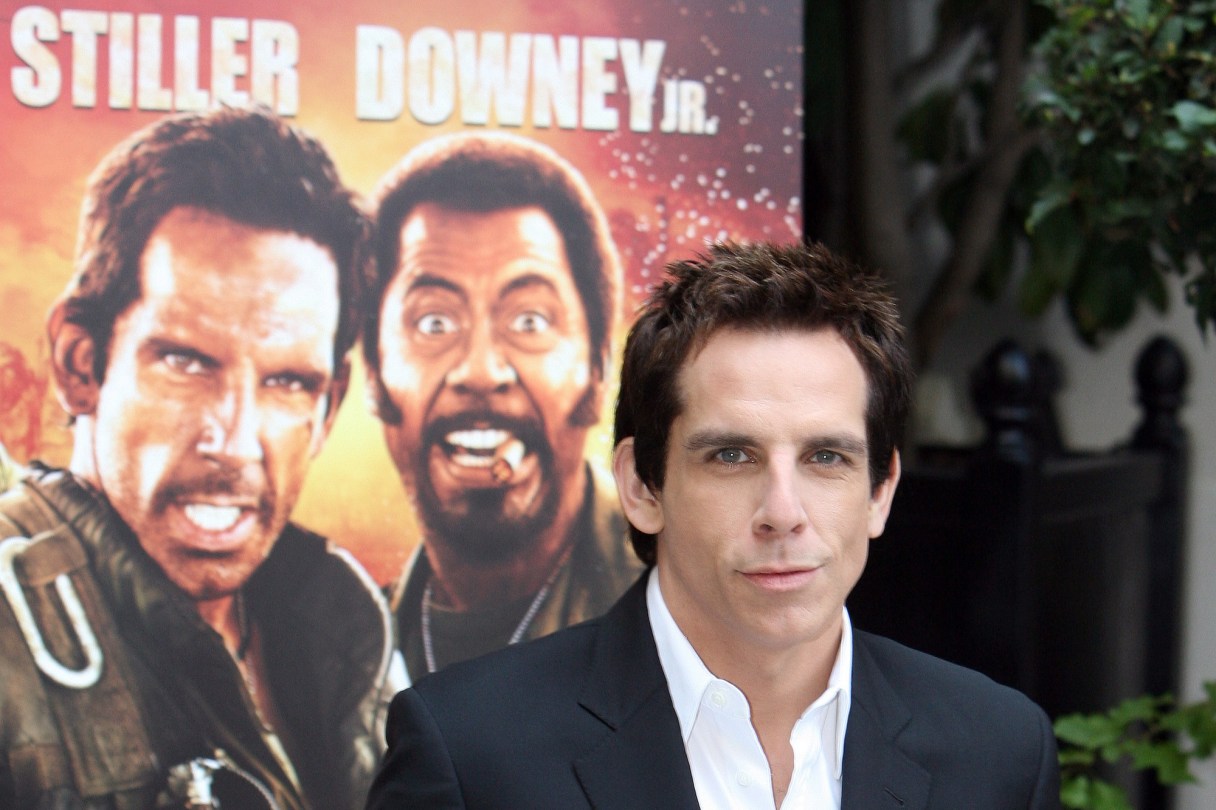
I was mingling with some 20- and 30-somethings at an outdoor birthday party in San Francisco. It was a bit chilly, but a distinct and quite different chill fell over my little conversation group as we began to discuss Ben Stiller’s “Tropic Thunder,” the hilarious (in my opinion) movie that spoofed Hollywood careerism and war movies.
I don’t remember why, exactly, we were talking about a film that came out in 2008. But all these years later, I said, I was still laughing at Tom’s Cruise surprising role as fat-fingered, balding studio boss Les Grossman, a filthy-mouthed bully who — it was rumored — was based on the producer Scott Rudin and/or Harvey Weinstein, legendary industry monsters who both happen to be Jewish.
One woman looked at me and said, “That role was problematic.”
“But it was satire,” I replied. “It was funny.”
“It was still problematic,” she said. “He was channeling Jewish stereotypes.”
At that point, I thought it best not to mention one of the movie’s other stars, Robert Downey Jr., who played a white Australian actor playing a Black American Vietnam war vet. In blackface.
Feeling wrongfully admonished, I changed the subject.
But ever since, I’ve wondered how the word “problematic,” so vague, had become such an effective insult and shorthand for someone’s (well, my) moral failure or insensitivity.
I plugged the word “problematic” into the Google Ngram Viewer, a website that shows patterns of word usage in English-language literature, and discovered that its use has soared in the last few decades and shows no signs of slowing.
But why?
In a 2021 Atlantic essay, Oxford political theory professor Teresa M. Bejan offered a possible answer:
“Academics like me love to describe things as ‘problematic.’ But what do we mean? We’re not saying that the thing in question is unsolvable or even difficult. We’re saying — or implying — that it is objectionable in some way, that it rests uneasily with our prior moral or political commitments. … It relies on a subtle sort of bullying in place of mutual justification. It excludes, rather than explains.”
Bingo.
I suggest that the word “problematic” has evolved to its current charged usage because the phrase “politically incorrect,” once used ironically by smug leftists, was hijacked by smug conservatives to denote rigid left-wing ideological conformity. According to the Ngram Viewer, the use of “politically correct” and “politically incorrect” has fallen dramatically in the last several years after surging in the years between 1980 and 1997.
Several years ago, a high school student named Liat Kaplan started an anonymous Tumblr page called “Your Fave is Problematic,” a less direct way of highlighting the problem with “problematic.”
As Kaplan explained it years later in The New York Times, “The posts contained long lists of celebrities’ regrettable (racist, sexist, homophobic, transphobic, ethnophobic, ableist and so on) statements and actions — the stuff that gets people canceled these days.”
With satisfaction, I’ve noticed at least the beginning of a backlash has been brewing against “problematic,” and its snotty little cousin “deeply problematic.”
The other day, I watched “Tropic Thunder” again for the first time in years.
It trades on and pokes fun at stereotypes of Black people, white people, Asian people, Jewish people, actors, agents, studio heads, war heroes. I wonder if it would get green-lighted today.
Personally, I found Cruise’s star turn as Grossman just as hilarious and true as the first time I saw it, maybe even more so because his alleged inspirations — Rudin and Weinstein — have gotten their karmic comeuppance in the wake of the MeToo movement.
Offensive? Perhaps. Over the top? For sure. But problematic? Banish the thought.