
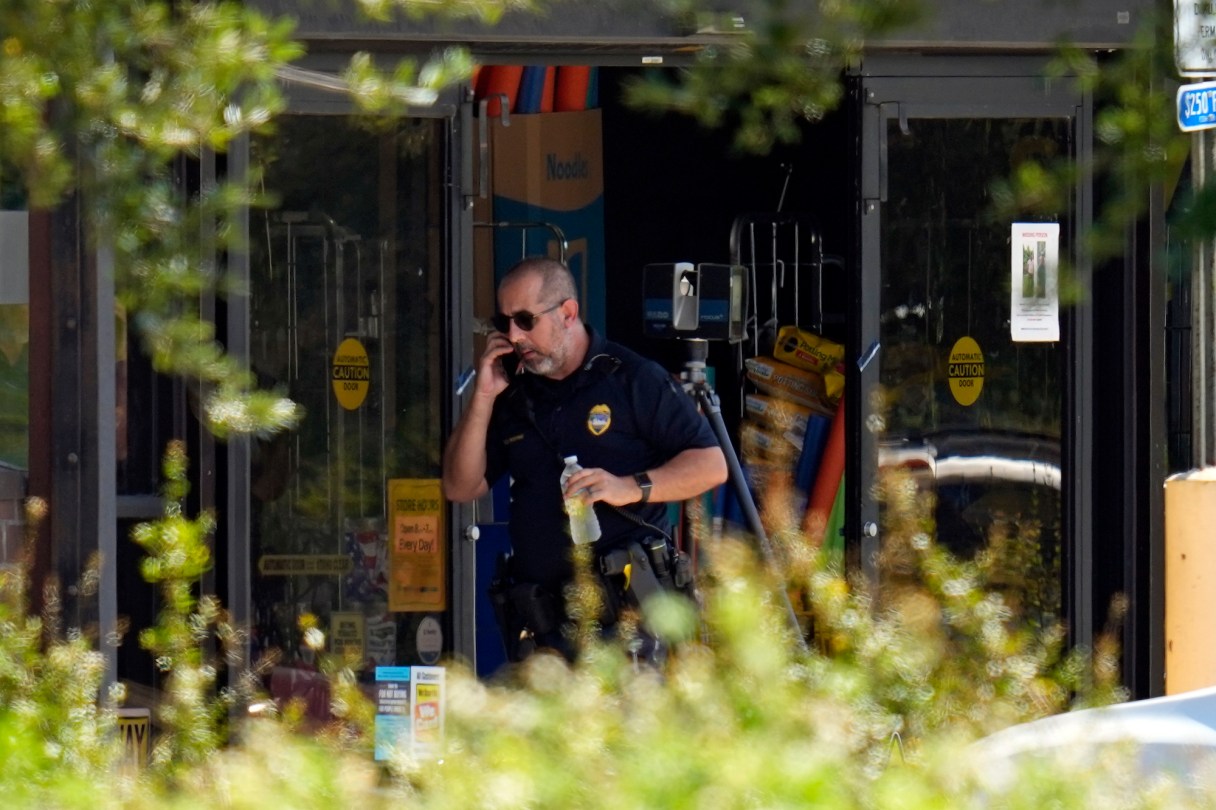
Last month, a terrorist inspired by white supremacy opened fire at a Dollar General store in Jacksonville, Florida, killing three Black people. The 21-year-old gunman, who had initially intended to attack a nearby historically Black university, had written several manifestos detailing his racist ideology, and one of his two legally purchased firearms was marked with swastikas.
Acts of terrorism against minority communities are frequently directed at soft targets defined by their openness, like supermarkets. The perpetrator of an August 2019 attack at a Walmart in El Paso wrote in his manifesto that “it is not cowardly to pick low-hanging fruit. AKA Don’t attack heavily guarded areas to fulfill your super soldier COD fantasy. Attack low-security targets.”
Such violence is intended to upend a sense of safety and belonging within those communities. A supermarket shooter in Buffalo in 2022 wrote in his manifesto that he desired “To show to the replacers that as long as the White man lives, our land will never be theirs and they will never be safe from us.”
Perpetrators of “blood and soil” violence seek to show immigrant and minority communities that they are not welcome. It is thus crucial that government leaders publicly and unambiguously reject such narratives. Americans have failed on this front, but there are successful examples abroad.
After an anti-immigrant attack in Germany in February 2020, then-Chancellor Angela Merkel used unusually direct language in declaring, “Racism is a poison. Hatred is a poison.”