
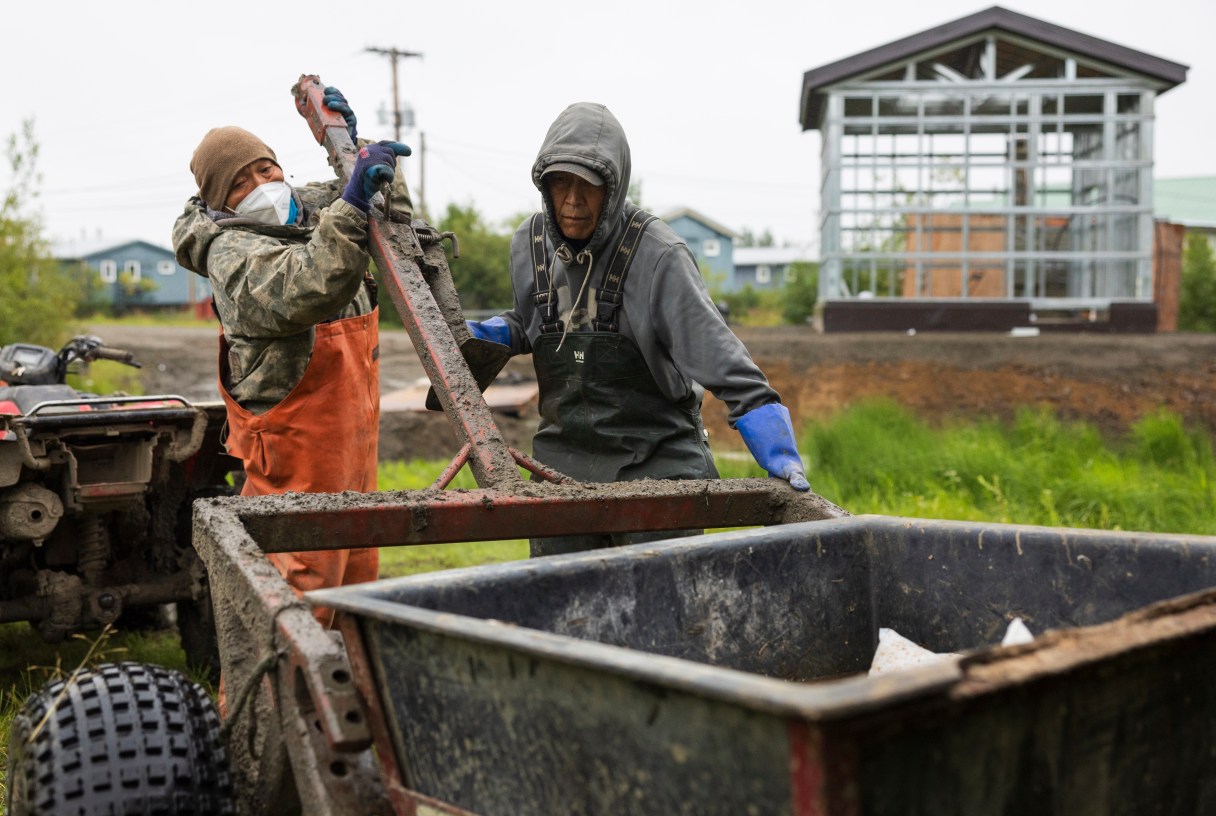
AKIACHAK, Alaska (AP) — Sanitation workers Thomas Noatak and Joseph Moses start every workday riding a four-wheeler along the muddy roads of this small Yup’ik village on southwestern Alaska’s vast Kuskokwim River, looking for human waste.
They’re checking honey bucket bins — large steel containers where residents dump their waste at neighborhood collection points. When they find a bin full enough to warrant a trip to the dump site just outside town, they load it up and haul it nearly a mile over deeply potholed and rutted streets, hoping to do it without splashing.
Many Alaska villages don’t have running water and flushing toilets. Instead of using a bathroom, people retire to a room in a house, pull a curtain and use a honey bucket — typically a 5-gallon bucket with a toilet seat on top and a plastic bag inside. Instead of showers, they rely on steam baths or sponge baths. Water for drinking and washing has to be hauled in.
All that’s changing in Akiachak, where most of the village’s nearly 700 people began getting modern plumbing for the first time this spring and summer — and finding their lives transformed.
“I was so happy, I kept doing my dishes,” said Katherine Wassilie. But for her and many other tribal members, it was saying goodbye to the honey bucket that had the biggest impact: “I’m really happy I got that throne.”