
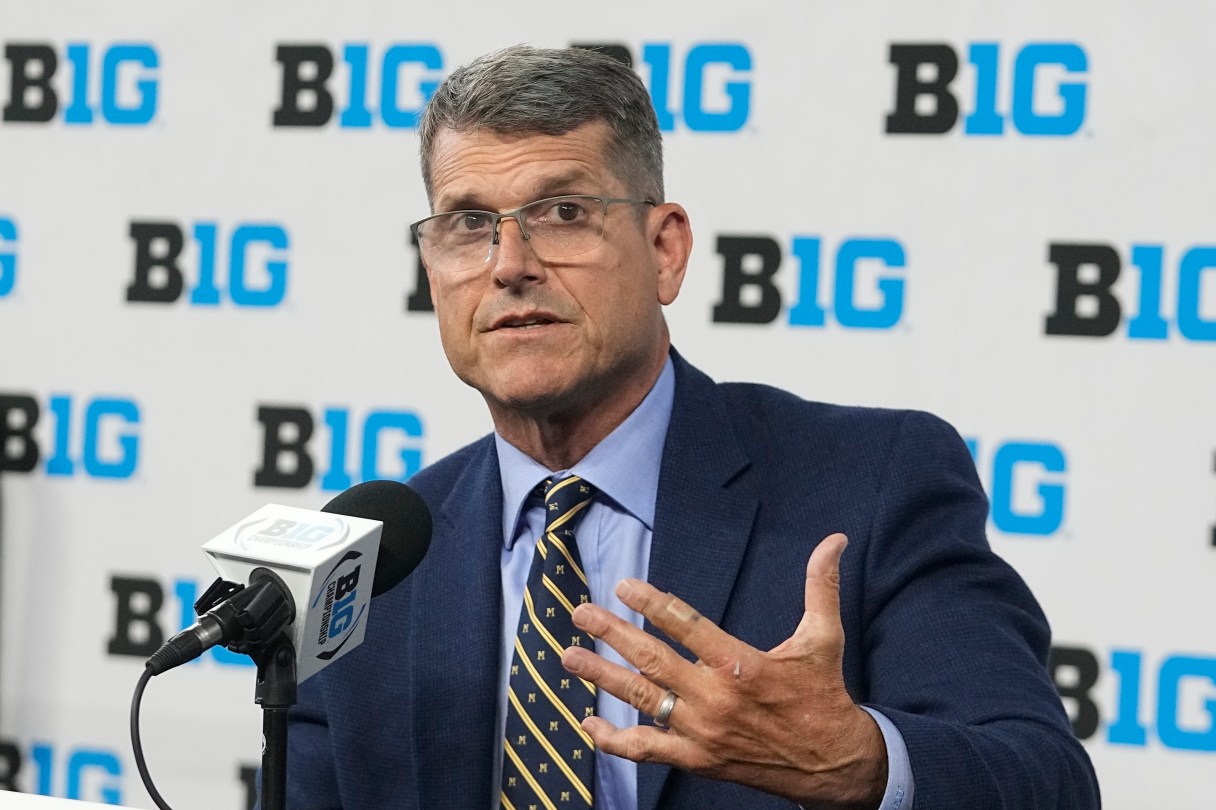
When one of college football’s top coaches makes a point of letting the world know he believes his players should essentially be paid, it gets a lot of attention.
“When student-athletes call it a game, corporate-types call it a business,” Michigan’s Jim Harbaugh said not long after the season began. “When the student-athletes call it a business, the corporate-types call it a game.”
Overhauling the collegiate sports model to allow athletes playing at the highest levels of college football to share in the billions television networks are paying conferences for the media rights to their games is an idea gaining traction. Especially in the court of public opinion.
Even 10 years ago, suggesting players get a cut of the massive TV deals that fuel athletic departments would have been met with incredulity by those who work and follow college sports. Now, Harbaugh is not even the only high-profile coach in the Big Ten Conference to advocate publicly for revenue sharing with players. Penn State’s James Franklin took a similar position in an interview with The Associated Press earlier this year.
The four biggest conferences have media rights deal of various lengths worth more than $20 billion, with football driving most of that value. The Pac-12 is in the final year of a $3 billion deal that was record-setting when it was signed in 2011, but soon surpassed by other leagues.