
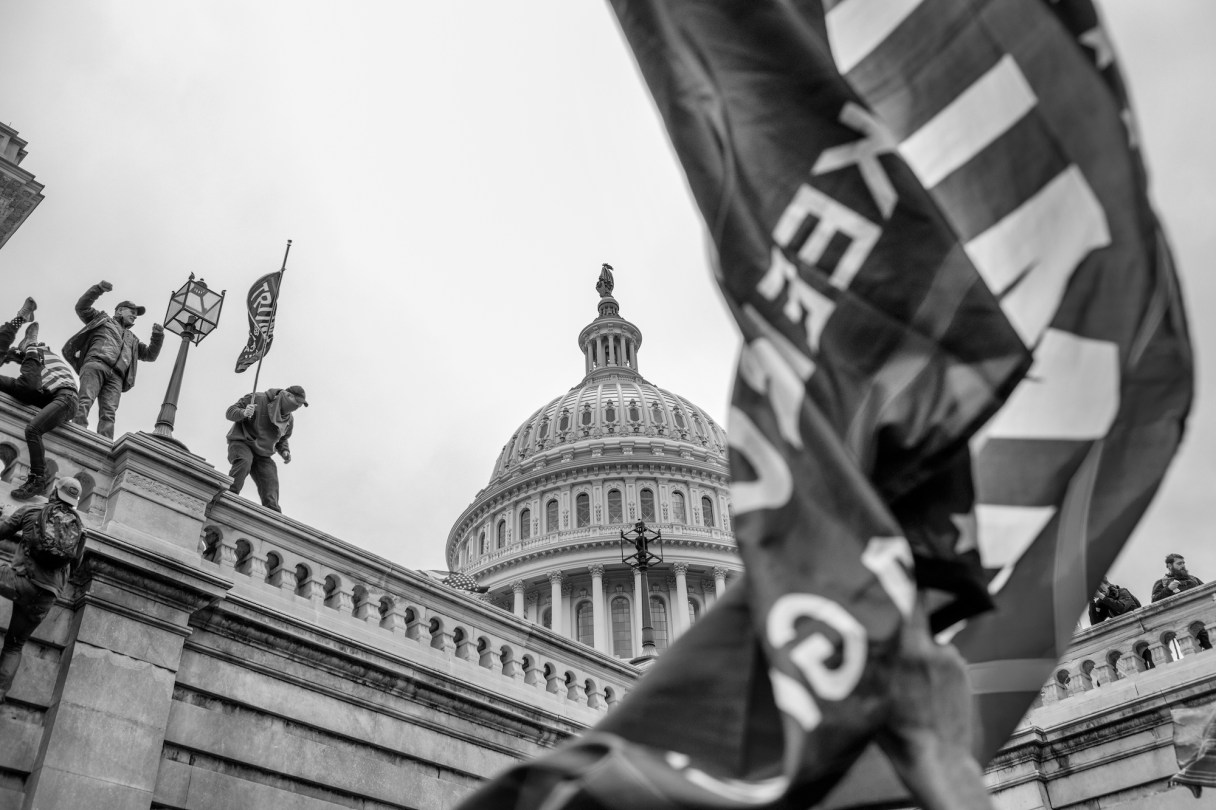
One of the most influential books of the Trump years was “How Democracies Die” by Harvard University government professors Steven Levitsky and Daniel Ziblatt. Published in 2018, it served as a guide to our unfolding ordeal. “Over the past two years, we have watched politicians say and do things that are unprecedented in the United States — but that we recognize as having been the precursors of democratic crisis in other places,” they wrote.
Because that volume was prescient about how Donald Trump would try to rule, I was surprised to learn, in Levitsky and Ziblatt’s new book, “Tyranny of the Minority,” that they were shocked by Jan. 6. Though they’ve studied violent insurrections all over the world, they write in this new book, “we never imagined we’d see them here. Nor did we ever imagine that one of America’s two major parties would turn away from democracy in the 21st century.”
What astonished them the most, Levitsky told me in an interview last week, “was the speed and the degree to which the Republican Party Trumpized.” In “How Democracies Die,” he and Ziblatt had reproved Republicans for failing to stop Trump’s rise to power. But at the time, he said, “we didn’t consider or call the Republican Party an authoritarian party. We did not expect it to transform so quickly and so thoroughly.”
“Tyranny of the Minority” is their attempt to make sense of how American democracy eroded so fast. “Societal diversity, cultural backlash and extreme-right parties are ubiquitous across established Western democracies,” they write. But in recent years, only in America has a defeated leader attempted a coup. And only in America is the coup leader likely to once again be the nominee of a major party. “Why did America, alone among rich established democracies, come to the brink?” they ask.
A disturbing part of the answer, Levitsky and Ziblatt conclude, lies in our Constitution, the very document Americans rely on to defend us from autocracy. “Designed in a predemocratic era, the U.S. Constitution allows partisan minorities to routinely thwart majorities, and sometimes even govern them,” they write. The Constitution’s countermajoritarian provisions, combined with profound geographic polarization, have locked us into a crisis of minority rule.