
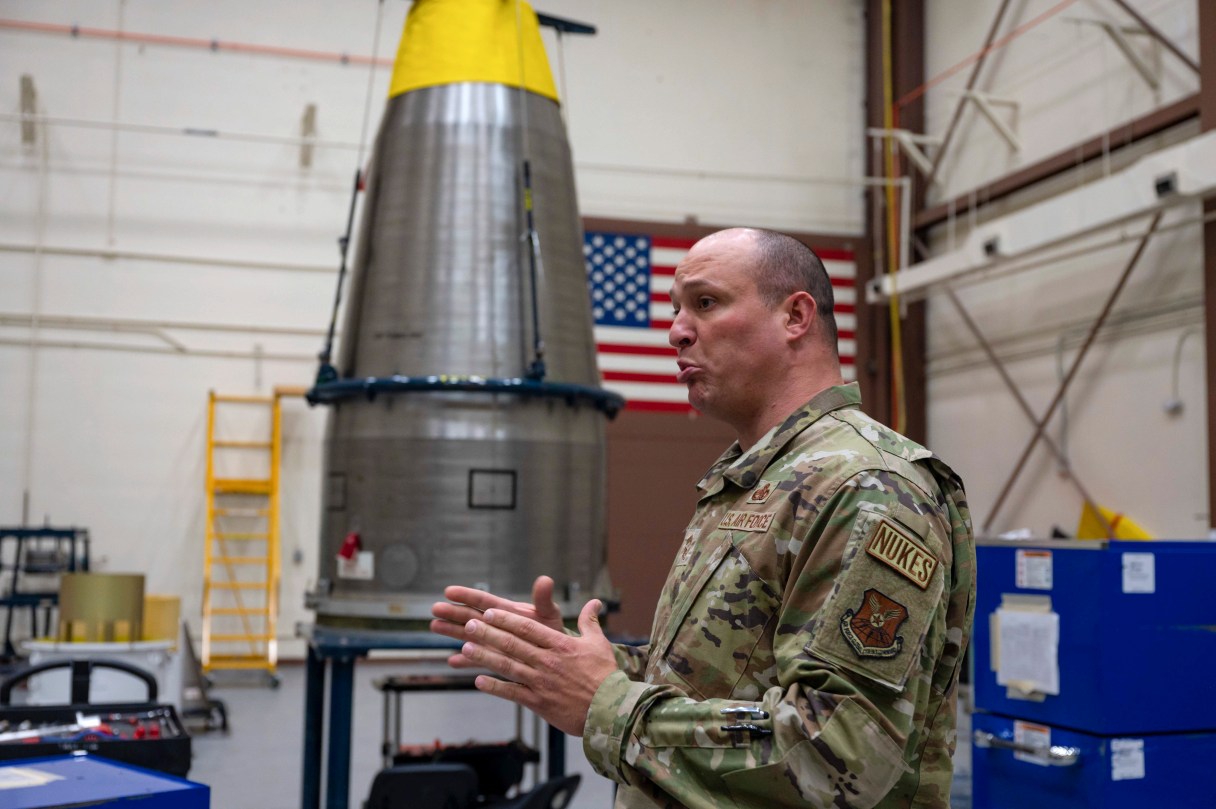
KANSAS CITY NATIONAL SECURITY CAMPUS, Mo. (AP) — In an ultra-sterile room at a secure factory in Kansas City, U.S. government technicians refurbish the nation’s nuclear warheads. The job is exacting: Each warhead has thousands of springs, gears and copper contacts that must work in conjunction to set off a nuclear explosion.
Eight hundred miles (about 1,300 kilometers) away in New Mexico, workers in a steel-walled vault have an equally delicate task. Wearing radiation monitors, safety goggles and seven layers of gloves, they practice shaping new warhead plutonium cores — by hand.
And at nuclear weapons bases across the country, troops as young as 17 keep 50-year-old warheads working until replacements are ready. A hairline scratch on a warhead’s polished black cone could send the bomb off course.
The Associated Press was granted rare access to key parts of the highly classified nuclear supply chain and got to watch technicians and engineers tackle the difficult job of maintaining an aging nuclear arsenal. Those workers are about to get a lot busier. The U.S. will spend more than $750 billion over the next 10 years replacing almost every component of its nuclear defenses, including new stealth bombers, submarines and ground-based intercontinental ballistic missiles in the country’s most ambitious nuclear weapons effort since the Manhattan Project.