
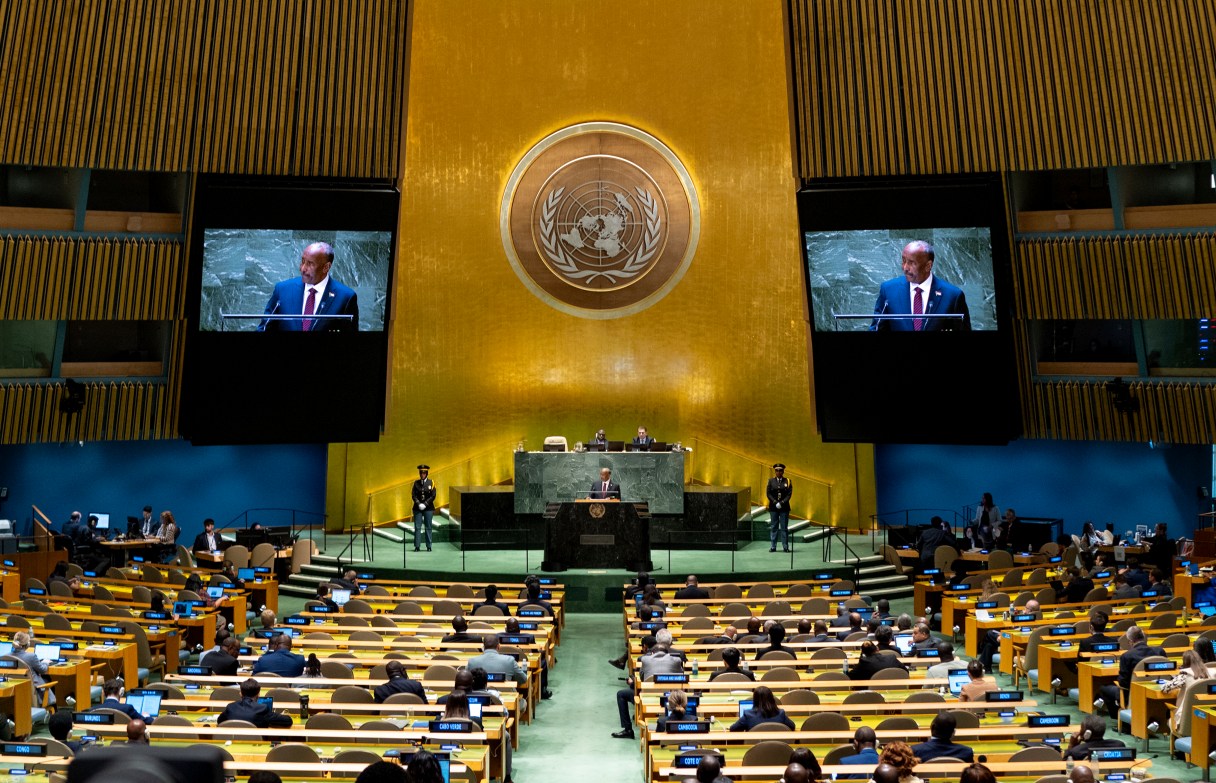
UNITED NATIONS (AP) — It’s one of the United Nations’ more obscure bodies, with no space to call its own within the riverside headquarters. And there is scant insight into how it decides a question of far-reaching impact: Who gets let through the door?
With an anodyne name, the U.N. Credentials Committee has long gone unnoticed; it doesn’t even appear on the U.N.’s own organizational chart of its many agencies, councils, committees and departments. But when it comes to countries riven by political divisions or coups, the nine-member body is the gatekeeper to the world’s stage at the U.N. General Assembly’s annual meeting.
Credentialing is a mere formality for universally recognized governments. But leaders of factions within divided nations know that the committee’s decision stands to withhold or bestow some much-desired legitimacy — especially when their claims aren’t necessarily the strongest.
So how does the committee decide who speaks for member states?
The workings of the Credentials Committee received little scrutiny until recently — when the Taliban and Myanmar military junta sought entry — and remains “an astonishingly opaque body,” said Richard Gowan, U.N. director for the International Crisis Group.