
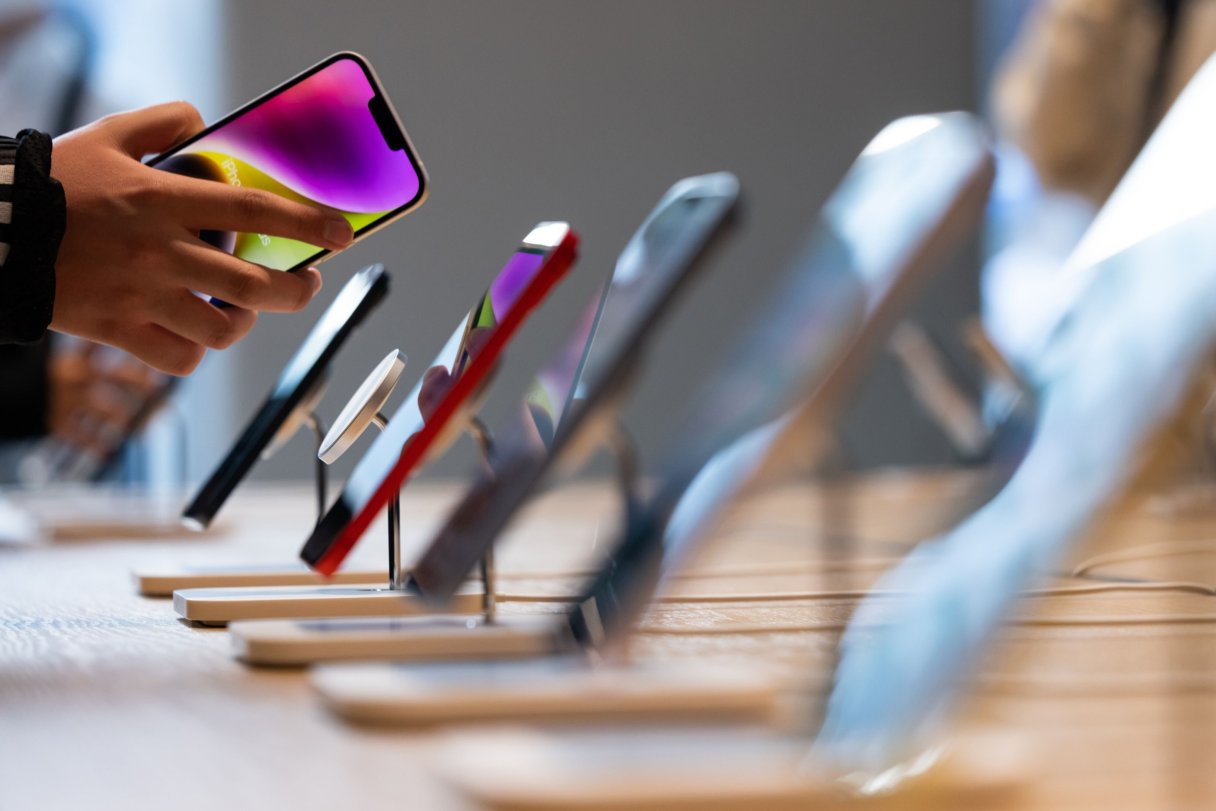
A few years ago, a Philadelphia-area Apple store featured a display in which a vibrant rainbow of the latest iPhones broke through a greyscale crowd of people. What was particularly striking about the advertisement wasn’t the use of contrast nor that this was not some thinly veiled Pride month display. The multicolored iPhones were positioned like veils, so that no face, or even part of a face, could be seen.
If Apple hoped the display would inspire new eagerness to join the technicolor life awaiting customers behind their screens, instead, by veiling human faces, the campaign unveiled the depersonalizing effects of our most ubiquitous technologies, especially smartphones, social media and the internet. This combination — which makes up our brave new world of new media — regularly functions as a barrier to other people and to the outside world, behind which we hide. Think of the socially anxious teen whose face is glued to the screen or think of the man who surfs for sexually explicit content online. New media offers them and others a place of anonymity, where they can live and move and have their being, unencumbered by others.
Our “digital veils” also function as a source of power and control, in a way depicted long ago in C.S. Lewis’ classic “Till We Have Faces.” The main character and narrator in the story is Orual, the unattractive and tomboyish older sister of the goddess Psyche. Orual convinces Psyche to disobey her husband, the god Cupid, who then banishes Psyche and ends their marriage. As a result, Orual decides to live out the rest of her days wearing a black veil.
The veil, which starts off as “a sort of treaty made with [her] ugliness,” quickly becomes a form of power and control. Whereas her ugliness and mannishness caused others to disregard her, the veil gives her a kind of power over others. Her father, the king, takes her seriously, suitors flock to her and enemies respect her. By shrouding her face in mystery, the veil even led some to imagine she was a dazzling beauty or even a spirit.
Like Orual’s veil, new media can become a kind of digital veil that enables us to hide from others, influence their perceptions of us and control our personal images. Social media especially functions in this way. We build profiles of perfectly lighted and cropped snapshots, snippets of the latest vacation, nights out with friends and personal projects. Through this, we shape others’ perceptions of us, giving them the impression that our lives are constantly happy, fun and productive. Through the process, some even become online “influencers,” influencing what others post, buy or do.