
Tuesday, November 17, 2026Nov 17

Why this week’s mass exodus from embattled Nagorno-Karabakh reflects decades of animosity

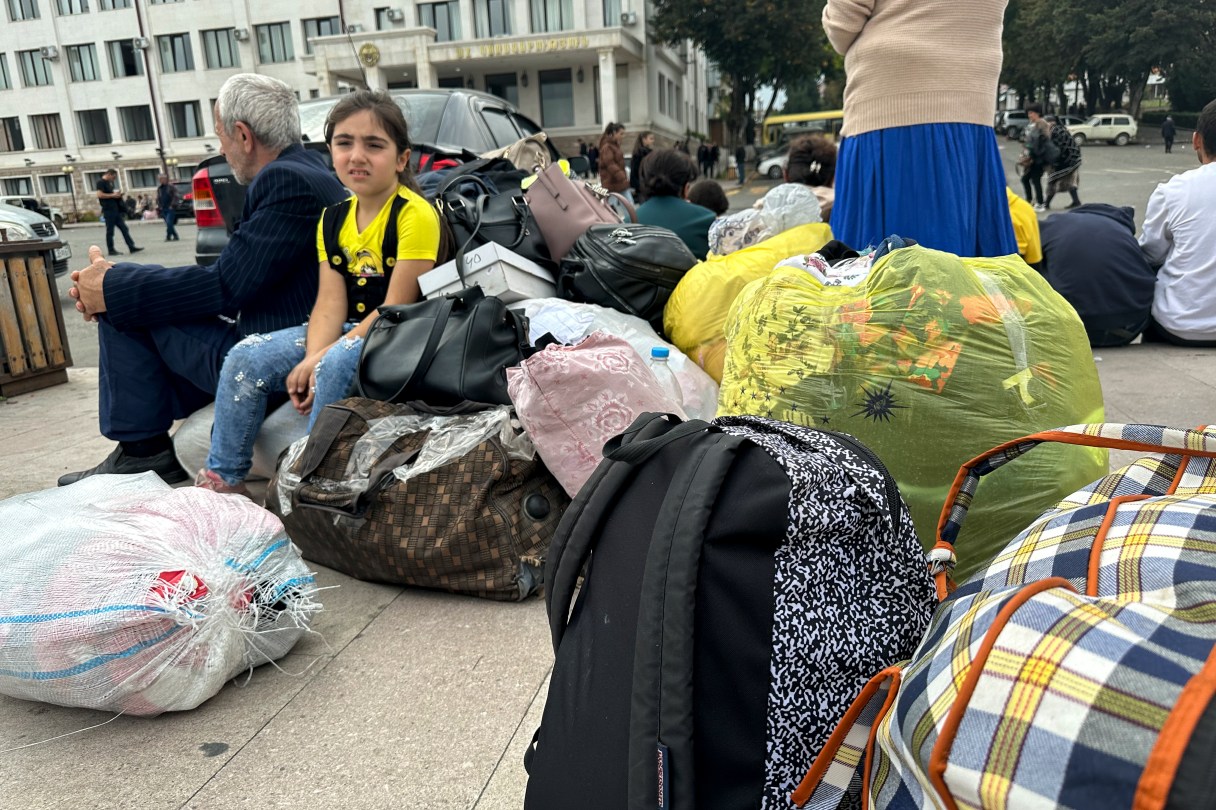
Ethnic Armenians gather in hope to leave Nagorno-Karabakh region for Armenia in the center of Stepanakert, Nagorno-Karabakh on Monday, Sept. 25, 2023. The separatist government of Nagorno-Karabakh announced Thursday that it will dissolve itself and the unrecognized republic will cease to exist by the end of the year, and Armenian officials said more than half of the population has already fled. (AP Photo/Ani Abaghyan)


TALLINN, Estonia (AP) — The exodus of ethnic Armenians this week from the region known as Nagorno-Karabakh has been a vivid and shocking tableau of fear and misery. Roads are jammed with cars lumbering with heavy loads, waiting for hours in traffic jams. People sit amid mounds of hastily packed luggage.

As of Thursday, about 70,000 people had left the breakaway region for Armenia. That’s a huge number — more than half of the population of the region that is located entirely within Azerbaijan.

Still, it’s not the largest displacement of civilians in three decades of conflict between Armenia and Azerbaijan following the 1991 collapse of the Soviet Union.

After ethnic Armenian forces secured control of Nagorno-Karabakh and surrounding territories in 1994, refugee organizations estimated that some 900,000 people had fled to Azerbaijan and 300,000 to Armenia.