
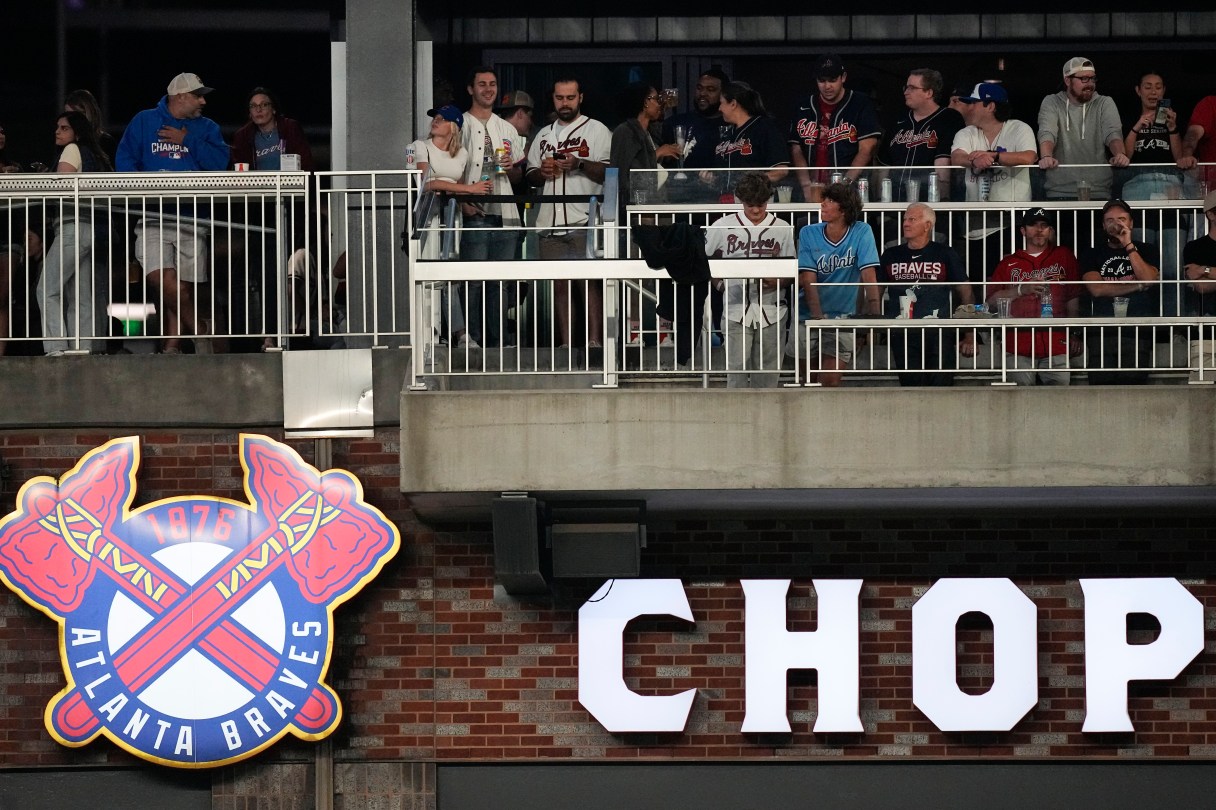
NEW YORK — More than 70 million fans will attend Major League Baseball games for the first time in six years, a post-pandemic rebound for a sport that instituted its biggest on-field changes in decades.
A pitch clock to speed play — game times are down 24 minutes to 2 hours, 40 minutes for nine-inning games — limits on defensive shifts to increase offense, new social spaces at ballparks and technology innovations to speed entry have factored into a 9.2% rise in average attendance to 29,176. Expanding the playoffs to 12 teams, which began last year, led to more than half the teams remaining in mathematical contention later in the regular season.
“Getting back above 70 million is an accomplishment for us,” Rob Manfred, the commissioner of baseball, said Wednesday. “I think it’s the playoff format, balanced schedule, the rule changes this year in terms of the product, the stuff clubs have done locally in terms seating options.”
Still, the average attendance remains below the record high of 32,785 in 2007, and MLB hasn’t reached 30,000 since 2017.
“We want to be a 70-plus-million-fan business year after year. We want that to become routine for us,” Manfred said. “I think we need to be a little realistic about the effect of, particularly in some of our bigger markets, smaller ballparks limit your ability to get to the absolute peak that you saw some years ago.”