
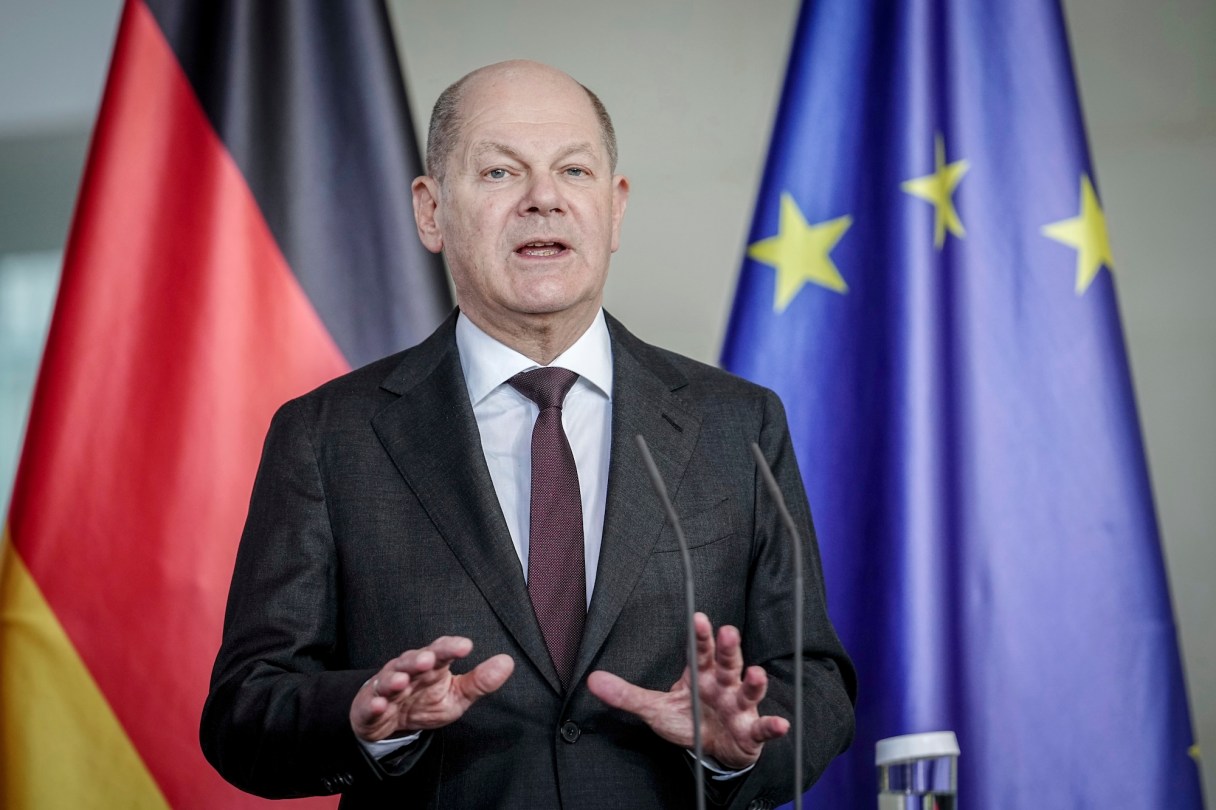
For more than two years, Vladimir Putin’s bluster, blame and threats of escalation have been driven by a singular goal: deterring and discouraging Western support for Ukraine. Worryingly, German Chancellor Olaf Scholz is giving Putin reasons to think his tactics are working.
After stalling for months, Scholz rejected Ukraine’s request for Germany’s long-range Taurus missile system. The decision reflects Scholz’s political sensitivities and an overarching German concern about escalating the conflict with Russia. Yet by sowing confusion and alienating allies, Scholz’s handling of the matter is likely only to further embolden Putin and endanger Europe’s security.
The Taurus missiles would doubtless boost Ukraine’s ability to strike Russian supply lines and better defend against the kind of attacks on cities and vital infrastructure the country is again experiencing. Two similar long-range cruise missiles, the UK-supplied Storm Shadow and the French Scalp, have proved highly effective, notably in helping to take out about a third of Russia’s Black Sea fleet. Limited numbers, and their high unit cost, have forced Ukraine to ration their use. The Taurus would boost that stock, offer comparable or greater range, and is a weapon that is highly resistant to detection and jamming attempts.
Meanwhile, Scholz has turned down British offers to send more Storm Shadows and backfill UK stock with Taurus missiles. That may be out of concern that giving away the weapons and data systems they rely on will erode the already diminished capabilities of the Bundeswehr, Germany’s military. A recently released annual report on the state of the armed forces found alarming shortfalls in personnel and weapons, as well as a lack of leadership and training.
These deficiencies argue for greater focus on addressing German underinvestment in its military while finding ways to ensure Ukraine can get the sophisticated weapons systems it needs. But Scholz’s fear of escalation has become the primary driver of German policy. Though the chancellor won plaudits for declaring a foreign-policy “zeitenwende,” or turning point, after Russia’s 2022 invasion, he’s lately seemed more interested in boosting his party’s flagging approval ratings by playing to pacifist streaks among segments of the German public.