
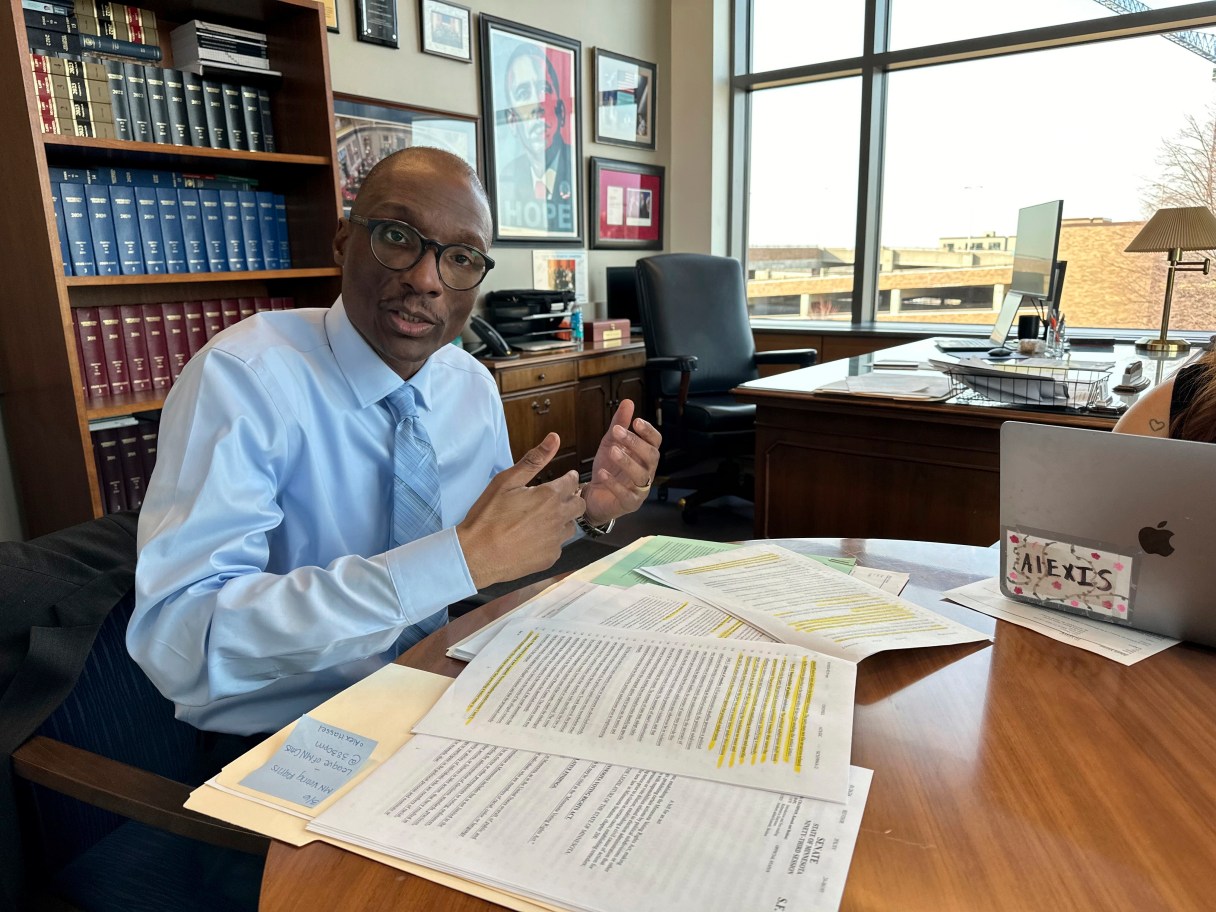
ST. PAUL, Minn. (AP) — An appeals court ruling that weakened a key part of the Voting Rights Act is spurring lawmakers in several states to enact state-level protections to plug gaps that the ruling opened in the landmark federal law aimed at prohibiting racial discrimination in voting.
Democratic-led states have been taking matters into their own hands because national legislation to expand voting rights remains stalled in a divided Congress. Meanwhile, Republican lawmakers in many states have tried to erode safeguards in the name of protecting election integrity amid former President Donald Trump’s false claims that vote fraud cost him the 2020 election.
Legislators in Minnesota, Michigan, Maryland, New Jersey and Florida are pursuing state voting rights acts, building on ones enacted by New York in 2022 and Connecticut in 2023, as well as ones enacted earlier in Virginia, Oregon, Washington and California.
“And we know of interest from other states that are considering taking up state VRAs in the next year or so,” said Michael Pernick, an attorney for the NAACP Legal Defense Fund in New York.