
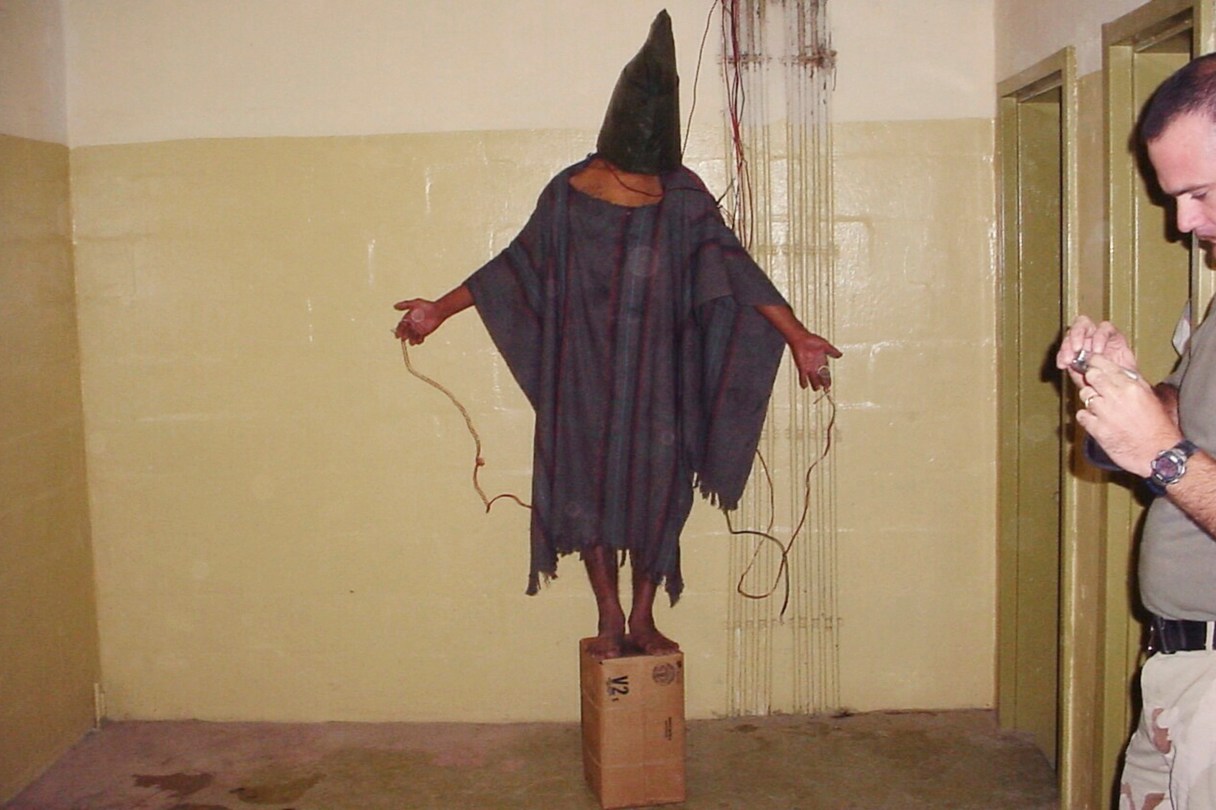
ALEXANDRIA, Va. (AP) — Twenty years ago this month, photos of abused prisoners and smiling U.S. soldiers guarding them at Iraq’s Abu Ghraib prison were released, shocking the world.
Now, three survivors of Abu Ghraib will finally get their day in U.S. court against the military contractor they hold responsible for their mistreatment.
The trial is scheduled to begin Monday in U.S. District Court in Alexandria, and will be the first time that Abu Ghraib survivors are able to bring their claims of torture to a U.S. jury, said Baher Azmy, a lawyer with the Center for Constitutional Rights representing the plaintiffs.
The defendant in the civil suit, CACI, supplied the interrogators who worked at the prison. The Virginia-based contractor denies any wrongdoing, and has emphasized throughout 16 years of litigation that its employees are not alleged to have inflicted any abuse on any of the plaintiffs in the case.
The plaintiffs, though, seek to hold CACI responsible for setting the conditions that resulted in the torture they endured, citing evidence in government investigations that CACI contractors instructed military police to “soften up” detainees for their interrogations.