
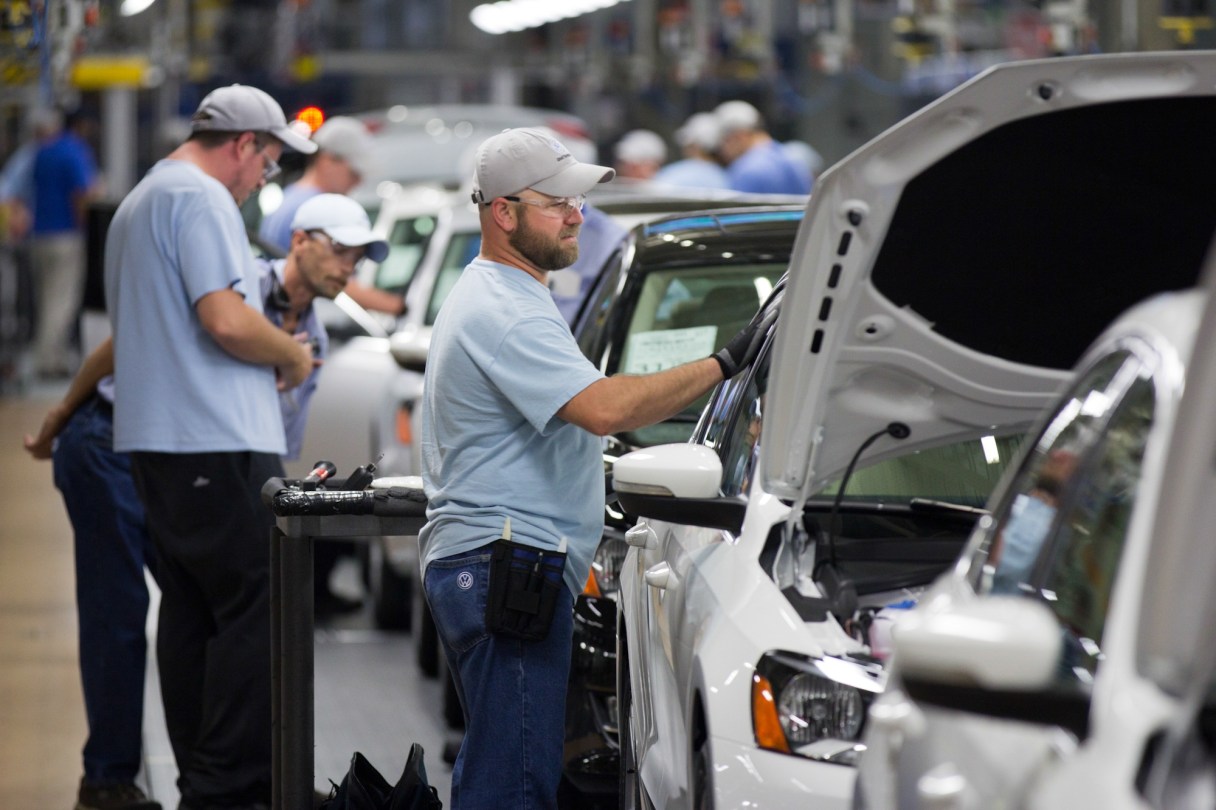
In 2022, the people of Tennessee enshrined the right to work into our state constitution. Though we have been a right to work state since 1947, the wildly successful constitutional amendment campaign sent a powerful message to employers and working families alike: Here in Tennessee, we take worker freedom very seriously.
The vote was the crowning achievement in a series of pro-business and pro-worker decisions made by state leaders who collaboratively decided decades ago that Tennessee would be a jewel of prosperity, growth, opportunity and freedom for our entire country. As a result, large employers moved to the state to open new facilities, creating hundreds of thousands of jobs. Among them are international automakers like Volkswagen, whose significant investments in the state resulted in the employment of over 5,000 hardworking Tennesseans at the VW plant.
The plant has been recognized by the EPA for its innovative and forward-leading commitment to green power and received the Pledge to America’s Workers Presidential Award in recognition of its programs that train and educate employees. Workers have received significant wage increases over the past several years. The partnership between Tennessee and Volkswagen has been a monumental success.
Now, for the third time, the United Auto Workers (UAW) has swooped down from Detroit to attempt to fundamentally change the things we’ve done. In contrast to our cooperative approach, the UAW chooses conflict. Look what they did in Michigan just last year. Their destructive strike against the big three automakers there cost workers nearly half-a-billion dollars in lost wages. Since the strike, the companies have announced a combined 18,000 layoffs. And Ford executives have openly speculated that future growth may have to occur outside the U.S. because the UAW has driven labor costs up so high.
Both Volkswagen and its employees have benefited from the relationship they’ve built through trust and transparency. But the UAW’s antagonistic approach drives a divisive wedge between employers and workers. Because union contracts prioritize seniority over merit, the advancement opportunities of younger or more skilled workers are restricted. If the UAW is successful in organizing the VW plant, it will have exclusive bargaining rights, meaning workers will be prohibited from negotiating on their own behalf — even workers who choose not to join the union. Unions often demand workers’ personal information to be used as they wish without the workers’ consent. And they make empty promises to workers during organizing campaigns and often fail to deliver. There is no reason to fix something that is not broken.